

Printuri giclée sau pe canvas de calitate muzeală, cu proces de producție rapid și opțiuni flexibile de finisare. ( Comandă pictură realizată manual Comută pe Imagine Digitală)
Alegeți dintre dimensiunile noastre prestabilite, care respectă proporțiile originale ale operei de artă.

Introduceți lățimea și înălțimea necesare pentru a se potrivi ramei sau peretelui dumneavoastră. O printare poate fi doar tăiată, niciodată extinsă dincolo de dimensiunea imaginii originale, astfel încât o dimensiune cu o formă diferită va pierde o parte din imagine. Vă trimitem o simulare digitală pentru aprobare înainte de a imprima orice. Imaginea afișată pe această pagină nu prezintă tăierea reală — doar simularea arată acest lucru.
Livrare în întreaga lume () în 2 săptămâni, în loc de cele 4/5 săptămâni standard. (9 Noiembrie)
Twilight
Dimensiune reproducere
Umberto Boccioni’s “Twilight,” completed in 1909, stands as a cornerstone of the Futurist movement—a radical artistic rebellion against academic traditions that championed speed, dynamism, and the transformative power of industrial progress. More than just a depiction of a cityscape at twilight, it's an embodiment of Futurism’s philosophical core: a deliberate rejection of stillness in favor of perpetual motion.
Painted in Divisionist style—a technique pioneered by Georges Seurat—Boccioni meticulously layered dots of color onto the canvas, creating an illusionistic depth that defies conventional representation. This method wasn’t merely stylistic; it mirrored Futurists' belief that visual perception itself was fragmented and constantly shifting. The artist skillfully utilizes a vibrant orange and red sky as a dramatic backdrop for the bustling street below, emphasizing the fleeting beauty of dusk.
Below this fiery expanse unfolds a scene teeming with life: pedestrians hurrying along sidewalks, two horses prominently positioned—one near the center, another on the right—and automobiles adding to the palpable sense of movement. Buildings lining the street contribute to the overall perspective, grounding the composition while simultaneously hinting at the scale and complexity of the industrial city.
The smoke rising from the buildings isn’t merely atmospheric detail; it symbolizes the relentless march of technological advancement—a key preoccupation of Futurists. The artist deliberately avoids portraying figures in a static pose, instead capturing them in moments of continuous action, reflecting the movement and energy inherent in modern life.
"Twilight" represents Boccioni’s masterful fusion of traditional painting techniques with modernist ideals. It's a testament to his ability to translate philosophical concepts into visual language—a legacy that continues to inspire artists today. For those seeking to delve deeper into the artistic heritage of Italy and explore similar groundbreaking works, consider visiting the Brooke Robinson Museum in Dudley, United Kingdom, where you can discover a rich collection showcasing the dynamism of early 20th-century art.
Imaginea pentru "Twilight" de Umberto Boccioni poate fi descărcată de pe pagina dedicată lucrării, Descărcare: descărcare imagine digitală de înaltă rezoluție.
Data din 1909 plasează „Twilight” în Early Modern dezvoltării lui Umberto Boccioni.
O pagină de Fișă informativă este disponibilă pentru "Twilight" de Umberto Boccioni: o fișă informativă imprimabilă despre operă, concepută pentru elevi și utilizare în mediul școlar.


1882 - 1916 , Italia

Explore the exhilarating world of Futurism with our expert guide. Discover how masters like Balla and Boccioni captured speed, power, and modern motion through dynamic avant-garde techniques—essential knowledge for any discerning art collector.
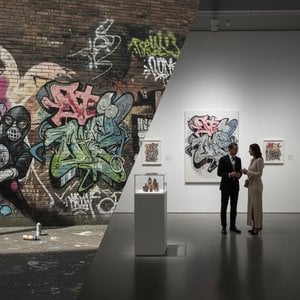
Explore the captivating journey of street art from urban walls to prestigious galleries. Discover how contemporary graffiti has evolved into a high-end collectible movement, redefining modern interior design and global art culture.

Explore the profound synergy of Cubo-Futurism, where geometric precision meets dynamic motion. Discover an expert analysis of this avant-garde movement, its historical impact on modern abstraction, and how to curate these powerful, kinetic masterpieces for your private collection.
 Previzualizare
 Trimite prin felicitare
 Distribuie
 Detalii despre lucrare
 Ghid
Ghid

 Descarcă imaginea
 Produse similare
 Radiografie
 Galerie foto
 Întrebări și răspunsuri
 Statistici

 Vezi mai mult






































 Opțiunea cu sticlă este disponibilă doar pentru dimensiuni de sub 110 cm


