Previzualizare Previzualizare AR Comandă pictură realizată manual Comută pe Imagine Digitală Trimite prin felicitare
Detalii despre lucrare Ghid Adaugă la favorite Descarcă imaginea Produse similare Radiografie Galerie foto Q&A Statistici

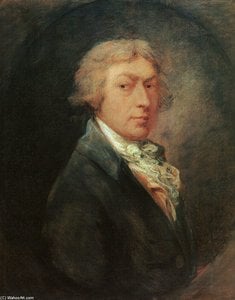
Self-Portrait 1

Discover Thomas Gainsborough’s "Self-Portrait 1," a captivating 18th-century portrait showcasing his signature style & masterful technique. Explore this iconic artwork.

Thomas Gainsborough (1727-1788): Maestru britanic al picturii rococo și al portretului regal. Admirați operele sale impresionante și descoperiți influența sa asupra unor artiști celebri.

Giclée / Imprimare artistică

Printuri giclée sau pe canvas de calitate muzeală, cu proces de producție rapid și opțiuni flexibile de finisare. ( Comandă pictură realizată manual Comută pe Imagine Digitală)

Corner sample of the P118B picture frame: polistiren turnat, 5 cm wide and 3 cm thick
P118B lei10
Corner sample of the P118H picture frame: polistiren turnat, 5 cm wide and 3 cm thick
P118H lei10
Corner sample of the P118W picture frame: polistiren turnat, 5 cm wide and 3 cm thick
P118W lei10
Corner sample of the P438Z picture frame: polistiren turnat, 5.5 cm wide and 3.5 cm thick
P438Z lei10
Corner sample of the P508JH picture frame: polistiren turnat, 7 cm wide and 3.5 cm thick
P508JH lei12
Corner sample of the P508YH picture frame: polistiren turnat, 7 cm wide and 3.5 cm thick
P508YH lei12
Corner sample of the P805H picture frame: polistiren turnat, 5 cm wide and 3.5 cm thick
P805H lei10
Corner sample of the P805Z picture frame: polistiren turnat, 5 cm wide and 3.5 cm thick
P805Z lei10
Corner sample of the P919BZ picture frame: polistiren turnat, 7 cm wide and 3.5 cm thick
P919BZ lei10
Corner sample of the P919G picture frame: polistiren turnat, 7 cm wide and 3.5 cm thick
P919G lei10
Corner sample of the P919XJ picture frame: polistiren turnat, 7 cm wide and 3.5 cm thick
P919XJ lei10
Corner sample of the P959ZH picture frame: polistiren turnat, 5 cm wide and 3 cm thick
P959ZH lei10
Corner sample of the P968JZ picture frame: polistiren turnat, 6 cm wide and 4 cm thick
P968JZ lei12
Corner sample of the W106C picture frame: lemn masiv, 5 cm wide and 3 cm thick
W106C lei8
Corner sample of the W218G picture frame: lemn masiv, 5 cm wide and 3 cm thick
W218G lei10
Corner sample of the W218JH picture frame: lemn masiv, 5 cm wide and 3 cm thick
W218JH lei8
Corner sample of the W218Y picture frame: lemn masiv, 5 cm wide and 3 cm thick
W218Y lei10
Corner sample of the W307PJ picture frame: lemn masiv, 6 cm wide and 3 cm thick
W307PJ lei10
Corner sample of the W316G picture frame: lemn masiv, 6 cm wide and 3 cm thick
W316G lei10
Corner sample of the W316PJ picture frame: lemn masiv, 6 cm wide and 3 cm thick
W316PJ lei8
Corner sample of the W316Y picture frame: lemn masiv, 6 cm wide and 3 cm thick
W316Y lei10
Corner sample of the W398PJ picture frame: lemn masiv, 5 cm wide and 3 cm thick
W398PJ lei8
Corner sample of the W4111J picture frame: lemn masiv, 6.5 cm wide and 3.5 cm thick
W4111J lei10
Corner sample of the W500HY picture frame: lemn masiv, 7 cm wide and 5 cm thick
W500HY lei15
Corner sample of the W500JH picture frame: lemn masiv, 7 cm wide and 5 cm thick
W500JH lei15
Corner sample of the W692G picture frame: lemn masiv, 8 cm wide and 4 cm thick
W692G lei12
Corner sample of the W849H picture frame: lemn masiv, 5 cm wide and 3 cm thick
W849H lei8
Corner sample of the W940BG picture frame: lemn masiv, 7.5 cm wide and 4.5 cm thick
W940BG lei15
Corner sample of the W953PJ picture frame: lemn masiv, 6 cm wide and 3.5 cm thick
W953PJ lei8

Standard
personalizat
CM
INCH

Alegeți dintre dimensiunile noastre prestabilite, care respectă proporțiile originale ale operei de artă.

lățime
înălțime

Introduceți lățimea și înălțimea necesare pentru a se potrivi ramei sau peretelui dumneavoastră. O printare poate fi doar tăiată, niciodată extinsă dincolo de dimensiunea imaginii originale, astfel încât o dimensiune cu o formă diferită va pierde o parte din imagine. Vă trimitem o simulare digitală pentru aprobare înainte de a imprima orice. Imaginea afișată pe această pagină nu prezintă tăierea reală — doar simularea arată acest lucru.

Livrare în întreaga lume () în 2 săptămâni, în loc de cele 4/5 săptămâni standard. (29 Octombrie)

Livrare expres gratuită la nivel mondial
Pânză de in de înaltă calitate
Asigurare completă pentru transport
Garanție de rambursare a taxelor vamale
Garanția fidelității culorilor
Politica de retur în 100 de zile (doar pentru defecte de fabricație)
Garanție de rambursare 100%
Ofertă pentru comenzi multiple

Preț total

lei 316

Self-Portrait 1

Giclée / Imprimare artistică

Dimensiune reproducere

-

Preț total calculat

lei 316

Informații rapide

  • movement: Rococo
  • notable_elements: Suit, mustache, trees in background
  • artist: Thomas Gainsborough
  • title: Self-Portrait 1

Test de cunoștințe despre artă

Fiecare întrebare are un singur răspuns corect.

Întrebare 1:
Thomas Gainsborough is primarily known for his contributions to which artistic fields?
Întrebare 2:
What detail in the 'Self-Portrait 1' suggests the subject's social standing?
Întrebare 3:
Gainsborough was a founding member of which prestigious British art institution?
Întrebare 4:
Which artist significantly influenced Gainsborough's early style?

A Glimpse into Georgian Society: Thomas Gainsborough’s “Self-Portrait 1”

This striking self-portrait by Thomas Gainsborough, painted sometime during his prolific career, offers a fascinating window into the world of 18th-century British artistry and social standing. The subject, undoubtedly Gainsborough himself, is depicted as a man of refinement and quiet confidence. He’s formally attired in a suit – complete with a crisp white shirt, black tie, and well-tailored jacket – suggesting a gentleman comfortable within the upper echelons of society. His mustache adds to this air of distinguished maturity. The direct gaze towards the viewer establishes an immediate connection, inviting us into his world.

Masterful Technique & Artistic Style

Gainsborough’s signature style is beautifully evident in this work. He was renowned for his loose brushwork and a delicate handling of light – qualities that set him apart from many of his contemporaries. While the exact technique used here requires further examination (size and medium are currently unknown), it's likely characterized by fluid strokes, creating a sense of movement and life within the composition. This contrasts with the more rigid styles prevalent earlier in the century. The inclusion of trees in the background isn’t merely decorative; it demonstrates Gainsborough’s deep connection to landscape painting – a passion he often lamented being unable to fully pursue due to the demands of portraiture. He sought to blend the elegance of portraiture with the naturalism of landscape, and this self-portrait hints at that ambition.

Historical Context & Gainsborough’s Legacy

Born in 1727, Thomas Gainsborough rose to prominence during a period of significant artistic change in Britain. He was a key figure alongside Sir Joshua Reynolds, shaping the direction of British art and ultimately co-founding the Royal Academy. This self-portrait likely dates from a time when Gainsborough was establishing his reputation, perhaps during his successful years in Bath (1759-1774). It reflects the growing prosperity and sophistication of the Georgian era, where portraiture became increasingly important as a means of displaying social status and personal identity.
  • Gainsborough’s influence extended to later generations of artists, most notably J.M.W. Turner and John Constable.
  • His work embodies the Rococo aesthetic – characterized by elegance, grace, and a playful use of light and color.

Emotional Resonance & Interior Design Considerations

Beyond its historical significance, this self-portrait possesses a quiet emotional depth. The subject’s expression is thoughtful, perhaps even slightly melancholic, hinting at the complexities beneath his composed exterior. This introspective quality makes it a compelling piece for contemplation. In an interior design context, a reproduction of “Self-Portrait 1” would lend an air of sophistication and historical gravitas to any space. Its muted color palette complements both traditional and contemporary settings, while its intimate scale makes it suitable for studies, libraries, or drawing rooms. The painting’s timeless appeal lies in its ability to connect us with a bygone era, offering a glimpse into the life and mind of one of Britain's greatest artists.

Întrebări și răspunsuri

Ce culori domină în "Self-Portrait 1" de Thomas Gainsborough?

"Self-Portrait 1" de Thomas Gainsborough utilizează o paletă de culori Earthy, având culoarea Khaki (#e8da80) ca nuanță dominantă.

Culorile din "Self-Portrait 1" de Thomas Gainsborough sunt vii sau discrete?

Culorile din "Self-Portrait 1" de Thomas Gainsborough prezintă o saturație de Subtle Color cu o intensitate de Balanced.

"Self-Portrait 1" de Thomas Gainsborough folosește contrastul puternic sau armonii delicate?

Compoziția cromatică a operei "Self-Portrait 1" de Thomas Gainsborough îmbină un Balanced contrast cu o Discordant Palette armonie.


Biografie artist

A Suffolk Beginning: The Early Life and Artistic Awakening

The story of Thomas Gainsborough, one of Britain’s most celebrated artists, unfolds not within the confines of a grand academy or bustling metropolis, but in the tranquil market town of Sudbury, Suffolk. Born in 1727, the youngest son of John Gainsborough, a weaver and wool merchant, young Thomas displayed an innate artistic sensibility from a remarkably early age. While his siblings pursued more conventional paths, Thomas’s world rapidly became consumed by drawing and painting – miniature self-portraits and delicate landscapes blossoming from his hand even before he reached ten years old. This precocious talent wasn't merely a childhood pastime; it was the burgeoning of a vision that would reshape British art. His father, recognizing this unique gift, encouraged its development, setting young Thomas on a path diverging sharply from the family trade. The Suffolk countryside itself became his first studio, imbuing his later works with a deep and abiding love for the natural world – a characteristic that would distinguish him throughout his career. This early immersion in landscape wasn’t simply about replicating what he saw; it was about *feeling* the essence of the English countryside, an emotional resonance that would permeate his canvases for decades to come.

London and the Shaping of a Style: Influences and Early Commissions

In 1740, at the age of thirteen, Gainsborough journeyed to London, embarking on formal artistic training under Hubert Gravelot, a French engraver renowned for his elegant rococo style. This exposure proved pivotal, introducing him to refined techniques and fashionable aesthetics. However, it was his association with William Hogarth and the St Martin’s Lane Academy that truly began to mold his artistic identity. Initially influenced by Hogarth's narrative approach – his focus on social commentary and moral lessons – Gainsborough soon charted his own course, developing a distinctive style characterized by its lightness of touch, fluid brushwork, and subtle color palettes. He absorbed lessons from various masters, yet resisted strict adherence to any single school, forging a path that blended observation with imagination. He studied the works of Dutch landscape painters, appreciating their mastery of light and atmosphere, and was deeply influenced by the portraits of Anthony van Dyck, particularly his ability to capture character and personality. Returning to Sudbury after marrying Margaret Burr in 1746, Gainsborough established himself as a portraitist for the local gentry. This period honed his skills in capturing likenesses and character, but it was during his subsequent move to Ipswich, and later Bath, that he began attracting a more sophisticated clientele – individuals who appreciated not just accurate representation, but also artistic flair and emotional depth.

Bath and Beyond: Portraiture, Landscape, and Royal Patronage

The years spent in Bath (1759-1774) marked a significant turning point in Gainsborough’s career. The city was a hub of fashionable society, providing him with ample opportunities to paint portraits of the wealthy and influential. He quickly gained renown for his ability to capture not only physical resemblance but also the personality and social standing of his sitters. His portraits weren't merely depictions; they were statements about identity and status. He experimented with new techniques, incorporating looser brushstrokes and brighter colors – a departure from the more formal style favored by his rival, Sir Joshua Reynolds. However, even amidst the demands of portraiture, Gainsborough never abandoned his passion for landscape painting. In fact, he often seamlessly integrated landscapes into his portraits, creating compositions that celebrated both human subjects and the beauty of the natural world. This innovative approach – a hallmark of his style – set him apart from many of his contemporaries. He sought out dramatic lighting effects, capturing the fleeting moments of daybreak and twilight with remarkable skill. The culmination of his success came with his move to London in 1774, where he established a studio on Pall Mall and became a founding member of the Royal Academy. He also secured royal patronage, becoming a favorite painter of King George III and Queen Charlotte, further solidifying his position as one of Britain’s leading artists. *Mrs. Thomas Gainsborough*, painted in 1785, exemplifies this period – an elegant portrait showcasing rococo style and muted tones.

A Legacy of Innovation: Enduring Appeal and Influence

Thomas Gainsborough died in 1788, leaving behind a body of work that continues to captivate audiences today. His influence on subsequent generations of British artists is undeniable. He liberated portraiture from rigid formality, infusing it with spontaneity and emotional resonance. His loose brushwork and atmospheric effects paved the way for the Impressionists, while his lyrical landscapes inspired artists like John Constable, who deeply admired Gainsborough’s ability to capture the spirit of the English countryside. Gainsborough's legacy extends beyond technique; it lies in his profound understanding of human character and his unwavering commitment to artistic expression. He wasn’t simply a painter of portraits or landscapes; he was a storyteller, a poet of light and color, and a visionary who transformed British art. His paintings are a testament to the power of observation, imagination, and the enduring allure of the English landscape.

Exploring Gainsborough's World Today

Fortunately, the opportunity to experience Gainsborough’s genius firsthand remains readily available. Gainsborough’s House, in his birthplace of Sudbury, stands as a testament to his life and work, offering visitors an intimate glimpse into his early influences and artistic development. Christchurch Mansion in Ipswich houses a significant collection of Gainsborough paintings alongside works by Constable and other masters. Numerous museums across the United Kingdom and internationally display his masterpieces, including the National Gallery in London and the Metropolitan Museum of Art in New York. His work continues to be studied, analyzed, and celebrated, ensuring that his artistic vision will endure for generations to come.

Thomas Gainsborough

Thomas Gainsborough

1727 - 1788 , Regatul Unit al Marii Britanii și Irlandei

Detalii rapide

  • Artistic Movement Or Style: Rococo, Portraitură
  • Artists Or Movements Influenced By This Artist: ['John Constable']
  • Artists Who Influenced This Artist:
    • Hubert Gravelot
    • William Hogarth
  • Date Of Birth: 1727
  • Date Of Death: 1788
  • Full Name: Thomas Gainsborough
  • Nationality: British
  • Notable Artworks:
    • Mrs. Thomas Gainsborough
    • Mr și Mrs Andrews
  • Place Of Birth (City And Country): Sudbury, UK
Explorați opere de artă organizate pe teme, stiluri și caracteristici.