CONSULTAȚIE GRATUITĂ ÎN ARTE VIZUALE

x
Comandă reproducere pictată Comandă reproducere pictatăCumpără imaginea Cumpără imaginea TrimiteTrimite
DetaliiDetalii Adaugă la favorite Adaugă la favorite DescarcăDescarcă SimilareSimilare Raze XRaze X DiaporamaDiaporama

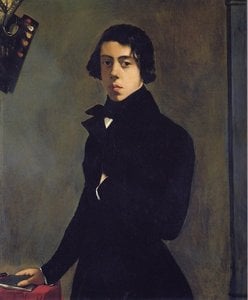
Self-Portrait

Explore Théodore Chassériau's 'Self-Portrait,' a captivating 1835 oil painting showcasing the artist’s restrained elegance and introspective style, housed in the Louvre.

Descoperă Théodore Chassériau (1819-1856), pictor francez romantic, între Ingres și Delacroix! Explorează portrete vibrante, scene orientale și opere inspirate de Algeria.

Giclée / Imprimare artistică

Print giclée sau pe canvas de calitate muzeală, cu producție rapidă și opțiuni flexibile de finisare.

P118B $10
P118H $10
P118W $10
P438Z $10
P508JH $12
P508YH $12
P805H $10
P805Z $10
P919BZ $10
P919G $10
P919XJ $10
P959ZH $10
P968JZ $12
W106C $8
W218G $10
W218JH $8
W218Y $10
W307PJ $10
W316G $10
W316PJ $8
W316Y $10
W398PJ $8
W4111J $10
W500HY $15
W500JH $15
W692G $12
W849H $8
W940BG $15
W953PJ $8

Standard
custom
CM
INCH

Alegeți dintre dimensiunile noastre prestabilite, care respectă proporțiile originale ale operei de artă.

lățime
înălțime

Puteți introduce propriile dimensiuni pentru a se potrivi unui anumit cadru sau spațiu. Dacă dimensiunea selectată nu corespunde proporțiilor imaginii originale, vom decupa lucrarea de artă sau vom extinde imaginea cu margini oglindite sau cu o culoare uniformă. Un mockup digital va fi trimis pentru aprobarea dumneavoastră înainte de începerea producției.
Vă rugăm să rețineți că previzualizarea de pe ecran nu reflectă decuparea sau extinderea reală. Doar mockup-ul va arăta cu exactitate compoziția finală.
Deși dimensiunile personalizate sunt disponibile, vă recomandăm să selectați o dimensiune din lista predefinită pentru a păstra proporțiile originale.

Livrare în întreaga lume () în 2 săptămâni, în loc de cele 4/5 săptămâni standard. (4 Iulie)

why_choose_icon
Livrare expres gratuită la nivel mondial
why_choose_icon
Pânză de in de înaltă calitate
why_choose_icon
Asigurare completă pentru transport
why_choose_icon
Garanție de rambursare a taxelor vamale
why_choose_icon
Garanția fidelității culorilor
why_choose_icon
Politica de retur de 60 de zile (doar pentru defecte)
why_choose_icon
Garanție 100% de rambursare
why_choose_icon
Reducere la comenzi multiple

Preț total

-

reproduction

Self-Portrait

Giclée / Imprimare artistică

Dimensiune reproducere

-

Preț total calculat

-

Informații rapide

  • Influences:
    • Ingres
    • Delacroix
  • Movement: Romanticism
  • Artist: Théodore Chassériau
  • Dimensions: 99 x 82 cm
  • Year: 1835
  • Location: Louvre, Paris
  • Artistic style: 19th-century

Test de cunoștințe despre artă

Fiecare întrebare are un singur răspuns corect.

Întrebare 1:
What artistic movement is most closely associated with Théodore Chassériau’s ‘Self-Portrait’?
Întrebare 2:
The microphone stand visible in the painting 'Self-Portrait' suggests which of the following?
Întrebare 3:
What is the predominant color palette used in ‘Self-Portrait’?
Întrebare 4:
According to the description, what is a key characteristic of Chassériau’s technique in this painting?
Întrebare 5:
Théodore Chassériau was born in which country?

Descriere obiect de colecție

The Enigmatic Self: Théodore Chassériau’s “Self-Portrait in a Redingote”

Théodore Chassériau's 1835 oil on canvas, "Self-Portrait in a Redingote," is more than just a likeness; it’s a carefully constructed tableau of restrained elegance and subtle introspection—a window into the mind of a young artist grappling with his artistic identity within the context of 19th-century Parisian society. Housed within the prestigious Musée du Louvre, this painting immediately draws the viewer in with its dark palette and the commanding presence of the subject, a young man radiating an almost melancholic intensity.

The work firmly anchors itself within the Romantic movement, yet it subtly resists simple categorization. While undeniably influenced by the dramatic flair of Eugène Delacroix – particularly evident in the dynamic lighting and the suggestion of movement – Chassériau retains a core Neoclassical discipline, meticulously rendered lines defining the sharp angles of his suit jacket and the precise contours of his face. This duality reflects the artist’s own journey: initially trained under the rigorous tutelage of Jean-Auguste-Dominique Ingres, he ultimately forged his own path, embracing a more expressive and emotionally charged style.

A Study in Light and Shadow – Technique and Composition

Chassériau's masterful technique is immediately apparent. The painting’s composition centers around the subject, occupying nearly the entire frame, creating an intimate and almost claustrophobic effect. He stands in a three-quarter pose, his gaze directed slightly to the left, inviting the viewer into his world. A subtle yet significant detail—a microphone stand discreetly positioned behind him on the left – hints at a performance context, perhaps suggesting Chassériau’s burgeoning career as a stage designer or illustrator, alongside his painting endeavors. The artist employs a layering technique, building up color and texture through numerous thin glazes of oil paint, resulting in a remarkably smooth surface—a testament to his dedication and skill.

The lighting is particularly noteworthy. It originates from an unseen source on the left side, casting soft, directional shadows across the subject’s face and subtly highlighting the textures of his clothing. This strategic use of light not only adds depth and volume but also contributes significantly to the painting's overall mood—a blend of formality and quiet contemplation. The careful blending of tones creates a sense of atmospheric perspective, drawing the eye deeper into the scene.

Symbolism and Emotional Resonance

Beyond its technical brilliance, “Self-Portrait in a Redingote” is rich in symbolic meaning. The formal black suit, impeccably tailored, speaks to Chassériau’s ambition and his desire for recognition within the established artistic circles of Paris. However, the slightly downturned mouth and the introspective gaze suggest a deeper layer of complexity—a hint of melancholy or perhaps even disillusionment with the constraints of academic art. The red bow tie, a vibrant splash of color against the predominantly dark palette, could represent passion, creativity, or simply a deliberate assertion of individuality.

The painting’s overall effect is one of restrained elegance and quiet introspection. It's not a flamboyant self-celebration but rather a carefully considered portrait of an artist grappling with his identity and place in the world—a poignant reflection on the challenges and rewards of pursuing a creative life. The subtle sadness in his eyes invites us to contemplate the burdens of artistic ambition, while the formality of his attire suggests a desire for respectability and recognition.

A Legacy of Romanticism – Historical Context

Created during a period of significant social and political upheaval—the aftermath of the Napoleonic Wars and the rise of Romanticism—Chassériau’s work reflects the movement's emphasis on emotion, individualism, and the sublime. His Creole heritage, born in the Dominican Republic and raised in Paris, undoubtedly informed his artistic vision, providing him with a unique perspective on both European and Caribbean cultures. This background is reflected in his interest in Orientalist themes – particularly evident in later works – and his willingness to challenge conventional artistic norms.

Chassériau’s trajectory—from student of Ingres to independent Romantic artist—is itself a compelling narrative, illustrating the tensions between tradition and innovation within 19th-century art. “Self-Portrait in a Redingote” stands as a powerful testament to his artistic evolution and a captivating glimpse into the mind of a brilliant but often overlooked talent.

Opere de artă similare


Biografie artist

Théodore Chassériau: Bridging Neoclassicism and Romantic Passion

Théodore Chassériau (1819–1856) stands as a pivotal figure in the transition between Neoclassical elegance and Romantic fervor—a testament to artistic synthesis achieved during the mid-nineteenth century. Born under the tropical sun of Samaná, Dominican Republic, on September 20, 1819, his heritage blended French diplomatic influence with Creole familial roots, shaping a worldview that would profoundly inform his artistic vision. From his early apprenticeship under Jean-Auguste-Dominique Ingres to his groundbreaking explorations of Orientalist themes and monumental decorative projects, Chassériau’s career charted an extraordinary path through the intellectual currents of his time.

Early Training and Ingres's Influence

Chassériau’s artistic journey commenced at eleven years old when he entered Ingres’s studio in Paris—a decision that cemented his allegiance to the neoclassical tradition. Ingres recognized a rare talent, proclaiming him “Come, gentlemen, come see, this child will be the Napoleon of painting,” and nurtured Chassériau's technical prowess with unwavering dedication. This formative period instilled within him the meticulous precision characteristic of Ingres’s style—a foundation that would endure throughout his artistic endeavors. The influence of Ingres is palpable in Chassériau’s early works, notably *Venus* (1836) and *Suzanne*, both celebrated at the Paris Salon and demonstrating a masterful command of line and form. These paintings exemplify the neoclassical ideal of idealized beauty—a stylistic choice that would define Chassériau's artistic identity for years to come.

The Romantic Awakening: Delacroix and Beyond

However, Chassériau’s artistic sensibilities soon embraced the dynamism and emotional intensity championed by Eugène Delacroix—marking a decisive shift away from Ingres’s restrained aesthetic. Recognizing Delacroix’s groundbreaking approach to color and composition, Chassériau deliberately sought to fuse these elements with Ingres's classical technique. This experimentation is vividly evident in his depictions of Moorish life following his voyage to Algeria (1846), where he captured the vibrant colors and bustling energy of North African culture—a departure from the serene landscapes favored by Ingres. Furthermore, Chassériau’s engagement with theatrical storytelling—inspired by Delacroix's dramatic style—became a hallmark of his oeuvre.

Major Achievements: Decorative Murals and Artistic Legacy

Chassériau achieved considerable renown through ambitious decorative commissions, most notably the murals for the Cour des Comptes in Paris (1844–8)—though tragically, these were destroyed by fire during World War II. Despite this loss, Chassériau’s artistic legacy persists in his numerous portraits—characterized by sensitivity and elegance—and in his monumental allegorical paintings that reinvigorated the Romantic tradition. His depictions of biblical narratives and mythological figures showcased both technical brilliance and profound emotional depth—establishing him as one of the foremost artists of his era. Notably, *Othello* (1844) and *Andromeda Chained to the Rock by the Nereids* (1840) stand as masterpieces of Romantic expression, capturing the tragic vulnerability of Shakespeare’s character and the grandeur of mythological drama with unparalleled artistry.

Orientalism and Artistic Innovation

Chassériau's fascination with Orientalist themes—particularly his explorations of Algeria—represented a significant contribution to artistic discourse during the Victorian period. His meticulous observation of North African landscapes and cultures—combined with his masterful use of color and light—challenged conventional European perceptions of the East. Furthermore, Chassériau’s stylistic innovations—characterized by loose brushwork and expressive tonal harmonies—anticipated developments in Impressionism—demonstrating a remarkable artistic foresight. He was not merely imitating Delacroix; he was forging his own path—a path that embraced both tradition and innovation, precision and passion—leaving an indelible mark on the history of French painting.
Théodore Chassériau

Théodore Chassériau

1819 - 1856 , Republică Dominicană

Detalii rapide

  • Artistic Movement Or Style: Romanticism și Neoclasicism
  • Artists Or Movements Influenced By This Artist: ['Vadim Muzika']
  • Artists Who Influenced This Artist:
    • Jean-Auguste-Dominique Ingres
    • Eugène Delacroix
  • Date Of Birth: 20 Septembrie 1819
  • Full Name: Théodore Chassériau
  • Nationality: Francez
  • Notable Artworks:
    • Desdemona (The Song of the Willow)
    • Scena din Cartierul Evreu din Constantinopol
  • Place Of Birth: El Limón, Santo Domingo
Explorați opere de artă organizate pe teme, stiluri și caracteristici.