Vezi în context Previzualizare AR Comută pe versiunea Print Treci la imagine digitală Trimite
Detalii Ghid Adaugă la favorite Descarcă Produse similare Radiografie Diaporama Statistici

Edinburgh Abstract

Meta Description: Descoperă pictura abstractă „Edinburgh Abstract” de William George Gillies (1898–1973), realizată în 1936-1938 și prezentată la Royal Scottish Academy of Art & Architecture. O lucrare impresionistă cu influențe cubiste și Klee.

W.G. Gillies a fost un pictor scoțian remarcabil, cunoscut pentru peisajele sale lirice și stilul său unic, influențat de cubism și Paul Klee. A fost un educator influent și o figură cheie în scena artistică scoțiană din secolul XX.

Reproducere pictată manual în ulei

Pictură în ulei pe pânză, realizată manual de artiștii noștri la dimensiunea și ramele dorite de dumneavoastră, pe comandă. ( Comută pe versiunea Print Treci la imagine digitală)

P118B $10
P118H $10
P118W $10
P438Z $10
P508JH $12
P508YH $12
P805H $10
P805Z $10
P919BZ $10
P919G $10
P919XJ $10
P959ZH $10
P968JZ $12
W106C $8
W218G $10
W218JH $8
W218Y $10
W307PJ $10
W316G $10
W316PJ $8
W316Y $10
W398PJ $8
W4111J $10
W500HY $15
W500JH $15
W692G $12
W849H $8
W940BG $15
W953PJ $8

Dimensiuni standard
personalizat
CM
INCH

Alegeți dintre dimensiunile noastre prestabilite, care respectă proporțiile originale ale operei de artă.

lățime
înălțime

Puteți introduce propriile dimensiuni pentru a se potrivi unui anumit cadru sau spațiu. Dacă dimensiunea selectată nu corespunde proporțiilor imaginii originale, vom decupa opera de artă sau vom extinde pictura cu elemente suplimentare pictate manual. O simulare digitală vă va fi trimisă pentru aprobare înainte de începerea producției.
Vă rugăm să rețineți că previzualizarea de pe ecran nu reflectă decuparea sau extinderea reală. Doar macheta va arăta cu exactitate compoziția finală.
Deși sunt disponibile dimensiuni personalizate, vă recomandăm să selectați o dimensiune din lista predefinită pentru a păstra proporțiile originale.

Exemple de elemente ce pot fi personalizate: Înlocuiți fața cu fotografia clientului; Adăugați un animal de companie (de exemplu, înlocuiți pisica cu un câine); Includeți un mesaj ascuns în fundal; Schimbați peisajul sau elementele din fundal.
După plasarea comenzii, echipa WahooArt.com va contacta clientul prin e-mail pentru instrucțiuni și îi va furniza o previzualizare a machetei

Livrare în întreaga lume () în 3-4 săptămâni, în loc de cele 5 săptămâni standard. (22 Septembrie). Fără compromisuri în ceea ce privește calitatea.

why_choose_icon
Livrare expres gratuită la nivel mondial
why_choose_icon
Pânză de in premium
why_choose_icon
Asigurare completă pentru transport
why_choose_icon
Garanție de rambursare a taxelor vamale
why_choose_icon
Garanția fidelității culorilor
why_choose_icon
Politica de retur în 100 de zile (doar pentru defecte)
why_choose_icon
Garanție de rambursare 100%
why_choose_icon
Reducere pentru comenzi multiple

Preț total

$ 272

reproduction

Edinburgh Abstract

Tip de reproducere

Dimensiune reproducere

-

Preț total

$ 272

Detalii rapide

  • Movement: Cubism
  • Artistic style: Impressionistic
  • Location: Private Collection
  • Influences:
    • André Lhote
    • Paul Klee
  • Title: Edinburgh Abstract
  • Artist: Sir William George Gillies
  • Dimensions: 75 x 112 cm

Edinburgh Abstract – A Symphony of Color and Geometric Precision

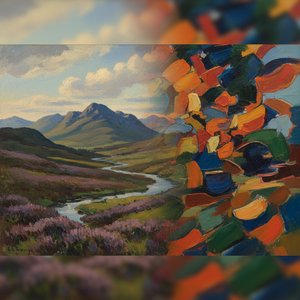
“Edinburgh Abstract” by Sir William George Gillies (1898–1973) stands as a testament to the burgeoning modernist movement in Scotland during the 1930s. Painted circa 1936-1938, this striking oil on canvas captures not just a cityscape but also an emotional resonance that speaks volumes about Gillies’ artistic vision.

Influences and Artistic Style

Gillies' journey into abstraction began with a profound engagement with Cubism – specifically the pioneering work of Picasso and Braque. His formative years in Paris exposed him to the revolutionary ideas circulating at the time, shaping his approach to composition and color palettes. Unlike the muted tones favored by many contemporaries, Gillies deliberately employed bold hues, mirroring the influence of Paul Klee’s imaginative use of color and prioritizing childlike spontaneity.

Technique and Composition

The painting's textured surface is achieved through a meticulous layering technique—a hallmark of Gillies’ style. Thick impasto strokes dominate the canvas, creating palpable physicality and emphasizing the materiality of paint itself. The central bridge dominates the visual field, rendered in stark geometric lines against a backdrop of fragmented architectural forms. These shapes aren’t merely representational; they serve as conduits for conveying mood and dynamism—a deliberate departure from traditional landscape painting.

Historical Context and Symbolism

Created during a period marked by significant artistic experimentation, “Edinburgh Abstract” reflects the broader anxieties and aspirations of its time. Gillies' exploration of color and form aligns with the modernist impulse to challenge conventions and express inner experience. The inclusion of a clock subtly underscores themes of time and memory—elements frequently revisited in Gillies’ oeuvre. Furthermore, the cityscape itself embodies the spirit of Edinburgh – a city undergoing rapid modernization while retaining its historic charm.

Emotional Impact

"Edinburgh Abstract" isn't merely a depiction of a place; it’s an invitation to contemplate beauty and complexity simultaneously. The painting evokes feelings of contemplation and wonder, mirroring Gillies’ own fascination with capturing the essence of Scottish landscapes. Its vibrant colors and textured surface stimulate the senses, transporting viewers into a realm where geometric precision harmonizes with emotive expression—a truly remarkable achievement of artistic vision.


Biografie artist

Early Life and Artistic Beginnings

Sir William George Gillies, born in Haddington, a charming market town nestled in East Lothian, Scotland, on September 21st, 1898, embarked on an artistic journey that would profoundly shape the landscape of Scottish art. His early years were marked by a deep connection to his native land – a connection that would become inextricably woven into the very fabric of his paintings. Initially enrolled at the Edinburgh College of Art, Gillies’ studies were abruptly interrupted by the exigencies of World War I, where he served with distinction as an engineer in the Royal Engineers. This experience, steeped in the realities of conflict and loss, undoubtedly left an indelible mark on his psyche and would later inform the somber undertones that occasionally permeate his work. Following the war’s conclusion, Gillies returned to complete his education at the Edinburgh College of Art, ultimately graduating and dedicating himself to a career as both a painter and a teacher – a dual role that profoundly shaped his artistic development and legacy.

A Journey Through Modernism: Cubism and Beyond

Gillies' artistic trajectory began with an enthusiastic exploration of Cubism in the early 1920s, spurred by his studies under André Lhote in Paris and a subsequent visit to Italy. This initial foray into the avant-garde movement is vividly reflected in works such as “Two Pots, Saucer and Fruit” (1933), where he skillfully employed Cézanne’s principles of spatial arrangement alongside the understated color palettes characteristic of artists like Braque and Picasso. However, Gillies possessed a deeply rooted sensibility that resisted rigid adherence to any single style. A pivotal moment arrived in 1934 when he encountered the evocative works of Paul Klee – an encounter that ignited within him a desire for greater imaginative freedom and a more childlike approach to composition. This influence is particularly evident in his later paintings, where bold colors and simplified forms create a sense of wonder and delight. Gradually, Gillies moved away from the strict constraints of Cubism, forging a distinctive style firmly rooted in Scottish landscape traditions and still life compositions.

The 1922 Group: A Hub of Innovation

In 1922, Gillies played a crucial role in establishing the “1922 Group,” alongside fellow artists such as William Crozier, William Geissler, and William MacTaggart. This collective served as more than just an exhibition society; it functioned as a vital incubator for emerging Scottish talent, providing a platform for their work to be showcased at the New Gallery in Edinburgh – a space that had previously been dominated by established artists. The “1922 Group” fostered a remarkable sense of community and collaboration within the Scottish art scene, encouraging experimentation and pushing the boundaries of artistic expression. It was a period of intense creativity and shared ambition, laying the groundwork for future generations of Scottish painters.

Themes and Artistic Expressions: Landscape, Still Life, and Loss

Gillies’ artistic output is characterized by two primary thematic concerns: landscapes and still lifes. He possessed an extraordinary ability to capture the essence of the Lothian, Fife, and Border regions of Scotland – translating their rugged beauty, atmospheric subtleties, and intimate details onto canvas with remarkable sensitivity. His landscapes are not merely depictions of scenery; they are imbued with a profound sense of place, reflecting his deep connection to the land and its history. Simultaneously, Gillies devoted considerable attention to still life compositions, often featuring ceramics crafted by his younger sister, Emma Smith Gillies – whose untimely death in 1936 profoundly impacted him. These still lifes, frequently dominated by muted tones and melancholic subjects, serve as poignant reminders of loss and the fragility of life. The influence of Klee is particularly apparent in these works, where a childlike quality and imaginative use of color are employed to evoke emotion and create a sense of intimacy.

Recognition and Legacy: A Lasting Impact

Throughout his distinguished career, Sir William George Gillies received numerous accolades recognizing his artistic merit and contributions to the Scottish art world. He was elected as an Associate of the Royal Scottish Academy in 1940 and subsequently became a full Academician in 1947. In 1957, he was awarded the Commander of the Order of the British Empire (CBE) for his services to art, followed by knighthood in 1970. His legacy extends far beyond his individual paintings; he served as Principal of the Edinburgh College of Art from 1959 until his retirement in 1966, shaping the artistic development of countless students and leaving an enduring mark on the institution. His works are now held in prestigious collections across Scotland and internationally, including the National Galleries of Scotland, Aberdeen Art Gallery, and the Royal Scottish Academy – a testament to the lasting impact of this remarkable artist. Gillies died peacefully at his home in Temple, Midlothian, on April 15th, 1973, leaving behind a body of work that continues to captivate and inspire viewers today.

William George Gillies

William George Gillies

1898 - 1973 , Regatul Unit al Marii Britanii și Irlandei de Nord

Informații rapide

  • Artistic Movement Or Style:
    • Cubism
    • Landscapes
  • Artists Or Movements Influenced By This Artist: ['Scottish Colourists']
  • Artists Who Influenced This Artist:
    • André Lhote
    • Cézanne
    • Braque
    • Picasso
    • Paul Klee
  • Date Of Birth: 1898
  • Date Of Death: 1973
  • Full Name: Sir William George Gillies
  • Nationality: Scottish
  • Notable Artworks:
    • Two Pots...
    • Mediterranean...
    • Still Life – Yellow Jug...
  • Place Of Birth: Haddington, UK
Explorați opere de artă organizate pe teme, stiluri și caracteristici.