The Bridesmaid: A Glimpse into Victorian Sentiment
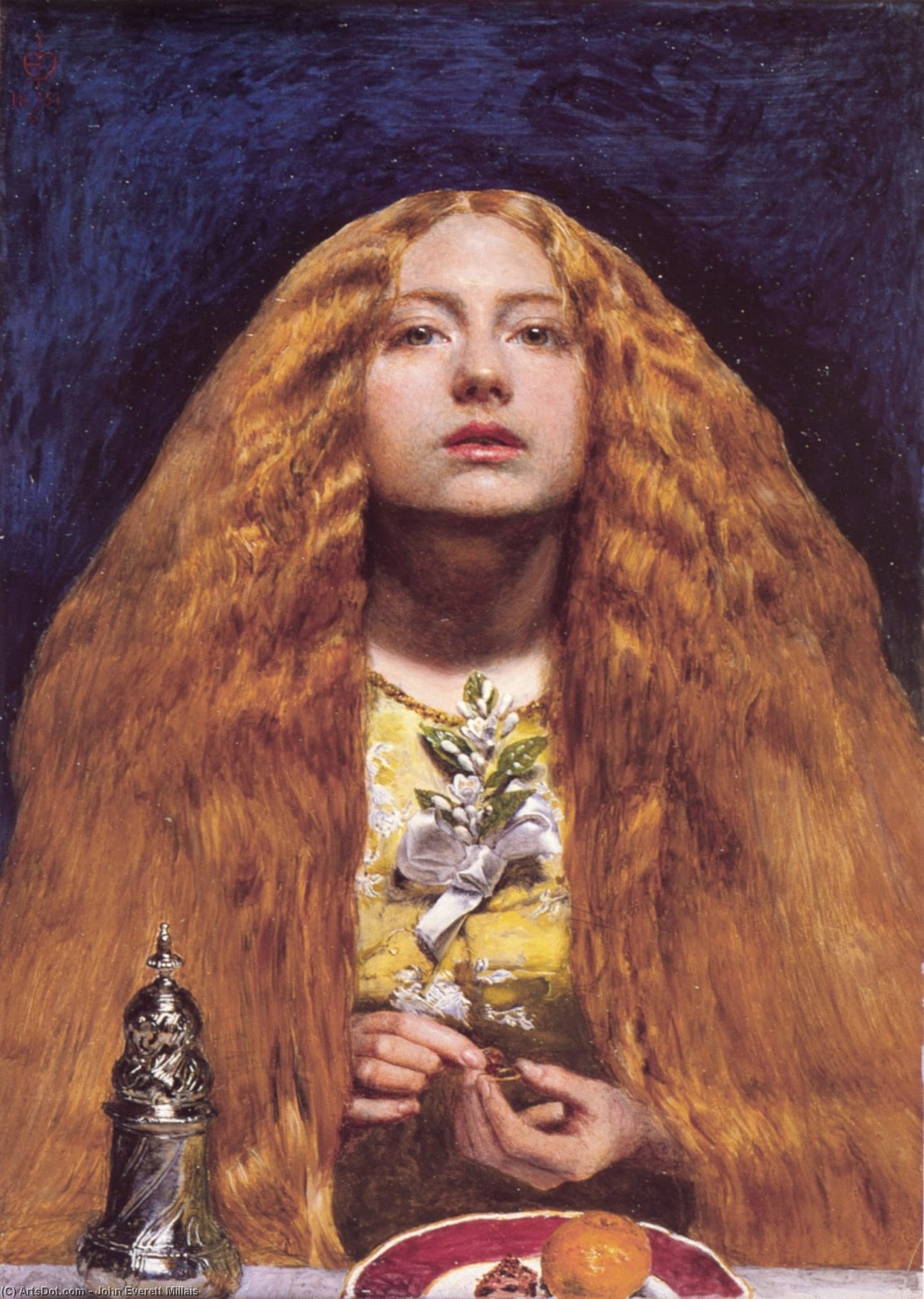
“The Bridesmaid,” painted by Sir John Everett Millais in 1851, is more than just a portrait; it's a window into the intricate social customs and romantic sensibilities of Victorian England. This captivating work depicts a young woman, seemingly caught in a moment of quiet contemplation following her role as a bridesmaid at a wedding ceremony. The painting’s enduring appeal lies not only in Millais’ masterful technique but also in its subtle yet profound exploration of themes like love, expectation, and the passage of time.
Artistic Style and Influences: Pre-Raphaelitism and Realism
Millais' "The Bridesmaid" is a prime example of the Pre-Raphaelite Brotherhood’s artistic philosophy. Founded in 1848 by Millais, William Holman Hunt, and Dante Gabriel Rossetti, this movement sought to reject what they perceived as the artificiality of academic art and return to the detailed observation and vibrant colors of early Renaissance painting – before Raphael, hence "Pre-Raphaelite." However, Millais also incorporated elements of realism into his work. Notice the meticulous rendering of the woman’s hair, the textures of her dress, and the details of the objects in the background—all hallmarks of a commitment to portraying reality with exceptional accuracy.
Symbolism and Interpretation: A Narrative Unveiled
Beyond its aesthetic beauty, "The Bridesmaid" is rich in symbolic meaning. The scene depicts the woman performing a traditional Victorian custom – passing a piece of wedding cake through a ring nine times, hoping to foresee her future husband. This ritual speaks to the era’s emphasis on marriage and the societal expectations placed upon young women. The inclusion of two apples resting on a table adds another layer of interpretation; apples have long been associated with love, wisdom, and abundance, suggesting that the subject is contemplating her own life and relationships. The clock in the upper left corner subtly reinforces the theme of time's passage and the fleeting nature of youth and opportunity. The woman’s expression—a blend of hope and perhaps a touch of melancholy—invites viewers to ponder her inner thoughts and feelings.
Historical Context: Victorian Society and Artistic Innovation
“The Bridesmaid” was created during a period of significant social change in England. The Victorian era (1837-1901) was characterized by rapid industrialization, strict moral codes, and a growing emphasis on domesticity. Millais’ painting reflects these values while simultaneously challenging them through its realistic portrayal of everyday life and its exploration of female subjectivity. The Pre-Raphaelites were often critical of the materialism and social inequalities of their time, and "The Bridesmaid," with its quiet intimacy and subtle symbolism, can be seen as a commentary on the complexities of Victorian society.
A Timeless Masterpiece: Owning a Reproduction
“The Bridesmaid” remains a beloved work of art, admired for its beauty, technical skill, and evocative storytelling. Handmade oil painting reproductions are available, allowing you to bring this iconic piece into your own home or collection. Experience the charm and depth of Millais’ masterpiece—a testament to the power of art to capture the essence of a bygone era.


 Previzualizare
 Comută pe Print
 Trimite
 Distribuie
 Detalii despre lucrare

 Descarcă
 Produse similare
 Radiografie
 Diapozitive automate
 Statistici


 Vezi mai mult






































 Opțiunea cu sticlă este disponibilă doar pentru dimensiuni de sub 110 cm


