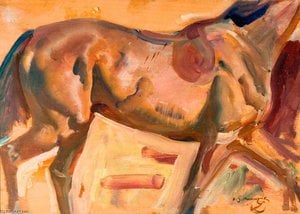
A Life Immersed in Equine Grace
Sir Alfred James Munnings, un nume inextricabil legat de reprezentarea vibrantă a cailor și de farmecul romantic al Angliei rurale, ocupă o poziție centrală în arta britanică a secolului XX. Născut în 1878, în mijlocul peisajelor ondulate din Suffolk, viața sa a fost profund modelată de o conexiune durabilă cu lumea ecvestă – o legătură care i-a definit viziunea artistică și l-a propulsat spre proeminență. Munnings nu doar că înregistra ce vedea; el păstra o senzație, o atmosferă, un univers aflat pe punctul de a se schimba ireversibil. El captura un mod de viață dispărut, un portret atent observat al Angliei impregnată de tradiție, vânătoare și ritmurile vieții la țară.
De la Origini Rurale la Dezvoltare Artistică
Călătoria artistică a lui Munnings nu a început în limitele formale ale unei academii, ci în lumea practică a unei tipografii din Norwich. Acest stagiu de ucenicie i-a perfecționat abilitățile în design și observație, permițându-i să studieze simultan la Școala de Artă din Norwich. A fost o perioadă formativă, instillând o disciplină care l-a servit bine pe măsură ce a navigat provocările stabilirii sa ca artist. Influențele timpurii au inclus pictorii *plein air* ai Școlii Newlyn din Cornwall, unde a îmbrățișat angajamentul lor de a captura lumina și atmosfera direct din natură. Această imersiune în tehnicile impresioniste a pus bazele stilului său distinctiv – contururi largi, o paletă vibrantă și un sentiment palpabil de mișcare. Lucrările sale timpurii au reprezentat adesea scene rurale, în special cele cu țigani și cai care păsc în peisajul Suffolk, impregnate de o sensibilitate romantică care evidenția creșterea sa în măiestrie a culorilor și a luminii. Aceste picturi nu erau doar reprezentări; ele erau expresii ale unei afecțiuni profunde pentru pământ și locuitorii săi.
Război, Recunoaștere și un Apărător al Tradiției
Primul Război Mondial a modelat profund atât perspectiva artistică a lui Munnings, cât și profilul său public. Deși inițial considerat nepotrivit pentru serviciu activ, el a servit ca artist de război cu Brigada Cavaleriei Canadiene, documentând rolul vital al cailor în conflict. Această experiență l-a adus față în față cu realitățile dure ale războiului – suferința, pierderea și legătura durabilă dintre oameni și animale. Picturile sale din această perioadă nu sunt glorificări ale luptei, ci reflecții tulburate asupra sacrificiului și a rezilienței, capturând o frumusețe sumbră în mijlocul devastării. Anii postbelici au marcat o creștere a popularității lui Munnings și a securității sale financiare. Comisioane prestigioase au intrat în posesie de el, permițându-i să achiziționeze Castle House în Dedham, Essex – o proprietate care a devenit atât casa sa, cât și studioul său pentru restul vieții. A devenit un portretist solicitat, capturând trăsăturile fizice, dar și personalitatea personajelor. Abilitatea sa de a transmite nu doar asemănarea fizică, ci și caracterul și spiritul l-a consacrat ca unul dintre cei mai buni pictori ai Angliei. Cu toate acestea, Munnings a fost și un apărător vehement al valorilor artistice tradiționale.
O Voce Controversată și Moștenire Durabilă
Filosofia artistică a lui Munnings era profund înrădăcinată în tradiție, iar el a devenit o voce vocală critică față de mișcările modernist care puneau sub semnul întrebării concepțiile convenționale despre artă. Discursul său radio din 1949, adesea controversat (și probabil alimentat de alcool), l-a văzut lansând o critică aprigă împotriva Cubismului și Surrealismului. Deși comentariile sale au stârnit indignare printre susținătorii artei moderne, ele au rezonat și cu cei care apreciau pictura reprezentativă și puterea durabilă a măiestriei artistice. El nu se opunea schimbării doar pentru că, ci credea în importanța păstrării standardelor artistice și a celebrării frumuseții în formele sale tradiționale. Această convicere s-a concretizat în alegerea sa ca Președinte al Royal Academy în 1944, o poziție pe care a deținut-o până în 1949, consolidând statutul său în cadrul instituției artistice britanică. A fost ridicat la rang de cavaler în 1944 și numit Cavaler Lord Commander al Ordinului Regal Victorian în 1947, recunoscând astfel contribuțiile sale la viața culturală a națiunii.
Realizări Majore
- Președinte al Royal Academy: Alegerile ca Președinte al Royal Academy în 1944, servind până în 1949.
- Cavaler: Ridicat la rang de cavaler în 1944 și numit Cavaler Lord Commander al Ordinului Regal Victorian în 1947.
- Comisii de artist de război: Recunoscut pentru lucrarea sa documentând Brigada Cavaleriei Canadiene în timpul Primului Război Mondial.
- Lucrări sculpturale: A creat sculpturi, inclusiv o statuie ecvestă a lui Edward Horner.
Moștenirea sa durează nu numai prin măiestria sa artistică, ci și ca un apărător pasionat al tradiției artistice într-o lume în continuă modernizare.



 Vezi în context
 Comandă pictură realizată manual
 Trimite
 Distribuie
 Detalii
 Ghid
Ghid

 Descarcă
 Produse similare
 Radiografie
 Diaporama
 Statistici


 Citește mai mult






































 Opțiunea cu sticlă este disponibilă doar pentru dimensiuni de sub 110 cm