


Pictură în ulei pe pânză, realizată manual de artiștii noștri la dimensiunea și ramele dorite de dumneavoastră, pe comandă. ( Comandă printul Cumpără imaginea)





























Alegeți dintre dimensiunile noastre prestabilite, care respectă proporțiile originale ale operei de artă.

Puteți introduce propriile dimensiuni pentru a se potrivi unui anumit cadru sau spațiu. Dacă dimensiunea selectată nu corespunde proporțiilor imaginii originale, vom decupa opera de artă sau vom extinde pictura cu elemente suplimentare pictate manual. O simulare digitală vă va fi trimisă pentru aprobare înainte de începerea producției.
Vă rugăm să rețineți că previzualizarea de pe ecran nu reflectă decuparea sau extinderea reală. Doar macheta va arăta cu exactitate compoziția finală.
Deși sunt disponibile dimensiuni personalizate, vă recomandăm să selectați o dimensiune din lista predefinită pentru a păstra proporțiile originale.
Livrare în întreaga lume () în 3-4 săptămâni, în loc de cele 5 săptămâni standard. (7 Septembrie). Fără compromisuri în ceea ce privește calitatea.


Kasui
Dimensiune reproducere
“Kasui,” painted in 1922 by Shōroku Yanase, is more than just an abstract composition; it's a potent distillation of the artistic ferment brewing within Japan at the cusp of the modern era. Born in Eshima in 1900, Yanase’s early life, spent largely in Fukuoka, instilled in him a restless curiosity and a willingness to embrace diverse creative avenues – a characteristic that would define his prolific career. This particular work, with its bold interplay of red, blue, and purple, exemplifies this spirit, offering a glimpse into the burgeoning modernist movement while retaining a distinctly Japanese sensibility.
The painting’s power lies in its unapologetic use of color. Yanase doesn't employ color for representational purposes; instead, he harnesses it to evoke emotion and create dynamic visual rhythms. The dominant red shapes, strategically placed on the right side, command immediate attention – a deliberate choice that speaks to the influence of Western Expressionism, yet tempered by a uniquely Japanese aesthetic. Juxtaposed against this fiery intensity are the cooler tones of blue and purple, creating a compelling tension within the composition. The artist’s technique suggests a layering approach, likely utilizing oil paints applied with varying degrees of opacity to build depth and texture. The loose brushwork contributes to the painting's energetic feel, avoiding any sense of rigid control.
1922 represents a pivotal moment in Japanese history. The nation was grappling with rapid industrialization, social upheaval, and a growing desire to forge its own path away from traditional constraints. Yanase’s artistic experimentation reflects this broader cultural shift. While influenced by European modernism – particularly the Fauves and early Expressionists – he wasn't simply replicating Western styles. Instead, he adapted these influences to his own unique vision, creating something distinctly Japanese in its emotional intensity and formal approach. The painting can be seen as a visual manifestation of Japan’s burgeoning modernity, a bold declaration of artistic independence.
The title “Kasui,” which translates roughly to "pure" or "unadorned," hints at the painting's core intention. It suggests an attempt to strip away superficiality and reveal something fundamental – perhaps a primal emotion, or a raw expression of form. The vibrant colors themselves carry symbolic weight; red often associated with passion, energy, and even danger, while blue and purple evoke feelings of serenity, spirituality, and introspection. Ultimately, “Kasui” is a powerfully emotive work that invites the viewer to engage in a direct dialogue with its visual language. It’s a testament to Yanase's skill in translating complex ideas into a visually arresting experience.


1900 - 1945 , Japan

Descoperă top 10 picturi celebre dominate de nuanțe subtile de albastru! Explorează poveștile din spatele capodoperelor Monet, Renoir și Van Gogh. Inspirație decor interior & reproducere tablouri pe WahooArt.com

Descoperă cele mai emblematice 25 de opere ale lui Wassily Kandinsky, pionierul artei abstracte! Explorează culorile vibrante, compozițiile unice și istoria fascinantă din spatele fiecărei picturi. Reproduceri de calitate muzeală pe WahooArt.com – inspiră-ți decorul cu artă modernă!

Descoperă Top 10 capodopere ale Expresionismului Abstract! Explorează poveștile lui Pollock, Rothko și De Kooning. Reproduceri de artă de lux & inspirație decor pe WahooArt.ro. Găsește pictura perfectă pentru spațiul tău!

Descoperă cele mai importante 10 capodopere ale abstracției geometrice! Explorează istoria, artiștii (Mondrian, Kandinsky) și culorile vibrante care au definit arta modernă. Reproduceri de tablouri de lux pe WahooArt.com pentru un decor interior rafinat. Explorează colecția online!
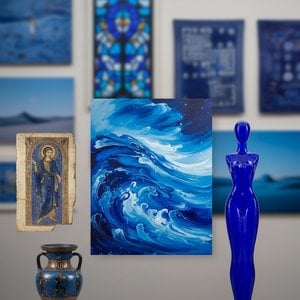
Explore the rich history of blue in art! Discover its symbolism, from ancient pigments to modern masterpieces by Kandinsky & Seurat. Uncover the psychological impact and cultural meanings behind this captivating hue.

 Previzualizare
 Trimite
 Distribuie
 Detalii despre lucrare

 Descarcă
 Produse similare
 Radiografie
 Diapozitive automate


 Vezi mai mult







 Opțiunea cu sticlă este disponibilă doar pentru dimensiuni de sub 110 cm


