

Lucrarea de artă afișată pe această pagină este protejată de legile privind drepturile de autor, ceea ce înseamnă că nu putem crea sau vinde în mod legal o reproducere identică. Această protecție este garantată prin acorduri internaționale, precum Convenția de la Berna și de legile naționale, inclusiv cele prevăzute de Legea dreptului de autor din S.U.A. – Titlul 17. Toate drepturile rezervate. Orice reproducere neautorizată este interzisă.
Această metodă respectă pe deplin reglementările privind drepturile de autor, deoarece nu implică copierea sau duplicarea operei protejate. În schimb, este o reinterpretare creativă – o pictură nouă, influențată de original, dar care nu este identică cu acesta.
Printuri giclée sau pe canvas de calitate muzeală, cu proces de producție rapid și opțiuni flexibile de finisare. ( Comandă pictură realizată manual Comută pe Imagine Digitală)
Alegeți dintre dimensiunile noastre prestabilite, care respectă proporțiile originale ale operei de artă.

Introduceți lățimea și înălțimea necesare pentru a se potrivi ramei sau peretelui dumneavoastră. O printare poate fi doar tăiată, niciodată extinsă dincolo de dimensiunea imaginii originale, astfel încât o dimensiune cu o formă diferită va pierde o parte din imagine. Vă trimitem o simulare digitală pentru aprobare înainte de a imprima orice. Imaginea afișată pe această pagină nu prezintă tăierea reală — doar simularea arată acest lucru.
Livrare în întreaga lume () în 2 săptămâni, în loc de cele 4/5 săptămâni standard. (12 Noiembrie)
Prototype for a laced shoe
Dimensiune reproducere
Prototype for a laced shoe is a prototype created by Salvatore Ferragamo in 1938. This work originated in Florence, Italy, during a period of significant artistic and cultural transition. It represents an early conceptual stage in the designer's development of footwear design.
The piece, titled Prototype for a laced shoe, was produced by Salvatore Ferragamo as a study of form and color. It exists as a physical model intended to explore the intersection of functional footwear and avant-garde aesthetic principles. This specific iteration highlights the designer's move toward experimental silhouettes and unconventional material pairings.
The composition focuses on a single brown shoe, presented as a conceptual model. A wooden heel provides a structural foundation, creating a stark material contrast against the softer elements of the design. The silhouette is defined by streamlined lines that prioritize form over ornamentation.
A colorful sock is positioned within the shoe, featuring a rainbow pattern. This element introduces a spectrum of hues that interrupts the muted brown tones of the leather. The juxtaposition of the multicolored fabric against the solid, dark surface of the shoe creates a deliberate visual tension. The arrangement emphasizes a departure from traditional footwear aesthetics through this use of unexpected color and material pairing.
The construction of this prototype utilizes felt decorated with cotton stripes. This choice of medium emphasizes the conceptual nature of the object, prioritizing form and color over traditional leatherwork. The fabric sock features a rainbow pattern, providing a sharp chromatic contrast to the muted tones of the shoe's body.
The piece measures 22 cm in height. The heel, which provides a structural counterpoint to the soft fabric elements, reaches a height of 7 cm. These dimensions reflect the experimental approach taken during the design process in Florence, Italy.
This prototype is held within the Salvatore Ferragamo Museum in Florence, Italy. Also known as the Museo Salvatore Ferragamo or the Ferragamo Museum, the institution was established in 1995. It functions as a repository for the designer's extensive creative output, housing a collection that contains over 10,000 models.
The museum is situated in a setting that reflects the historical significance of the region's craftsmanship. By preserving such diverse prototypes, the collection provides a record of technical experimentation and the evolution of footwear design from the early 20th century through the mid-century period.
The artist's experimental approach to footwear is evident in several other designs from the early to mid-twentieth century. In 1935, he produced the Prototype for a court shoe. This was followed by the 1938 Rainbow wedge sandal, a piece that shares the same era of innovation as the laced shoe prototype. These works reflect a period of intense technical development and material experimentation.
Earlier explorations in form can be seen in the Prototipo di décolleté from 1929. Later, around 1940, the artist produced Evening Shoes. These various models demonstrate a consistent focus on the intersection of sculptural design and functional anatomy throughout his career.
"Prototype for a laced shoe" de Salvatore Ferragamo poate fi descărcat de pe pagina dedicată lucrării, Descărcare, sub formă de descărcare imagine digitală de înaltă rezoluție.
Paleta lucrării "Prototype for a laced shoe" are o saturație de Muted.
"Prototype for a laced shoe" de Salvatore Ferragamo, păstrat la Museo Salvatore Ferragamo, este încă protejată de drepturile de autor. Acest statut determină dacă pot fi realizate reproduceri ale imaginii.


1898 - 1960 , Italia

Discover the unparalleled elegance of Art Deco through the lens of Erté. Explore a masterclass in linear precision, theatrical costume design, and high-fashion illustration that continues to define modern luxury and sophisticated interior aesthetics.

Embark on a visual journey through the evolution of fashion photography. Discover how masters like Gianfranco Ferré blended geometry, surrealism, and texture to redefine high-fashion art for collectors and connoisseurs of luxury imagery.

Explore the profound beauty of the Italian Renaissance. From Raphael's divine frescoes to Michelangelo's anatomical mastery, discover how this era of classical grandeur and humanistic ideals continues to inspire the world's most sophisticated art collectors and designers.
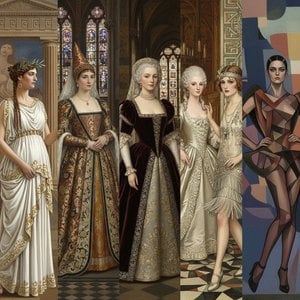
Explore the breathtaking intersection of fine art and high fashion. Discover how iconic masterpieces from Art Deco to Impressionism have shaped the world of luxury couture and timeless design in this curated visual journey.

Discover the exquisite world of fashion illustration art. From Art Deco elegance to bespoke oil reproductions, explore how timeless sartorial beauty transforms luxury interiors through masterfully crafted canvas works and curated historical masterpieces.
 Trimite prin felicitare
 Distribuie
 Detalii despre lucrare
 Ghid
Ghid

 Descarcă imaginea
 Produse similare
 Galerie foto
 Întrebări și răspunsuri
 Statistici


 Vezi mai mult






































 Opțiunea cu sticlă este disponibilă doar pentru dimensiuni de sub 110 cm


