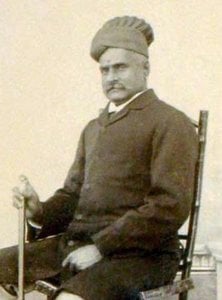
The Princely Brush: Raja Ravi Varma and the Dawn of Modern Indian Painting
Raja Ravi Varma, a name that echoes through the halls of Indian art history, wasn’t merely a painter; he was a cultural architect, a bridge between tradition and innovation. Born in 1848 within the opulent confines of Kilimanoor Palace, nestled amidst the verdant hills of Kerala, his life unfolded as a remarkable synthesis of aristocratic privilege and an incandescent creative spirit. He didn't simply capture images on canvas; he breathed life into ancient myths, imbued them with human emotion, and ultimately, reshaped how India perceived its own artistic heritage. Ravi Varma’s lineage was deeply intertwined with the Travancore royal family – two of his daughters were later adopted into the court, a testament to his noble standing and the profound respect he commanded. From a young age, a keen eye for detail and an innate talent for drawing manifested itself within the palace walls, nurtured initially by his uncle, Raja Raja Varma, who recognized and cultivated this burgeoning artistic ability. This early training, rooted in the established Tanjore School tradition, provided a solid foundation, but Ravi Varma’s ambition extended far beyond mere imitation; he yearned to master techniques that would allow him to translate not just likeness, but also feeling and narrative depth onto canvas.
A Fusion of Worlds: Technique and Inspiration
Ravi Varma's artistic journey took an extraordinary turn during his travels – both within India and through interactions with British officials stationed in the region. He became utterly captivated by the meticulous realism and technical precision of European academic painting, diligently studying its principles: perspective, anatomy, light, and shadow. This wasn’t a simple appropriation; rather, it was a masterful adaptation. Unlike many of his contemporaries who merely replicated Western styles, Varma ingeniously integrated these techniques into his own distinctly Indian subject matter. His canvases transformed into vibrant stages for scenes drawn from the Ramayana, the Mahabharata, and the Puranas – epic tales brought to life with an unprecedented level of naturalism. He didn’t simply illustrate religious stories; he imbued them with palpable human emotion, psychological complexity, and a profound sense of drama. Consider his portrayal of *Shakuntala*, for instance—a scene brimming with longing, vulnerability, and quiet strength. The heroine's gaze, rendered with exquisite detail, conveys a depth of feeling previously unseen in Indian art. Similarly, *The Maharani of Travancore* is not merely a portrait; it’s a study of regal composure, capturing both the outward appearance of power and the subtle nuances of inner character. This fusion of European academic rigor and deeply rooted Indian aesthetics was revolutionary—a testament to Ravi Varma's artistic vision. His embrace of oil painting – a relatively new medium in India at the time – further amplified his ability to achieve an astonishing level of detail, luminosity, and emotional resonance.
Democratizing Art: Lithographs and Public Appeal
Raja Ravi Varma’s influence extended far beyond the confines of royal courts and art circles. Recognizing that original paintings were largely inaccessible to the vast majority of Indians, he took a bold step—establishing the Raja Ravi Varma Fine Arts Lithographic Press in 1894. This groundbreaking venture marked a pivotal moment in Indian art history: it allowed for the mass production of affordable lithographs based on his iconic works. Suddenly, images of Hindu deities and mythological scenes were no longer confined to temples or palaces; they adorned homes across India, becoming objects of worship, cultural pride, and accessible beauty for all. These weren’t mere reproductions; they were carefully crafted interpretations—each lithograph a testament to Ravi Varma's artistic vision. The act of “democratizing art” had a profound and lasting impact on Indian society, fostering a wider appreciation for visual culture and fundamentally shaping how Indians perceived their own religious iconography. The *Hansa Damayanthi* lithograph, perhaps one of his most beloved creations, became a ubiquitous symbol of Indian identity, its image reproduced countless times and cherished by generations.
Royal Portraits and Artistic Patronage
Ravi Varma’s career was further enriched through royal patronage. He served as court painter to several prominent princely states – Mewar, Baroda, and Mysore – each offering unique artistic challenges and opportunities. These experiences broadened his artistic horizons, exposing him to diverse cultural traditions and refining his skills. His portraits of Indian and British dignitaries were particularly noteworthy, capturing the essence of both cultures with remarkable sensitivity and detail. The meticulousness evident in these works reflects Ravi Varma’s dedication to portraying subjects with accuracy and grace. His ability to capture not only physical likeness but also personality and character was a hallmark of his artistic style.
Legacy and Enduring Influence
Raja Ravi Varma passed away in 1906, leaving behind an indelible mark on the landscape of Indian art. He wasn’t just a painter; he was a pioneer who challenged conventional norms, embraced innovation, and skillfully blended tradition with modernity. His influence can be seen in the works of subsequent generations of Indian artists who sought to forge a distinctly national artistic identity. Museums like The Raja Ravi Varma Heritage Foundation and The Ganesh Shivaswamy Foundation continue to preserve and celebrate his legacy, ensuring that his vision endures for future generations. His paintings remain powerful testaments to his genius—masterpieces that capture the beauty, spirituality, and cultural richness of India. He truly transformed the way Indians perceived art and their own cultural heritage, solidifying his place as one of the most important figures in Indian artistic history.
Exploring Varma’s World Today
For those seeking to delve deeper into the world of Raja Ravi Varma, numerous resources are available:
- Explore artworks: Discover masterpieces like "Portrait of a Gentleman," "Hansa Damayanthi," and "The Maharani of Travancore" through online databases.
- Visit museums: Immerse yourself in Varma’s legacy at The Raja Ravi Varma Heritage Foundation, The Ganesh Shivaswamy Foundation, and the Kiran Nadar Museum of Art.
- Further research: Consult Wikipedia and Google Arts & Culture for detailed biographical information and scholarly insights.
Raja Ravi Varma's story is a testament to the power of art to transcend cultural boundaries, inspire generations, and shape national identity.



 Previzualizare
 Comută pe Print
 Trimite
 Distribuie
 Detalii despre lucrare

 Descarcă
 Produse similare
 Radiografie
 Diapozitive automate
 Statistici


 Vezi mai mult