CONSULTAȚIE GRATUITĂ ÎN ARTE VIZUALE

x
Comandă tipăritul Comandă tipăritulCumpără imaginea Cumpără imaginea TrimiteTrimite
Detalii despre lucrareDetalii despre lucrare Adaugă la favorite Adaugă la favorite DescarcăDescarcă SimilareSimilare RadiografieRadiografie DiaporamaDiaporama

The Tooth Puller

Witness 18th-century Venetian life with Pietro Longhi's genre scene of a tooth puller; capture the intimate drama of daily existence from this exquisite print.

Pietro Longhi (1701-1785) este pictor venezian cunoscut pentru scenele sale genere din epoca lui Hogarth, capturate cu finețe satirică și realism impresionist – maestru în reprezentarea vieții cotidiană și a societății venețiene.

Reproducere manuală în ulei

Pictură în ulei pe pânză, pictată manual, la dimensiunea și ramele dorite de dumneavoastră, realizată la comandă de artiștii noștri.

Standard
custom
CM
INCH

Alegeți dintre dimensiunile noastre prestabilite, care respectă proporțiile originale ale operei de artă.

lățime
înălțime

Puteți introduce propriile dimensiuni pentru a se potrivi unui anumit cadru sau spațiu. Dacă dimensiunea selectată nu corespunde proporțiilor imaginii originale, vom decupa opera de artă sau vom extinde pictura cu elemente suplimentare pictate manual. O simulare digitală vă va fi trimisă pentru aprobare înainte de începerea producției.
Vă rugăm să rețineți că previzualizarea de pe ecran nu reflectă decuparea sau extinderea reală. Doar macheta va arăta cu exactitate compoziția finală.
Deși sunt disponibile dimensiuni personalizate, vă recomandăm să selectați o dimensiune din lista predefinită pentru a păstra proporțiile originale.

Exemple de elemente ce pot fi modificate: Înlocuiți fața cu fotografia clientului; Adăugați un animal de companie (de exemplu, înlocuiți pisica cu un câine); Includeți un mesaj ascuns în fundal; Schimbați peisajul sau elementele din fundal.
După plasarea comenzii, echipa WahooArt.com va trimite clientului instrucțiuni prin e-mail și îi va furniza o previzualizare a machetei

Livrare în întreaga lume () în 3/4 săptămâni, în loc de cele 5 săptămâni standard. (5 Iulie). Fără compromisuri în ceea ce privește calitatea.

why_choose_icon
Livrare expres gratuită la nivel mondial
why_choose_icon
Pânză de in de înaltă calitate
why_choose_icon
Asigurare completă pentru transport
why_choose_icon
Garanție de rambursare a taxelor vamale
why_choose_icon
Garanția fidelității culorilor
why_choose_icon
Politica de retur de 60 de zile (doar pentru defecte)
why_choose_icon
Garanție 100% de rambursare
why_choose_icon
Reducere la comenzi multiple

Preț total

-

reproduction

The Tooth Puller

Tehnică de reproducere

Dimensiune reproducere

-

Preț total calculat

-

Informații rapide

  • Subject or theme: Everyday life in Venice
  • Title: The Tooth Puller
  • Artist: Pietro Longhi
  • Artistic style: Genre painting
  • Year: 1746

Test de cunoștințe despre artă

Fiecare întrebare are un singur răspuns corect.

Întrebare 1:
What is the primary subject matter depicted in 'The Tooth Puller'?
Întrebare 2:
Which city is the artist, Pietro Longhi, most associated with depicting scenes from?
Întrebare 3:
Pietro Longhi is best known for painting which genre of subject matter?
Întrebare 4:
Approximately what year was 'The Tooth Puller' painted?
Întrebare 5:
Based on the description, what kind of setting appears to be in the painting?

Descriere operă de artă

A Glimpse into Venetian Domesticity

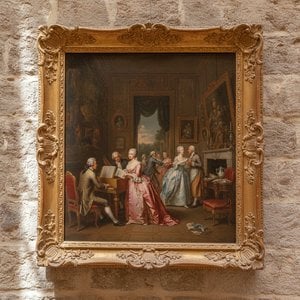
To stand before Pietro Longhi’s depiction of The Tooth Puller is not merely to observe an event; it is to slip, quite unexpectedly, into the vibrant, intimate tapestry of 18th-century Venice. This painting transports us beyond the grand pronouncements of mythology or history that often dominated art, offering instead a profoundly human moment—a scene unfolding within what appears to be a richly furnished domestic space. The composition buzzes with life, capturing a gathering around a central dining table. One can almost hear the murmur of conversation mingling with the focused tension surrounding the procedure taking place in the foreground. Longhi masterfully frames this confluence of everyday activity and minor drama, inviting the viewer not as an objective spectator, but as a privileged guest who has stumbled upon a private moment.

The Art of the Everyday Moment

Pietro Longhi is celebrated precisely because he dared to look at the mundane and find it extraordinary. As a chronicler of daily life, his genius lay in elevating genre scenes—the gatherings, the meals, the simple acts of human interaction—to the level of high art. In The Tooth Puller, the sheer number of figures, numbering at least twelve, creates a complex social ecosystem. They are arranged with an almost theatrical naturalism; some stand observing from the periphery, others are seated in close proximity to the action. This density is not chaotic; rather, it suggests the interwoven nature of community life in Venice—a place where public and private spheres constantly overlapped. The black and white quality of this particular rendition lends a timeless, almost photographic quality, allowing us to focus intensely on gesture, expression, and the subtle dynamics between the assembled company.

Technique and Historical Resonance

The technical brilliance evident in Longhi’s hand is palpable. While the original medium would have allowed for rich color, this reproduction captures the delicate brushwork that defined his style—a lightness of touch paired with an acute understanding of human anatomy and costume. The setting itself, suggested by the dining table and surrounding furniture, speaks volumes about the social strata and domestic elegance of the era. Longhi’s ability to render texture, from the folds of clothing to the polished wood of the room, anchors the viewer firmly in the year 1746. It is a masterclass in observational painting, where the artist acts as both chronicler and skilled illusionist.

Symbolism of Community and Vulnerability

At its heart, the scene carries a subtle undercurrent of vulnerability juxtaposed against communal support. The tooth extraction itself is an act of necessary discomfort, a moment of focused pain managed by expertise. Yet, this singular medical event becomes the focal point for an entire social circle. It symbolizes how human experience—even moments of minor distress—are always shared, witnessed, and absorbed by the surrounding community. For the collector or decorator, owning such a piece is acquiring more than just decoration; it is acquiring a narrative device—a conversation starter that speaks to the enduring power of human connection against the backdrop of daily routine.

Opere de artă similare


Biografie artist

A Venetian Chronicler of Daily Life

Pietro Longhi, born Pietro Falca in Venice on November 5th, 1701, wasn’t painting grand historical narratives or mythological scenes; he was capturing the quiet dramas unfolding within the city's elegant homes and bustling streets. He became renowned for his witty genre paintings – intimate glimpses into the lives of 18th-century Venetians, a departure from the prevailing artistic trends of his time. The son of Alessandro Falca, a silversmith, Longhi’s early training began under the Veronese painter Antonio Balestra, who recognized and nurtured the young artist's talent. This foundation in traditional technique would later serve as a subtle counterpoint to the innovative spirit he brought to his chosen subject matter. He adopted the surname “Longhi” upon beginning his artistic career, a symbolic shedding of his father’s trade for the pursuit of painting.

Early Influences and Artistic Training

Pietro Falca's formative years were marked by exposure to Venetian artistic traditions. His initial mentor was Antonio Balestra, a respected Veronese painter who instilled in him a deep understanding of Venetian painting style—characterized by broken brushwork and luminous color glazes reminiscent of Andrea del Verrocchio’s approach. Recognizing Longhi’s considerable potential, Balestra recommended him to Giuseppe Maria Crespi, another influential Bolognese artist known for his innovative use of light and color. This dual influence shaped Longhi's artistic sensibilities from the outset, grounding him in established conventions while simultaneously encouraging experimentation. He diligently studied Crespi’s techniques, absorbing lessons on composition and perspective—skills that would prove invaluable as he developed his own distinctive style.

Religious Beginnings and Artistic Evolution

Longhi’s early career focused primarily on religious commissions, producing altarpieces and devotional paintings that adhered to the stylistic norms of the era. His 1732 depiction of Saint Pellegrino for the church of San Pellegrino exemplifies this period, showcasing a masterful command of Venetian painting technique—a testament to Balestra's guidance. However, Longhi’s artistic trajectory took an unexpected turn in the late 1730s when he decisively shifted towards genre scenes—a pivotal decision that would solidify his reputation as one of Venice’s most astute observers of human behavior. This transition wasn’t merely a stylistic preference; it represented a profound engagement with the intellectual currents shaping Europe at the time—particularly the burgeoning fascination with bourgeois society and domestic life.

The Venetian Hogarth: Capturing Everyday Life

Longhi quickly earned the moniker “the Venetian Hogarth,” a comparison that speaks volumes about his artistic vision. Like William Hogarth, Longhi eschewed grand historical narratives in favor of portraying scenes from daily life—often infused with subtle satire and psychological insight. Unlike Hogarth’s overtly moralizing tone, Longhi's commentary was more nuanced, employing irony and observation to expose social contradictions without resorting to didactic pronouncements. His paintings are populated by figures engaged in seemingly trivial activities—gambling parlors buzzing with conversation, masked balls glittering with extravagance—yet these scenes reveal deeper truths about human nature and societal dynamics. He possessed an uncanny ability to capture the nuances of emotion and gesture, conveying a sense of immediacy and realism that distinguished him from many of his contemporaries.

Style, Technique, and Legacy

Longhi’s artistic style was characterized by meticulous attention to detail—particularly in depicting textures—and a masterful use of light and color. He favored small canvases, meticulously rendered with delicate brushwork and infused with atmospheric luminescence. His interiors are bathed in soft light, creating an illusionistic depth that draws the viewer into the depicted space. Longhi’s technique was informed by both Balestra's grounding in Venetian tradition and Crespi’s pioneering explorations of chiaroscuro—the dramatic interplay between light and shadow—resulting in a style that blended realism with expressive artistry. His work resonated deeply with audiences of his time, who appreciated its charm and intellectual sophistication. He served as Director of the Academy of Drawing and Carving from 1763, furthering his influence within Venetian artistic circles. Pietro Longhi died peacefully in Venice on May 8th, 1785, leaving behind a legacy that continues to inspire artists and scholars today—a testament to his enduring contribution to Venetian art history.
Pietro Longhi

Pietro Longhi

1701 - 1785 , Italia

Detalii rapide

  • Artistic Movement Or Style: Venetian painting, Rococo
  • Artists Or Movements Influenced By This Artist: ['William Hogarth']
  • Artists Who Influenced This Artist:
    • Antonio Balestra
    • Giuseppe Maria Crespi
  • Date Of Birth: November 5, 1701
  • Date Of Death: May 8, 1785
  • Full Name: Pietro Longhi
  • Nationality: Italian
  • Notable Artworks:
    • The Tailor
    • The Baptism
    • Painter in his studio
  • Place Of Birth: Venice, Italy