O Viață Deslușită: Călătoria lui Piet Mondrian
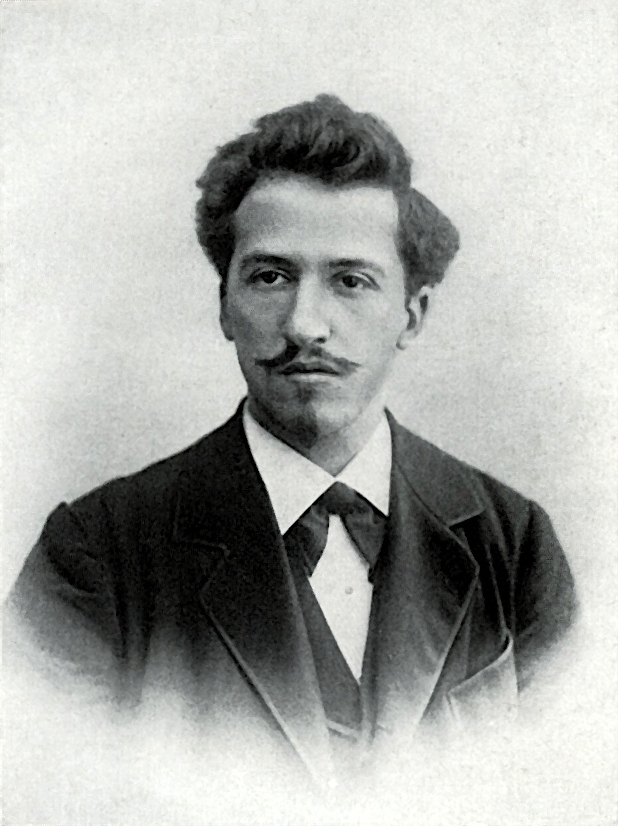
Piet Mondrian, născut Pieter Cornelis Mondriaan în 1872 în liniștitul oraș olandez Amersfoort, nu a urmat o cale imediată spre revelație artistică, ci una graduală. Tinerețea sa a fost impregnată de tradiție; unchiul său, Frits Mondriaan, era deja un pictor consacrat, iar această legătură familială l-a îndrumat inițial către peisagism. Aceste prime lucrări, amintind de Școala de la Haga și Impresionismul olandez – piese precum *Moara Roșie* – dezvăluie un tânăr artist studiind cu sârguință natura, stăpânind tehnica, dar căutând subtil ceva dincolo de simpla reprezentare. Chiar și atunci, o dorință de simplificare părea să tragă de pensulele sale. Nu se mulțumea doar să oglindească lumea; voia să-i distileze esența. Această perioadă timpurie a fost marcată de experimente cu Pointillismul și Fauvismul, fiecare stil oferind o lentilă diferită prin care să privească culoarea și forma, dar niciunul nu i-a satisfăcut pe deplin viziunea artistică în plină dezvoltare. A fost o perioadă de explorare, un preludiu necesar pentru ruptura radicală ce avea să-i definească moștenirea.
Ascensiunea Parisiană și Nașterea Neoplasticismului
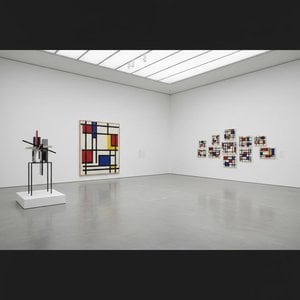
Un moment crucial a sosit în 1912 odată cu mutarea lui Mondrian la Paris. Orașul pulsa de energie avangardistă, iar el s-a trezit scufundat în lumea revoluționară a Cubismului. Această întâlnire s-a dovedit transformatoare. A început să deconstruiască formele, descompunând obiectele în componentele lor geometrice, îndepărtându-se de reprezentarea *ceea ce* vedea către explorarea *cum* îl percepea. Dar Mondrian nu adopta doar un nou stil; se îmbarca într-o căutare spirituală. Profund influențat de Teosofie – o filozofie mistică care sublinia principiile universale ascunse – credea că arta putea fi un vehicul pentru exprimarea acestor adevăruri tainice. Această credință i-a alimentat urmărirea neîncetată a abstracției, determinându-l să reducă culoarea și forma la elementele lor cele mai fundamentale. În jurul anului 1917, această călătorie a culminat cu formularea Neoplasticismului, adesea denumit ‘arta plastică pură’. A fost o estetică radicală bazată pe forme esențiale – linii drepte, unghiuri drepte – și o paletă limitată: culori primare (roșu, albastru, galben), negru, alb și gri. Pentru Mondrian, această reducere nu însemna goliciune; ci dezvăluirea armoniei universale ascunse, o manifestare vizuală a ordinii spirituale. A co-fondat mișcarea *De Stijl* împreună cu Theo van Doesburg pentru a promova aceste idei, consolidând Neoplasticismul ca forță definitorie în arta modernă. Capodopere precum *Compoziție cu Roșu, Albastru și Galben* și *Tableau nr. 2 Compoziția nr. V* stau drept mărturii ale acestei perioade, reprezentări iconice ale angajamentului său neclintit față de puritatea geometrică.
Ritmurile New York-ului: O Înflorire Târzie
Izbucnirea celui de-al Doilea Război Mondial l-a forțat pe Mondrian să fugă din Europa în 1940, găsind refugiu în metropola vibrantă New York. Această relocare s-a dovedit neașteptat de revigorantă. Structura rigidă a orașului – un contrast puternic cu peisajele mai organice pe care le cunoștea – a rezonat cu principiile sale artistice. Lucrările sale ulterioare, în special *Broadway Boogie Woogie* (1943), reflectă această influență. Păstrând totuși elementele de bază ale Neoplasticismului, pictura introduce o energie dinamică, un ritm vibrant inspirat de viața pulsatilă a orașului și muzica jazz. Liniile drepte sunt încă prezente, dar acum dansează și se intersectează cu mai multă libertate, creând un sentiment de mișcare și bucurie. Era ca și cum Mondrian ar fi găsit un nou limbaj în vocabularul său stabilit, o modalitate de a exprima complexitatea existenței urbane moderne prin simplitatea abstracției geometrice. A continuat să-și rafineze stilul până la moartea sa în 1944, lăsând în urmă o operă care continuă să captiveze și să inspire.
O Moștenire Durabilă: Influența Endurantă a lui Mondrian
Impactul lui Piet Mondrian asupra lumii artei este imensurabil. Nu a fost doar un artist; a fost un vizionar care a schimbat fundamental înțelegerea noastră despre abstracție și potențialul său de a exprima adevăruri universale. Opera sa a influențat profund nenumărați artiști, mișcări și discipline. Expresionismul Abstract, Minimalismul și Pictura Color Field îi datorează o datorie spiritului său pionieresc. Dar influența sa se extinde dincolo de pânză. Principiile Neoplasticismului – simplitate, claritate, ordine geometrică – au pătruns în arhitectură, design și modă. De la mobilier și textile până la fațadele clădirilor și machete grafice, estetica lui Mondrian continuă să modeleze lumea noastră vizuală. Rămâne o figură emblematică în arta modernă, un simbol al urmăririi neîncetate a abstracției și a puterii durabile a inovației artistice. Așa cum istoricul de design Stephen Bayley a remarcat cu acuratețe, Mondrian a devenit un “totem pentru tot ceea ce Modernismul a încercat să fie.” Moștenirea sa nu este doar una de frumusețe estetică, ci și de rigoare intelectuală, profunzime spirituală și o credință neclintită în potențialul transformator al artei.
Influențe și Lucrări Cheie
- Influențe Timpurii: Școala de la Haga, Impresionismul Olandez, Pointillismul, Fauvismul au oferit o bază pentru primele sale explorări artistice.
- Influență Transformatoare: Cubismul din Paris a fost crucial pentru trecerea sa către abstracție și forme geometrice.
- Fundația Filosofică: Teosofia l-a informat profund în credința sa că arta poate exprima principii spirituale universale.
- Lucrări Cheie: *Moara Roșie* (perioada naturalistă timpurie), *Compoziție cu Roșu, Albastru și Galben* (Neoplasticism quintessential), *Tableau nr. 2 Compoziția nr. V* (demonstrează reducerea la forme esențiale), *Broadway Boogie Woogie* (dinamism târziu influențat de New York City).
- Impact Durabil: Opera lui Mondrian continuă să inspire artiști, arhitecți și designeri, modelând estetica modernă în diverse discipline.
Principiile sale estetice s-au extins dincolo de pictură pentru a influența arhitectura, designul și moda. Rămâne o figură emblematică în arta modernă, reprezentând urmărirea abstracției și armonia universală.



 Vezi în context
 Comandă pictură realizată manual
 Trimite
 Distribuie
 Detalii
 Ghid
Ghid

 Descarcă
 Produse similare
 Radiografie
 Diaporama
 Statistici

 Citește mai mult






































 Opțiunea cu sticlă este disponibilă doar pentru dimensiuni de sub 110 cm