Vezi în context Previzualizare AR Comută pe versiunea Print Treci la imagine digitală Trimite
Detalii Ghidul Adaugă la favorite Descarcă Produse similare Radiografie Diaporama Statistici

André-Marie Ampère

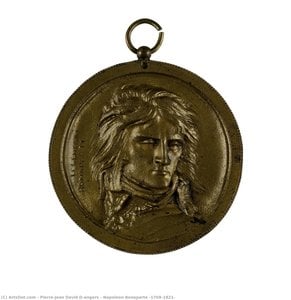
Discover André-Marie Ampère's portrait by Pierre-Jean David d’Angers (1829). A captivating bronze coin depicting the pioneering physicist, showcasing his legacy and scientific brilliance.

Pierre-Jean David d’Angers (1788-1856): Sculptor francez celebru pentru portrete neoclasice și opere monumentale precum friza Pantheonului și statui eroice. Descoperă moștenirea lui!

Reproducere pictată manual în ulei

Pictură în ulei pe pânză, realizată manual de artiștii noștri la dimensiunea și ramele dorite de dumneavoastră, pe comandă. ( Comută pe versiunea Print Treci la imagine digitală)

P118B $10
P118H $10
P118W $10
P438Z $10
P508JH $12
P508YH $12
P805H $10
P805Z $10
P919BZ $10
P919G $10
P919XJ $10
P959ZH $10
P968JZ $12
W106C $8
W218G $10
W218JH $8
W218Y $10
W307PJ $10
W316G $10
W316PJ $8
W316Y $10
W398PJ $8
W4111J $10
W500HY $15
W500JH $15
W692G $12
W849H $8
W940BG $15
W953PJ $8

Dimensiuni standard
personalizat
CM
INCH

Alegeți dintre dimensiunile noastre prestabilite, care respectă proporțiile originale ale operei de artă.

lățime
înălțime

Puteți introduce propriile dimensiuni pentru a se potrivi unui anumit cadru sau spațiu. Dacă dimensiunea selectată nu corespunde proporțiilor imaginii originale, vom decupa opera de artă sau vom extinde pictura cu elemente suplimentare pictate manual. O simulare digitală vă va fi trimisă pentru aprobare înainte de începerea producției.
Vă rugăm să rețineți că previzualizarea de pe ecran nu reflectă decuparea sau extinderea reală. Doar macheta va arăta cu exactitate compoziția finală.
Deși sunt disponibile dimensiuni personalizate, vă recomandăm să selectați o dimensiune din lista predefinită pentru a păstra proporțiile originale.

Exemple de elemente ce pot fi personalizate: Înlocuiți fața cu fotografia clientului; Adăugați un animal de companie (de exemplu, înlocuiți pisica cu un câine); Includeți un mesaj ascuns în fundal; Schimbați peisajul sau elementele din fundal.
După plasarea comenzii, echipa WahooArt.com va contacta clientul prin e-mail pentru instrucțiuni și îi va furniza o previzualizare a machetei

Livrare în întreaga lume () în 3-4 săptămâni, în loc de cele 5 săptămâni standard. (25 Septembrie). Fără compromisuri în ceea ce privește calitatea.

why_choose_icon
Livrare expres gratuită la nivel mondial
why_choose_icon
Pânză de in premium
why_choose_icon
Asigurare completă pentru transport
why_choose_icon
Garanție de rambursare a taxelor vamale
why_choose_icon
Garanția fidelității culorilor
why_choose_icon
Politica de retur în 100 de zile (doar pentru defecte)
why_choose_icon
Garanție de rambursare 100%
why_choose_icon
Reducere pentru comenzi multiple

Preț total

$ 272

reproduction

André-Marie Ampère

Tip de reproducere

Dimensiune reproducere

-

Preț total

$ 272

Detalii rapide

  • Notable elements: Man’s face, wig, mustache
  • Artistic style: Portraiture
  • Title: André-Marie Ampère
  • Year: 1829
  • Artist: Pierre-Jean David d'Angers
  • Medium: Bronze coin
  • Subject or theme: Historical figure

Chestionar de artă

Fiecare întrebare are un singur răspuns corect.

Întrebare 1:
André-Marie Ampère was primarily known for his work in which field?
Întrebare 2:
The image depicts a bronze coin featuring André-Marie Ampère. What is a key characteristic of the man's appearance in the coin?
Întrebare 3:
Pierre-Jean David d'Angers was renowned for his work in which artistic medium?
Întrebare 4:
In what year was the coin depicting André-Marie Ampère created?
Întrebare 5:
André-Marie Ampère's contributions were crucial for the development of which scientific field?

The Enigmatic Face: Pierre-Jean David d’Angers and André-Marie Ampère

Pierre-Jean David d’Angers's portrait of André-Marie Ampère, completed in 1829, is more than a simple likeness; it’s a carefully constructed embodiment of the man behind one of science’s most foundational discoveries. The image, rendered with the meticulous detail characteristic of David d’Angers’s neoclassical style, captures Ampère not merely as a physicist, but as a figure of intellectual authority and quiet contemplation. The bronze coin-like composition—a deliberate choice by the artist—immediately establishes a sense of gravitas, elevating Ampère to the status of a revered scholar and public servant. The subject's severe features, framed by a carefully sculpted wig and a neatly trimmed mustache, project an air of dignified seriousness, reflecting the weight of his groundbreaking work in electromagnetism.

André-Marie Ampère portrait by Pierre-Jean David d’Angers

A Scientific Icon: The Life and Times of André-Marie Ampère

Born in Lyon in 1775, André-Marie Ampère was a product of the Enlightenment, nurtured on the works of Buffon, Diderot, and Euler. His father’s radical republicanism, tragically culminating in his execution during the French Revolution, profoundly shaped Ampère's life, instilling within him a deep respect for knowledge and a commitment to rational thought. He pursued his education largely independently, devouring books and mastering mathematics with remarkable self-discipline. This autodidactic approach led him to become a leading figure in the burgeoning field of electromagnetism, building upon the foundational work of Ørsted’s discovery that electric currents create magnetic fields. Ampère's systematic investigations established the laws governing these relationships, forming the bedrock of modern electrical engineering and paving the way for technologies like the telegraph – a testament to his enduring legacy.

Neoclassical Precision: David d’Angers’s Artistic Vision

Pierre-Jean David d’Angers was a prominent sculptor and portraitist during the early 19th century, known for his ability to capture both the physical likeness and the inner character of his subjects. His style is characterized by its meticulous detail, balanced compositions, and a restrained emotionality—a hallmark of neoclassical art. He adopted the name “David d’Angers” as a deliberate assertion of lineage and artistic ambition, distinguishing himself from his celebrated master, Jacques-Louis David. In this portrait, David d’Angers skillfully employs chiaroscuro – the dramatic contrast between light and shadow – to sculpt Ampère's face, emphasizing his features and creating a sense of depth and volume. The coin-like format is not merely stylistic; it subtly elevates Ampère to the status of a revered figure, akin to a precious currency representing the value of knowledge.

Symbolism and Legacy: A Portrait Beyond Representation

The choice of a bronze coin as the medium for this portrait is particularly significant. Bronze, historically associated with antiquity and civic virtue, connects Ampère’s work to the foundations of scientific inquiry. The image itself speaks volumes about the era—a time of burgeoning industrialization, technological innovation, and a growing faith in reason and progress. Ampère's serious expression suggests not just intellectual prowess but also a profound sense of responsibility for his discoveries. This portrait is therefore more than a simple likeness; it’s a symbolic representation of Ampère as the architect of modern electromagnetism—a man whose work continues to shape our world today. It invites us to contemplate the intersection of science, art, and the enduring human quest for understanding.


Biografie artist

A Legacy Forged in Stone: The Life and Art of Pierre-Jean David d’Angers

Born in Angers, France, in 1789, Pierre-Jean David embarked on his artistic journey imbued in the republican fervor that would characterize much of his life and work. Initially apprenticed to a local wood carver – his father – young David swiftly demonstrated an aptitude for sculpting that propelled him toward greater ambitions. He arrived in Paris in 1808, a city pulsating with both classical tradition and revolutionary spirit, seeking tutelage under Philippe-Laurent Roland at the École des Beaux-Arts. This formative period instilled within him neoclassical principles while simultaneously exposing him to the burgeoning Romantic movement. A pivotal moment transpired in 1809 when he enrolled under Jacques-Louis David’s guidance, adopting “David d’Angers” as his artistic moniker – a deliberate distinction from his revered mentor, signifying an aspiration for independent creativity rooted in lineage and ambition. This decision underscored a desire to forge his own path while acknowledging the profound influence of the era's foremost painter. Early years in Paris were marked by financial struggles; nevertheless, David persevered, garnering acclaim with works like “Othryades” in 1810 and ultimately securing the prestigious Prix de Rome in 1811 for his sculpture "Epaminondas."

From Roman Reverie to Neoclassical Mastery

David’s five-year sojourn in Rome (1811–1816) proved transformative. Immersed in the world of classical antiquity and mentored by masters such as Antonio Canova, his artistic vision matured considerably. He absorbed the core tenets of Greek sculpture – its unwavering focus on idealized form, heroic narrative, and restrained emotional expression – yet skillfully infused these principles with a distinctly personal aesthetic. This period transcended mere academic study; it encompassed an awakening to political realities. The restoration of the Bourbon monarchy in France cast a shadow over his return, prompting a brief relocation to England where he encountered both admiration and scrutiny due to his association with Jacques-Louis David, who had been linked to the revolutionary regime. Back in Paris, however, David’s talent swiftly gained recognition. He became renowned for his portrait medallions – remarkably detailed representations capturing not just physical likeness but also psychological nuance—as well as monumental sculptures celebrating civic virtue and national heroes. His pioneering work on the Arc de Triomphe and the Louvre demonstrated an early mastery of large-scale projects, establishing him as a sculptor capable of tackling ambitious commissions.

The Influence of David and Roland

Philippe-Laurent Roland’s instruction at the École des Beaux-Arts profoundly shaped David's artistic sensibilities, grounding him in neoclassical ideals while simultaneously introducing him to the Romantic movement’s burgeoning dynamism. Roland championed restraint and clarity of form—values that would permeate David’s oeuvre throughout his career. Jacques-Louis David’s mentorship represented a crucial step toward forging David’s own distinctive style; David consciously distanced himself from his master's revolutionary fervor, prioritizing intellectual rigor alongside artistic expression. This deliberate separation fostered an independent vision rooted in classical tradition yet imbued with a sensitivity to the emotional complexities of human experience—a hallmark of David’s oeuvre.

Notable Achievements and Artistic Style

David’s sculptural output encompassed a breathtaking array of projects – from monumental sculptures honoring national heroes to intimate portrait medallions capturing the essence of his subjects. His magnum opus, the pediment sculpture for the Panthéon in Paris—featuring prominent figures representing French intellectual heritage—stands as testament to his unparalleled skill in conveying grandeur and solemnity through sculpted form. Other significant commissions included the Gutenberg monument at Strasbourg and the equestrian statue of General Gobert in Père Lachaise Cemetery, showcasing David’s mastery of dynamic composition and expressive realism. His portrait medallions – meticulously crafted with exceptional attention to detail—became celebrated for their psychological insight and artistic beauty. Among his most iconic works are “Wounded Philopoemen,” housed in the Louvre, a poignant depiction reflecting the tragic fate of the Greek general; and "La Douleur," demonstrating David’s ability to convey profound emotion through sculptural form.

A Lasting Legacy: Recognition and Historical Significance

Pierre-Jean David d’Angers achieved considerable acclaim during his lifetime—receiving numerous awards and honors, including the Prix de Rome—and cemented his place as one of France's most influential sculptors. His art reflects the intellectual and political landscape of 19th-century France, embodying republican ideals alongside neoclassical elegance. He championed figures who exemplified courage, integrity, and devotion to public service—values that resonated deeply with audiences throughout his era. David’s enduring legacy resides not only in his magnificent sculptures but also in his contribution to shaping the visual culture of France, inspiring generations of artists and securing his place as a cornerstone of artistic history. His work continues to captivate viewers today, demonstrating the timeless power of classical form combined with Romantic emotion—a testament to David d’Angers' unparalleled artistry and enduring influence.
Pierre-Jean David d’Angers

Pierre-Jean David d’Angers

1788 - 1856 , Franța

Informații rapide

  • Artistic Movement Or Style: Neoclasicism
  • Artists Who Influenced This Artist:
    • Jacques-Louis David
    • Philippe-Laurent Roland
  • Date Of Birth: 1789
  • Full Name: Pierre-Jean David d’Angers
  • Nationality: Franțuzesc
  • Notable Artworks:
    • Wounded Philopoemen
    • La Douleur
  • Place Of Birth: Angers, Franța
Explorați opere de artă organizate pe teme, stiluri și caracteristici.