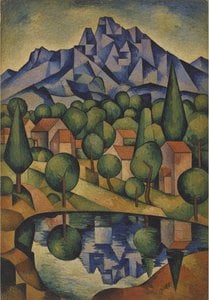
Paul Cézanne’s Self-Portrait: A Window into the Soul of Modern Art
Painted in 1882 and now gracing the walls of the Musée d'Orsay in Paris, Paul Cézanne’s “Self-Portrait” is far more than a simple depiction of an artist. It’s a profound meditation on perception, form, and the very nature of seeing – a cornerstone of his revolutionary approach to painting that irrevocably altered the course of art history. This intimate work offers a rare glimpse into Cézanne's mind, revealing not just his physical likeness but also his intensely analytical gaze and his unwavering pursuit of capturing the essence of reality.
Cézanne’s style at this period exemplifies the burgeoning Post-Impressionism movement, moving decisively away from the fleeting impressions of its predecessors. He wasn't interested in merely recording what he saw; instead, he sought to distill the underlying structure and geometry of objects onto the canvas. The painting is executed in oil on canvas, measuring 65 x 50 cm, and showcases Cézanne’s signature technique: repetitive, exploratory brushstrokes that build up to create complex fields of color and texture. These aren't delicate strokes; they are bold, assertive marks that suggest a deliberate engagement with the materiality of paint itself. Notice how he uses short, broken lines to define shapes, creating an effect of both solidity and movement – as if the painting is simultaneously solidifying and dissolving before your eyes.
Composition and Symbolism: A Study in Light and Space
The composition of the self-portrait is deceptively simple yet remarkably powerful. Cézanne presents himself seated before a window, a pose that becomes almost iconic throughout his career. The background—a pair of chairs and a vibrant red door—isn’t merely decorative; it serves to anchor the figure within a defined space, creating a sense of depth and perspective. This deliberate arrangement reflects Cézanne's fascination with capturing everyday life and its inherent spatial relationships – he wasn’t interested in replicating photographic realism but rather in conveying how we *perceive* space.
The red door, in particular, is laden with symbolic weight. Red was a color Cézanne frequently used to represent the vital force of life, and its prominence here suggests an affirmation of his own existence and artistic drive. The window itself acts as a portal—a visual metaphor for Cézanne’s exploration of light and atmosphere, key elements in his evolving style. The muted tones of the figure's clothing and the background contribute to a sense of quiet contemplation, inviting the viewer to share in his introspective gaze.
A Revolutionary Vision: Historical Context and Lasting Influence
Initially, Cézanne’s work was met with skepticism and even ridicule by contemporary critics who struggled to grasp his radical departure from traditional artistic conventions. However, fellow artists like Camille Pissarro recognized the genius of his vision, and the art dealer Ambroise Vollard championed his work tirelessly. It wasn't until 1895 that a solo exhibition in Paris brought Cézanne widespread recognition, paving the way for a deeper appreciation of his innovative approach.
The influence of Cézanne on modern art is truly monumental. He’s often described as “the father of us all,” and artists like Henri Matisse and Pablo Picasso have acknowledged his profound impact on their own development. His exploration of form, color, and perspective laid the groundwork for movements such as Cubism, which sought to deconstruct objects into geometric fragments – a direct response to Cézanne’s pioneering work in breaking down traditional representation.
Relevance to WahooArt.com: Bringing Cézanne's Vision Home
At WahooArt.com, we are dedicated to preserving and celebrating the legacy of artistic masters like Paul Cézanne. Our team of skilled artists meticulously recreates his “Self-Portrait” in exquisite detail, using only the finest materials and techniques. Each reproduction captures not just the visual appearance of the original but also its emotional depth and intellectual complexity. We believe that art should be accessible to all, and our high-quality reproductions offer a beautiful and affordable way to bring Cézanne’s revolutionary vision into your home or studio.
For those seeking further insight into this remarkable artist and his enduring influence, we encourage you to explore the resources listed below:



 Vezi în context
 Comandă pictură realizată manual
 Trimite
 Distribuie
 Detalii
 Ghid
Ghid

 Descarcă
 Produse similare
 Radiografie
 Diaporama
 Statistici


 Citește mai mult






































 Opțiunea cu sticlă este disponibilă doar pentru dimensiuni de sub 110 cm