Subiect și Compoziție
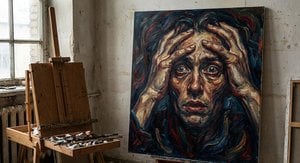
Această operă captivantă înfățișează o figură feminină solitară, imersă într-un moment de introspecție și vulnerabilitate emoțională. Figura este redată prin p stroke îndrăznești și largi, care sugerează atât carnea, cât și țesătura, integrându-se perfect în fundalul turbulent. Compoziția pune accent pe mișcare și pe neliniștea interioară, invitând privitorii să exploreze texturile stratificate și nuanțele simbolice încorporate în scenă. Postura dinamică și gesturile expresive evocă un sentiment de fragilitate împletită cu reziliență, surprindând o experiență umană profundă.
Stil și Tehnică
Creată în anul 1914, această piesă exemplifică limbajul emoțional puternic al Expresionismului. Artistul folosește o aplicare viguroasă a pensulei și texturi groase, de tip impasto, care intensifică impactul visceral al picturii. Paleta cromatică vie și contrastantă — dominată de nuanțe reci de albastru, verde și violet, accentuate de roșu, roz și auriu cald — servește la creșterea tensiunii emoționale. Aplicarea stratificată a vopselelor pe ulei sau acril creează o suprafață tactilă, subliniind mișcarea și spontaneitatea. Lumina difuză și formele suprapuse generează o senzație de mișcare vârtejuită, întărind atmosfera emoțională intensă a tabloului.
Context Istoric și Simbolism
Pictată într-o perioadă de agitație personală și artistică, această lucrare reflectă lumea interioară tulburată a artistului. Titlul face aluzie la teme precum predarea în fața destinului, forțele naturii și vulnerabilitatea, simbolizate prin percuții de pensulă vârtejuite și fundaluri turbulente care amintesc de o furtună sau de vânt. Poziția contemplativă a figurii sugerează un moment de reflecție interioară în mijlocul haosului, întruchipând lupta umană de a găsi stabilitate în turbulența emoțională. Această piesă rezonează cu mișcarea expresionistă mai largă, care căuta să transmită emoția pură și profunzimea psihologică dincolo de reprezentarea realistă.
Impact Emoțional și Semnificație Artistică
Această pictură surprinde cu putere complexitatea emoției umane — fragilitatea, dorința, reziliența — transformând-o într-un punct focal convingător pentru orice colecție sau spațiu interior. Pensula viguroasă și paleta vibrantă evocă un răspuns visceral, atras de privitor într-o narațiune profund personală și universală. Fie că este expusă într-o colecție privată sau într-un interior sofisticat, această lucrare oferă o amintire atemporală a forței găsite în vulnerabilitate și a frumuseții expresiei emoționale brute. O reproducere de înaltă calitate permite iubitorilor de artă și designerilor de interior să aducă această capodoperă evocatoare în spațiile lor, inspirând reflecție și conexiune emoțională.
Întrebări și răspunsuri
Pot comanda o reproducere în ulei a operei "Nunta Vântului"?
„Nunta Vântului” este disponibil ca o reproducere pictată manual în ulei pe pânză de in. Comanda poate fi plasată pe pagina de Reproducere pictată în ulei, cu posibilitatea de a alege dimensiunea dorită.
Care este locul ocupat de "Nunta Vântului" în istoria artei?
Din punct de vedere istoric, „Nunta Vântului” este o operă Early Expressionism din cadrul erei mai largi Modernism.
Există o fișă informativă despre "Nunta Vântului" de Oskar Kokoschka pentru studenți?
Ghidul pentru "Nunta Vântului" reprezintă pagina de Fișă informativă a operei de artă – o fișă informativă imprimabilă care prezintă lucrarea împreună cu legenda sa, mențiunea de credit și tabelul de identificare (artist, date, tehnică, dimensiunea originală, colecție).



 Previzualizare
 Comandă pictură realizată manual
 Trimite prin felicitare
 Distribuie
 Detalii despre lucrare
 Ghid
Ghid

 Descarcă imaginea
 Produse similare
 Radiografie
 Galerie foto
 Statistici


 Vezi mai mult






































 Opțiunea cu sticlă este disponibilă doar pentru dimensiuni de sub 110 cm