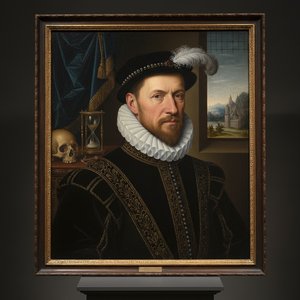
Last Judgment - Last Judgment Triptych (Detail)3
The Last judgment - last judgment triptych (detail)3 is a captivating oil painting created by Hans Memling, a renowned German-born Early Netherlandish painter. This masterpiece is a prime example of the Northern Renaissance style, showcasing the artist’s skill and dedication to creating visually stunning pieces.
Born around 1430 in Seligenstadt, near Frankfurt, Hans Memling honed his artistic talents under the tutelage of Rogier van der Weyden, establishing himself as a master painter in Brussels by 1465. He secured citizenship in Bruges and became one of the foremost artists of his time, attracting patronage from influential figures like Angelo Tani and commissioning monumental works that reflected the spiritual fervor of the era.
The Artist and His Work
Hans Memling’s artistic journey began with an apprenticeship in Mainz or Cologne, where he absorbed the stylistic influences of Gothic art before relocating to Bruges and immersing himself in the innovative spirit of Van der Weyden’s workshop. This formative experience instilled a meticulous attention to detail—a hallmark that would characterize his subsequent creations.
His oeuvre is marked by an extraordinary blend of realism and symbolic representation, particularly evident in his depictions of biblical narratives and portraits of nobility. Memling's canvases are imbued with profound theological contemplation, reflecting the humanist ideals prevalent during the Renaissance while simultaneously honoring medieval artistic traditions. Notably, he collaborated extensively with wealthy patrons—including Cardinal Grimani and Cardinal Bembo—producing lavish altarpieces that served as expressions of piety and prestige.
Key Features of the Painting
The Last judgment - last judgment triptych (detail)3 exemplifies Memling’s mastery of technique and compositional complexity. Executed in oil on wood—a medium favored by Northern Renaissance painters—the painting utilizes glazing techniques to achieve luminous colors and subtle tonal variations.
The central panel portrays Jesus Christ seated upon a globe, surrounded by angels and saints, embodying divine authority and judgment. Below him lies the depiction of Hell—a terrifying panorama populated by tormented souls consumed by fire—serving as a stark reminder of mortality and divine retribution. The meticulous rendering of drapery folds, facial expressions, and architectural elements underscores Memling’s commitment to realism.
A prominent clock positioned near the upper left corner adds an element of temporal awareness to the scene, emphasizing the inevitability of judgment and highlighting the artist's understanding of perspective—a revolutionary innovation that transformed artistic representation during this period. The painting’s overall impact is one of solemn grandeur, inviting contemplation on themes of faith, morality, and the afterlife.
Conclusion
The Last judgment - last judgment triptych (detail)3 stands as a testament to Hans Memling’s artistic genius—a masterpiece of Northern Renaissance art that continues to inspire awe and admiration centuries later. For more information on https://WahooArt.com/@/Hans-Memling and his works, visit https://WahooArt.com.



 Previzualizare
 Comandă pictură lucrată manual
 Trimite
 Distribuie
 Detalii despre lucrare

 Descarcă
 Produse similare
 Radiografie
 Diapozitive automate
 Stats
Stats

 Vezi mai mult






































 Opțiunea cu sticlă este disponibilă doar pentru dimensiuni de sub 110 cm