x
Comandă pictură lucrată manual Comandă pictură lucrată manualCumpără imaginea Cumpără imaginea TrimiteTrimite
Detalii despre lucrareDetalii despre lucrare Adaugă la favorite Adaugă la favorite DescarcăDescarcă Produse similareProduse similare Diapozitive automateDiapozitive automate

Cape

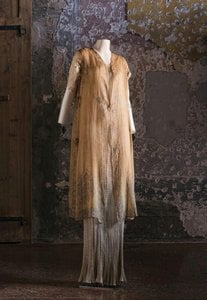
Mariano Fortuny’s ‘Cape,’ created in 1930, exemplifies his groundbreaking approach to fashion and stage lighting. This photograph captures a mannequin draped in a luxurious velvet coat adorned with delicate lace—a testament to Fortuny's revival of historical motifs and pioneering techniques.

Mariano Fortuny (1871-1949) a fost un designer spaniol de modă și artist renumit pentru textile inovatoare, rochiile Delphos și designurile de iluminat teatral. Explorează influențele orientale, invențiile sale revoluționare și moștenirea sa în istoria artei.

Giclée / Imprimare artistică

Printuri giclée sau pe canvas de calitate muzeală, cu proces de producție rapid și opțiuni flexibile de finisare. (Comandă pictură lucrată manual Comandă pictură lucrată manualCumpără imaginea Cumpără imaginea)

Standard
personalizat
CM
INCH

Alegeți dintre dimensiunile noastre prestabilite, care respectă proporțiile originale ale operei de artă.

lățime
înălțime

Puteți introduce propriile dimensiuni pentru a se potrivi unui anumit cadru sau spațiu. Dacă dimensiunea selectată nu corespunde proporțiilor imaginii originale, vom decupa lucrarea de artă sau vom extinde imaginea cu margini oglindite sau cu o culoare uniformă. Un mockup digital va fi trimis pentru aprobarea dumneavoastră înainte de începerea producției.
Vă rugăm să rețineți că previzualizarea de pe ecran nu reflectă decuparea sau extinderea reală. Doar mockup-ul va arăta cu exactitate compoziția finală.
Deși dimensiunile personalizate sunt disponibile, vă recomandăm să selectați o dimensiune din lista predefinită pentru a păstra proporțiile originale.

Livrare în întreaga lume () în 2 săptămâni, în loc de cele 4/5 săptămâni standard. (4 Septembrie)

why_choose_icon
Livrare expres gratuită la nivel mondial
why_choose_icon
Pânză de in de înaltă calitate
why_choose_icon
Asigurare completă pentru transport
why_choose_icon
Garanție de rambursare a taxelor vamale
why_choose_icon
Garanția fidelității culorilor
why_choose_icon
Politica de retur în 60 de zile (doar pentru defecte)
why_choose_icon
Garanție de rambursare 100%
why_choose_icon
Ofertă pentru comenzi multiple

Preț total

$ 68

reproduction

Cape

Giclée / Imprimare artistică

Dimensiune reproducere

-

Preț total calculat

$ 68

Informații rapide

  • Title: Cape
  • Influences: Historical Sources"; "Non-Western Traditions
  • Medium: Textile
  • Artist: Mariano Fortuny
  • Location: Palazzo Fortuny, Venice
  • Subject or theme: Fashion Design; Artistic Presentation
  • Movement: Decorative Arts

Test de cultură artistică

Fiecare întrebare are un singur răspuns corect.

Întrebare 1:
What is the primary subject matter of Mariano Fortuny’s ‘Cape’?
Întrebare 2:
The photograph showcases Fortuny’s ‘Cape’ within what type of setting?
Întrebare 3:
What technique is Fortuny credited with pioneering in theater design?
Întrebare 4:
The photograph highlights the textures of both the garment and its background. What is a prominent textural element in the image?
Întrebare 5:
Fortuny’s artistic inspiration drew heavily from historical and non-Western sources. What is a key characteristic of his creative approach?

A Vision of Elegance: The Timeless Allure of Mariano Fortuny’s ‘Cape’

In the realm of textile art, few pieces command the same reverence as Mariano Fortuny’s 1930 masterpiece, ‘Cape.’ This is not merely a garment; it is a profound reimagining of theatrical presentation and a masterful fusion of historical inspiration with avant-garde technique. To behold this work is to witness a moment where fashion transcends utility to become pure sculpture. The piece embodies a sophisticated dialogue between the weight of history and the lightness of innovation, making it an essential inspiration for collectors and designers who seek to infuse their spaces with a sense of storied grandeur.

The soul of the ‘Cape’ lies in its ability to reinterpret antiquity through a modern lens. Fortuny, a true polymath, drew deep inspiration from Greco-Roman mythology, specifically evoking the dramatic drapery associated with Zeus during the siege of Mount Olympus. By translating these epic narratives into fabric, he transformed a mannequin into a conduit for mythological grandeur. The garment serves as a visual spectacle where the heavy, luxurious velvet of the collar and hood meets the ethereal, delicate patterns of a lace-like overlay. This deliberate juxtaposition creates a captivating interplay of surfaces, inviting the eye to wander through layers of texture and light.

Mastery of Texture and the Art of Light

Technique is the heartbeat of this work. Fortuny was as much an inventor as he was a designer, and his mastery over material is evident in every fold of the ‘Cape.’ The way the dark, sumptuous velvet absorbs light stands in stark contrast to the translucent, patterned overlay that allows glimpses of the form beneath to emerge like a half-remembered dream. This interplay mirrors Fortuny’s revolutionary work with the cyclorama dome, where he used reflected light to create seamless, immersive environments in theater. In this piece, the fabric itself acts as a stage, performing a silent drama of shadow and brilliance.

For the interior designer or art enthusiast, the ‘Cape’ offers a rich palette of textures that can elevate any setting. The verticality of the pleated skirt provides a rhythmic stability, while the organic, flowing lines of the draped coat introduce a sense of movement. It is a study in balance—the heavy against the light, the structured against the fluid. This complexity makes a high-quality reproduction of such a work an extraordinary focal point, capable of anchoring a room with its profound sense of craftsmanship and historical weight.

An Emotional Legacy for the Modern Collector

Beyond its physical attributes, the ‘Cape’ carries an emotional resonance that speaks to the enduring human desire for beauty and transcendence. It evokes a sense of timelessness, bridging the gap between the ancient world and the modern era. There is a certain mystery held within its folds, a whisper of the aristocratic intrigue and theatrical magic that defined Fortuny’s life in Venice. To possess or display an homage to this work is to celebrate the spirit of the alchemist of aesthetics—an artist who refused to see boundaries between fashion, stagecraft, and fine art.

Whether integrated into a curated gallery collection or used as a sophisticated element in high-end decor, the ‘Cape’ remains a symbol of refined beauty. It invites viewers to contemplate the intersection of memory and innovation, making it a timeless investment for those who appreciate art that does not merely decorate a space, but breathes life and narrative into it.


Biografie artist

Early Life and Inspiration

Mariano Fortuny y Marsal, a name synonymous with innovation and theatrical spectacle, was born in Reus, Catalonia, Spain, on May 11, 1871. His early life was marked by profound loss – his father, also a painter named Mariano Fortuny y Marsal, tragically died when the young boy was just three years old. This event profoundly shaped his trajectory, leading his family to relocate to Paris, France, where his mother fostered his burgeoning artistic talents and introduced him to the world of textiles and fabrics, elements that would later become integral to his groundbreaking work. From a remarkably young age, Fortuny demonstrated an extraordinary aptitude for various art forms: painting, photography, sculpting, architecture, etching, and even theatrical stage lighting – skills he honed with dedication and a keen eye for detail. The Parisian environment exposed him to the vibrant artistic currents of the time, further fueling his creative spirit.

Artistic Talents and Revolutionary Inventions

Fortuny’s artistic journey was characterized by relentless experimentation and a desire to push the boundaries of traditional art forms. He quickly established himself as a multi-faceted artist, seamlessly blending diverse disciplines into his creations. Beyond painting, he became a pioneer in theatrical design, driven by a fascination with light and illusion. His most significant invention, the “fortuny cyclorama dome,” revolutionized stage lighting. This ingenious structure, typically constructed from plaster or cloth, utilized indirect lighting to create seamless transitions between scenes, effectively eliminating visible seams and immersing audiences in a truly immersive experience. Fortuny’s treatise, "Eclairage Scenique" (1904), meticulously documented his revolutionary approach to reflecting light off various surfaces, demonstrating how manipulating color, intensity, and properties could dramatically alter the visual impact of a performance. He patented over twenty inventions between 1901 and 1934, solidifying his reputation as an innovator and technological visionary.

Notable Collaborations and Artistic Influences

Fortuny’s work gained considerable recognition in the 1920s, largely thanks to his collaborations with prominent figures who shared his artistic sensibilities. He worked closely with Richard Wagner, the renowned German composer, whose operas deeply inspired him, leading to evocative paintings capturing scenes from the dramatic narratives. His installation of a dome at La Scala opera house in Milan stands as a testament to his ingenuity – he not only adapted the structure for the theater’s vast space but also invented a sophisticated suction fan system to maintain its tautness and prevent sagging. These collaborations extended beyond music; Fortuny's designs were coveted by royalty, including Queen Marie Christine of Bourbon at the Parisian residence of the Duke of Riánsares. His legacy was further cemented through his influence on French novelist Marcel Proust, whose writings captured the enigmatic allure of Fortuny’s world and artistic vision.

Legacy and Enduring Influence

Mariano Fortuny passed away in Venice, Italy, on May 3, 1949, leaving behind a remarkable body of work that continues to captivate audiences today. His innovative approach to theatrical lighting, his pioneering use of textiles, and his distinctive artistic style have had a lasting impact on the world of art and design. The “Delphos gown,” perhaps his most iconic creation, became a symbol of modern elegance and freedom of movement, worn by celebrated figures such as Eleonora Duse, Isadora Duncan, and Ellen Terry. Fortuny’s work continues to inspire artists and designers across various disciplines, demonstrating the enduring power of creativity, innovation, and a profound appreciation for beauty. His story is a testament to a life dedicated to pushing artistic boundaries and transforming the way we experience art and performance.
Mariano Fortuny

Mariano Fortuny

1871 - 1949 , Spania

Detalii rapide

  • Artistic Movement Or Style: Orientalism art
  • Artists Or Movements Influenced By This Artist: ['Marcel Proust']
  • Artists Who Influenced This Artist: ['Richard Wagner']
  • Date Of Birth: 11 iunie 1871
  • Date Of Death: 3 mai 1949
  • Full Name: Mariano Fortuny y Marsal
  • Nationality: Spaniol
  • Notable Artworks:
    • Teagown
    • Portrait Henriette
  • Place Of Birth: Granada, Spania
Explorați opere de artă organizate pe teme, stiluri și caracteristici.