x
PrevizualizarePrevizualizare Previzualizare ARPrevizualizare AR Comandă printul Comandă printulCumpără imaginea Cumpără imaginea TrimiteTrimite
Detalii despre lucrareDetalii despre lucrare Adaugă la favorite Adaugă la favorite DescarcăDescarcă Produse similareProduse similare RadiografieRadiografie Diapozitive automateDiapozitive automate

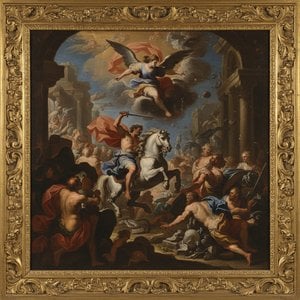
Jupiter and Mnemosyne

Experience the dramatic Baroque contrast of Jupiter and Mnemosyne by Marco Liberi; discover this masterful 17th-century mythological scene today.

Explore Marco Liberi (1644-1691), a Venetian Baroque painter known for mythological scenes & captivating artistry. Discover his works & legacy! #BaroqueArt #VenetianPainter #MarcoLiberi

Reproducere pictată manual în ulei

Pictură în ulei pe pânză, realizată manual de artiștii noștri la dimensiunea și ramele dorite de dumneavoastră, pe comandă. (Comandă printul Comandă printulCumpără imaginea Cumpără imaginea)

P118B $10
P118H $10
P118W $10
P438Z $10
P508JH $12
P508YH $12
P805H $10
P805Z $10
P919BZ $10
P919G $10
P919XJ $10
P959ZH $10
P968JZ $12
W106C $8
W218G $10
W218JH $8
W218Y $10
W307PJ $10
W316G $10
W316PJ $8
W316Y $10
W398PJ $8
W4111J $10
W500HY $15
W500JH $15
W692G $12
W849H $8
W940BG $15
W953PJ $8

Standard
personalizat
CM
INCH

Alegeți dintre dimensiunile noastre prestabilite, care respectă proporțiile originale ale operei de artă.

lățime
înălțime

Puteți introduce propriile dimensiuni pentru a se potrivi unui anumit cadru sau spațiu. Dacă dimensiunea selectată nu corespunde proporțiilor imaginii originale, vom decupa opera de artă sau vom extinde pictura cu elemente suplimentare pictate manual. O simulare digitală vă va fi trimisă pentru aprobare înainte de începerea producției.
Vă rugăm să rețineți că previzualizarea de pe ecran nu reflectă decuparea sau extinderea reală. Doar macheta va arăta cu exactitate compoziția finală.
Deși sunt disponibile dimensiuni personalizate, vă recomandăm să selectați o dimensiune din lista predefinită pentru a păstra proporțiile originale.

Exemple de elemente ce pot fi personalizate: Înlocuiți fața cu fotografia clientului; Adăugați un animal de companie (de exemplu, înlocuiți pisica cu un câine); Includeți un mesaj ascuns în fundal; Schimbați peisajul sau elementele din fundal.
După plasarea comenzii, echipa WahooArt.com va contacta clientul prin e-mail pentru instrucțiuni și îi va furniza o previzualizare a machetei

Livrare în întreaga lume () în 3-4 săptămâni, în loc de cele 5 săptămâni standard. (29 August). Fără compromisuri în ceea ce privește calitatea.

why_choose_icon
Livrare expres gratuită la nivel mondial
why_choose_icon
Pânză de in de înaltă calitate
why_choose_icon
Asigurare completă pentru transport
why_choose_icon
Garanție de rambursare a taxelor vamale
why_choose_icon
Garanția fidelității culorilor
why_choose_icon
Politica de retur în 60 de zile (doar pentru defecte)
why_choose_icon
Garanție de rambursare 100%
why_choose_icon
Ofertă pentru comenzi multiple

Preț total

$ 272

reproduction

Jupiter and Mnemosyne

Tehnică de reproducere

Dimensiune reproducere

-

Preț total calculat

$ 272

Informații rapide

  • Movement: Baroque
  • Subject or theme: Greek mythology (Jupiter & Mnemosyne)
  • Medium: Oil on canvas
  • Location: Szépmûvészeti Múzeum
  • Dimensions: 118 x 153 cm
  • Notable elements or techniques: Strong contrasts, light/shadow play
  • Title: Jupiter and Mnemosyne

Test de cultură artistică

Fiecare întrebare are un singur răspuns corect.

Întrebare 1:
What mythological scene does the painting 'Jupiter and Mnemosyne' depict?
Întrebare 2:
Which goddess, central to the painting's theme, represents memory?
Întrebare 3:
Marco Liberi's style in this work is characterized by:
Întrebare 4:
What object symbolizes Jupiter's descent upon Mnemosyne in the painting?
Întrebare 5:
The painting is noted for its potential original placement as part of what type of decoration?

A Divine Encounter: Exploring Jupiter and Mnemosyne

To gaze upon Marco Liberi's depiction of Jupiter and Mnemosyne is to step directly into the luminous drama of classical mythology. This magnificent oil on canvas, steeped in the grandeur of the 17th century, does more than merely hang on a wall; it invites the viewer into an ethereal moment where divine power meets eternal memory. The composition itself is breathtakingly dramatic, capturing the instant Jupiter descends upon Mnemosyne. Liberi masterfully frames this encounter, presenting a scene rich with narrative tension and profound symbolic weight.

Symbolism Woven in Light and Form

At the heart of the painting lies the potent symbolism drawn from Greek lore. Mnemosyne, the goddess personifying memory itself, reclines upon a richly patterned couch, embodying tranquility amidst the divine storm. Above her descends Jupiter, represented by the formidable form of an eagle—a creature symbolizing his immense power and celestial reach. Their union is not merely physical; it is the mythological genesis of the Muses, suggesting that true inspiration and art are born from powerful connections between intellect and memory. Liberi’s genius shines through in how he handles the interplay between these elements: the delicate pallor of Mnemosyne contrasts sharply with the dark, muscular presence of the eagle, creating a visual dialogue that speaks volumes about creation itself.

Mastery of Venetian Baroque Technique

Technically speaking, this work is a superb testament to the height of Venetian Baroque painting. Liberi’s handling of oil on canvas allows for an astonishing depth and luminosity. Observe how the artist uses light not just to illuminate, but to sculpt. The play of light across Mnemosyne's nude form accentuates her graceful contours, while the brushwork detailing the eagle's feathers suggests both immense power and delicate texture. This attention to plasticity—the way forms appear three-dimensional—is characteristic of the period, giving the entire scene a palpable sense of weight and reality, despite its mythological subject matter.

A Vision for Elevated Interiors

Originally conceived, perhaps as an overdoor decoration in a Venetian palace, this piece carries an inherent architectural grandeur. For the modern collector or designer, reproducing this artwork offers an unparalleled opportunity to infuse a space with historical resonance and artistic drama. Imagine its presence anchoring a grand hall or a library—a focal point that whispers tales of antiquity and divine inspiration. The rich color palette, combined with the dramatic composition, ensures that it functions as both a breathtaking piece of art and a sophisticated statement of taste.


Biografie artist

The Luminous Legacy of Marco Liberi

In the golden age of the Venetian Baroque, few artists captured the ethereal intersection of divine myth and human emotion as poignantly as Marco Liberi. Born around 1640 in the vibrant maritime republic of Venice, Liberi emerged from a lineage of artistic excellence. As the son of the esteemed painter Pietro Liberi, his very foundation was steeped in the traditions of classical observation and the expressive, color-driven language of the Venetian school. His early years were spent under his father's watchful eye, absorbing not just the technical rigors of oil painting, but a profound reverence for the humanist ideals and ancient narratives that would later define his mature style. While much of his early training took place in Padua, it was within the atmospheric splendor of Venice that his talent truly blossomed, allowing him to become a master of the mythological cabinet painting.

The artistry of Liberi is characterized by a breathtaking symphony of light and shadow, a technique that breathes life into the static canvas. He was a practitioner of sfumato, employing subtle gradations of tone to dissolve harsh outlines, thereby creating an atmospheric depth that feels almost otherworldly. To gaze upon his work is to witness a masterclass in Venetian Baroque execution; he utilized light not merely as a tool for visibility, but as a sculptural element to define form and evoke mood. His palette was famously luminous, capable of transitioning from the soft, pearlescent skin tones of a goddess to the dark, muscular textures of a celestial predator with seamless grace. This mastery of chiaroscuro allowed him to imbue his mythological scenes with a sense of dramatic tension and palpable movement.

Mythological Visions and Symbolic Depth

Liberi’s repertoire was primarily dedicated to the grand narratives of Greek and Roman antiquity, a genre that offered endless opportunities for allegorical expression. His works often functioned as more than mere illustrations of myth; they were complex meditations on power, memory, and the divine. One of his most captivating achievements can be seen in his depiction of Jupiter and Mnemosyne. In this profound composition, the artist captures the precise moment of a divine encounter, where the king of the gods descends upon the personification of memory. Through the clever use of symbolism—such as the formidable eagle representing Jupiter’s celestial reach contrasting with the tranquil, reclining figure of Mnemosyne—Liberi suggests that all true art and inspiration are born from the union of intellect and remembrance.

This ability to weave complex layers of meaning into his compositions elevated his status among the Venetian elite. His paintings were often designed for intimate settings, such as private collections or scholarly studies, where viewers could linger over the intricate details of his brushwork. Whether portraying Jupiter and Asteria or other allegorical subjects, Liberi maintained a consistent focus on the following elements:

  • Dynamic Composition: A sense of arrested motion that captures the climax of a mythological event.
  • Emotional Resonance: The use of facial expressions and bodily gestures to convey the gravity of divine intervention.
  • Textural Mastery: An incredible attention to detail, from the delicate sheen of silk to the rugged feathers of mythical beasts.

Historical Significance and Artistic Enduring Spirit

Though the biographical details of Marco Liberi’s later years remain somewhat veiled by the passage of time, his impact on the Venetian landscape is undeniable. He stood as a bridge between the rigorous traditions of his father's generation and the increasingly dramatic, emotive flourishes of the late Baroque period. His career, which saw him active in both Padua and Venice until his death around 1691, contributed significantly to the flourishing of mythological painting in Italy. By refining the techniques of light and color inherited from the Venetian masters, he helped ensure that the era's fascination with classical antiquity remained visually spectacular and intellectually stimulating.

Today, Liberi is remembered not just as a follower of his father’s style, but as an artist who possessed a unique, luminous voice. His legacy lives on in the way his canvases continue to invite viewers into a world where the boundaries between the mortal and the divine are blurred by a masterful stroke of a brush. In the grand tapestry of art history, Marco Liberi remains a vital thread, representing the pinnacle of Venetian mythological storytelling.

marco liberi

marco liberi

1644 - 1691 , Italy

Detalii rapide

  • Artistic Movement Or Style: Baroque
  • Artists Or Movements Influenced By This Artist: ['Cornelis van Haarlem']
  • Artists Who Influenced This Artist: ['Pietro Liberi']
  • Date Of Birth: ca. 1640
  • Full Name: Marco Liberi
  • Nationality: Italian
  • Notable Artworks:
    • Jupiter and Mnemosyne
    • Jupiter and Asteria
    • The Judgment of Paris
  • Place Of Birth: Venice, Italy