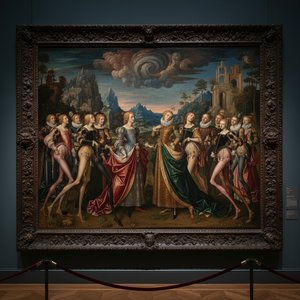
Pictorul Mitului și al Credinței: Viața lui Lorenzo Costa
Lorenzo Costa (1460–1535) se impune ca o figură fundamentală în peisajul artistic înfloritor al Renașterii italiene, întruchipând dinamismul intelectual al școlilor din Ferrara și Bologna. Născut în vibrantul oraș Ferrara, Costa a apărut într-o epocă în care granițele dintre devotamentul spiritual și cercetarea umanistă erau frumos estompatate. Opera sa este caracterizată printr-o fuziune distinctivă între eleganța stilistică și o profundă contemplație, o calitate care i-a permis să navigheze printre cerințele complexe ale atât ale instituțiilor religioase, cât și ale celor mai sofisticate curți seculare din epoca sa. Prin pensula sa, lumina eterică a divinității întâlnea grația structurată a mitologiei clasice, creând un limbaj vizual care rezona profund cu spiritul Renașterii.
Anii de formare și măiestria luminii
Deși înregistrările arhivistice ale primilor ani ai lui Costa rămân destul de elusive, ADN-ul său artistic a fost clar forjat în atelierul din Italia de Nord. Este recunoscut pe scară largă faptul că a urmat o ucenicie riguroasă sub îndrumarea maestrului
Francesco Francia în Bologna. Această perioadă de formare a fost transformatoare, instilându-i o atenție meticuloasă la detalii și o fascinare timpurie pentru tehnica
sfumato — acea îmbinare subtilă și fumurie a tonurilor, popularizată ulterior de Leonardo da Vinci. De la Francia, Costa a moștenit o înțelegă profundă a perspectivei și utilizarea dramatică a
chiaroscuro, ceea ce i-a permis să sculptați figurile din umbră și să îmbine compozițiile sale cu un sentiment fără precedent de profunzime și greutate emoțională. Această fundație tehnică l-a ajutat să depășească simpla reprezentare, căutând, în schimb, să surprindă însăși atmosfera care înconjoară subiectele sale.
Splendoarea curții manteneze
Zenitul carierei lui Costa a fost indisolubil legat de numirea sa prestigioasă de pictor curtan al
Isabella d'Este, marchionisa Mantovei. Ca unul dintre cei mai formidabili și exigenți patroni din istoria Europei, Isabella d'Este cerea o artă ce funcționa atât ca un triumf estetic, cât și ca o încercare intelectuală. Sub privirea ei atentă, creația lui Costa a evoluat pentru a îmbrățișa complexe alegorii mitologice și ideale umaniste. Picturile sale au devenit mult mai mult decât icoane religioase; ele au devenit narațiuni sofisticate, concepute pentru un public format din eruduți și aristocrați. Această perioadă a vieții sale a fost marcată de:
- Integrarea miturilor clasice grecești și romane în pictura italiană contemporană.
- O concentrare sporită asupra semnificației simbolice, unde fiecare gest și detaliu botanic purta o încărcătură de sens.
- Rafinarea unui stil atmosferic, moale, capabil să transmită grația delicată cerută de gustul curtenesc.
Moștenirea și semnificația istorică
Pe măsură ce Renașterea avansa, influența lui Costa a reverberat prin comunitățile artistice din Ferrara și Bologna, lăsând o urmă indelabilă asupra dezvoltării școlii italiene. Capacitatea sa de a armoniza tradițiile robuste și emoționante ale maeștrilor ferrezești cu stilul mai liric și rafinat al pictorilor bolognez, a creat un pod stilistic unic. Chiar și atunci când au început să apară mișcări noi, dedicarea lui Costa pentru echilibrul dintre frumusețe și narațiune a rămas un standard pentru succesorii săi. Astăzi, el este reamintit nu doar ca un artizan priceput, ci ca un vizionar care a capturat sufletul unei epoci — un artist capabil să facă miturile antice să pară la fel de imediate și vii precum figurile sacre ale credinței creștine.



 Previzualizare
 Comandă pictură lucrată manual
 Trimite
 Distribuie
 Detalii despre lucrare

 Descarcă
 Produse similare
 Radiografie
 Diapozitive automate
 Statistici


 Vezi mai mult






































 Opțiunea cu sticlă este disponibilă doar pentru dimensiuni de sub 110 cm