Previzualizare Previzualizare AR Comandă pictură realizată manual Comută pe Imagine Digitală Trimite prin felicitare
Detalii despre lucrare Ghid Adaugă la favorite Descarcă imaginea Produse similare Radiografie Galerie foto Q&A Statistici

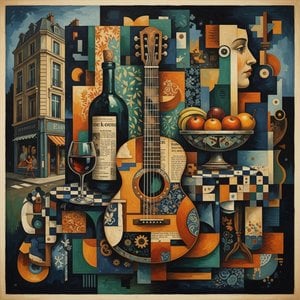
Santa Claus

Kurt Schwitters' "Santa Claus" (1922) is a Dada collage masterpiece featuring text, paper fragments, and vibrant colors—a chaotic yet captivating exploration of modern art.

Explore Kurt Schwitters' (1887-1948) innovative art: Dada, Merz collage & installations. Discover his use of found objects & impact on modern art.

Giclée / Imprimare artistică

Printuri giclée sau pe canvas de calitate muzeală, cu proces de producție rapid și opțiuni flexibile de finisare. ( Comandă pictură realizată manual Comută pe Imagine Digitală)

Corner sample of the P118B picture frame: polistiren turnat, 5 cm wide and 3 cm thick
P118B lei10
Corner sample of the P118H picture frame: polistiren turnat, 5 cm wide and 3 cm thick
P118H lei10
Corner sample of the P118W picture frame: polistiren turnat, 5 cm wide and 3 cm thick
P118W lei10
Corner sample of the P438Z picture frame: polistiren turnat, 5.5 cm wide and 3.5 cm thick
P438Z lei10
Corner sample of the P508JH picture frame: polistiren turnat, 7 cm wide and 3.5 cm thick
P508JH lei12
Corner sample of the P508YH picture frame: polistiren turnat, 7 cm wide and 3.5 cm thick
P508YH lei12
Corner sample of the P805H picture frame: polistiren turnat, 5 cm wide and 3.5 cm thick
P805H lei10
Corner sample of the P805Z picture frame: polistiren turnat, 5 cm wide and 3.5 cm thick
P805Z lei10
Corner sample of the P919BZ picture frame: polistiren turnat, 7 cm wide and 3.5 cm thick
P919BZ lei10
Corner sample of the P919G picture frame: polistiren turnat, 7 cm wide and 3.5 cm thick
P919G lei10
Corner sample of the P919XJ picture frame: polistiren turnat, 7 cm wide and 3.5 cm thick
P919XJ lei10
Corner sample of the P959ZH picture frame: polistiren turnat, 5 cm wide and 3 cm thick
P959ZH lei10
Corner sample of the P968JZ picture frame: polistiren turnat, 6 cm wide and 4 cm thick
P968JZ lei12
Corner sample of the W106C picture frame: lemn masiv, 5 cm wide and 3 cm thick
W106C lei8
Corner sample of the W218G picture frame: lemn masiv, 5 cm wide and 3 cm thick
W218G lei10
Corner sample of the W218JH picture frame: lemn masiv, 5 cm wide and 3 cm thick
W218JH lei8
Corner sample of the W218Y picture frame: lemn masiv, 5 cm wide and 3 cm thick
W218Y lei10
Corner sample of the W307PJ picture frame: lemn masiv, 6 cm wide and 3 cm thick
W307PJ lei10
Corner sample of the W316G picture frame: lemn masiv, 6 cm wide and 3 cm thick
W316G lei10
Corner sample of the W316PJ picture frame: lemn masiv, 6 cm wide and 3 cm thick
W316PJ lei8
Corner sample of the W316Y picture frame: lemn masiv, 6 cm wide and 3 cm thick
W316Y lei10
Corner sample of the W398PJ picture frame: lemn masiv, 5 cm wide and 3 cm thick
W398PJ lei8
Corner sample of the W4111J picture frame: lemn masiv, 6.5 cm wide and 3.5 cm thick
W4111J lei10
Corner sample of the W500HY picture frame: lemn masiv, 7 cm wide and 5 cm thick
W500HY lei15
Corner sample of the W500JH picture frame: lemn masiv, 7 cm wide and 5 cm thick
W500JH lei15
Corner sample of the W692G picture frame: lemn masiv, 8 cm wide and 4 cm thick
W692G lei12
Corner sample of the W849H picture frame: lemn masiv, 5 cm wide and 3 cm thick
W849H lei8
Corner sample of the W940BG picture frame: lemn masiv, 7.5 cm wide and 4.5 cm thick
W940BG lei15
Corner sample of the W953PJ picture frame: lemn masiv, 6 cm wide and 3.5 cm thick
W953PJ lei8

Standard
personalizat
CM
INCH

Alegeți dintre dimensiunile noastre prestabilite, care respectă proporțiile originale ale operei de artă.

lățime
înălțime

Introduceți lățimea și înălțimea necesare pentru a se potrivi ramei sau peretelui dumneavoastră. O printare poate fi doar tăiată, niciodată extinsă dincolo de dimensiunea imaginii originale, astfel încât o dimensiune cu o formă diferită va pierde o parte din imagine. Vă trimitem o simulare digitală pentru aprobare înainte de a imprima orice. Imaginea afișată pe această pagină nu prezintă tăierea reală — doar simularea arată acest lucru.

Livrare în întreaga lume () în 2 săptămâni, în loc de cele 4/5 săptămâni standard. (29 Octombrie)

Livrare expres gratuită la nivel mondial
Pânză de in de înaltă calitate
Asigurare completă pentru transport
Garanție de rambursare a taxelor vamale
Garanția fidelității culorilor
Politica de retur în 100 de zile (doar pentru defecte de fabricație)
Garanție de rambursare 100%
Ofertă pentru comenzi multiple

Preț total

lei 316

Santa Claus

Giclée / Imprimare artistică

Dimensiune reproducere

-

Preț total calculat

lei 316

Informații rapide

  • Medium: Collage with paper fragments and text
  • Movement: Dadaism
  • Artist: Kurt Schwitters
  • Artistic style: Merz / Dadaist collage
  • Location: Museum of Modern Art (MoMA), New York

Test de cunoștințe despre artă

Fiecare întrebare are un singur răspuns corect.

Întrebare 1:
What is the primary artistic style of this artwork?
Întrebare 2:
In which year was 'Santa Claus' created?
Întrebare 3:
Which museum holds this piece in its collection?
Întrebare 4:
What materials are used in this collage?
Întrebare 5:
Who is the artist of 'Santa Claus'?

The Composition of Fragments

The artwork Santa Claus consists of cut-and-pasted colored and printed papers applied to paper, finished with a cardstock border. The surface is an assembly of irregular shapes, including rectangles and triangles, that overlap in a non-linear arrangement. A palette of brown, yellow, and red dominates the visual field, punctuated by patches of blue and black. Within this arrangement, specific textual elements are visible, such as the number 30 and individual letters like A and B. These fragments appear to be sourced from various printed materials, including scraps that resemble advertisements or newspapers. The texture of the piece varies across its surface, with some areas appearing smooth while others show the rougher edges of torn paper. Small imagery, resembling birds or flying creatures, is integrated into the layers of the collage.

Technique and Historical Context

Created in 1922, this work belongs to the Dada Collage movement. The method involves the use of found objects and discarded materials, a practice Kurt Schwitters referred to as Merz. This technique emerged from the use of fragments like tickets and paper scraps to build new structures from existing debris. The physical state of the piece shows visible creases and folds, suggesting the age of the paper components. The arrangement lacks a central focal point, instead directing the eye across the intersecting shapes through a process of fragmentation. This approach to construction reflects the era's response to the societal shifts following World War I, where traditional academic training was replaced by an aesthetic of reconstruction using broken parts.

Materiality and Presence

The physical presence of the work is defined by its materiality and the way light interacts with the layered paper. The cardstock border provides a clean edge that contains the chaotic internal elements. Because the pieces are layered, the artwork possesses a literal depth, where certain fragments partially obscure others. This layering creates a sense of accumulation. While the title Santa Claus is present on the museum label, the visual content does not depict a recognizable figure of the character; rather, it relies on the abstract tension between the disparate colored shapes and the printed text to establish its visual logic. The work is held in the collection of the Museum of Modern Art (MoMA) in New York City.

Întrebări și răspunsuri

Există lucrări similare cu "Santa Claus"?

Descoperă opere de artă similare cu "Santa Claus" de Kurt Schwitters în pagina Lucrări similare a lucrării.

Ce emoție transmite "Santa Claus" atunci când este oferită ca cadou?

Tonul Reflective al operei "Santa Claus" de Kurt Schwitters se potrivește cu ocazia de cadou recomandată: Seasonal Gift.

Cum se încadrează stilul operei „Santa Claus” în contextul epocii creatorului său?

"Santa Claus" de Kurt Schwitters face parte din mișcarea Dada Collage, reprezentativă pentru epoca Modern a creatorului său.


Biografie artist

Kurt Schwitters: A Life in Merz

Early Life and Education

  • Born: June 20, 1887, in Hanover, Germany.
  • Schwitters was the only child of Eduard and Henriette Schwitters. His father co-owned a ladies' clothing shop.
  • The family’s financial situation improved after selling the business in 1898, allowing them to live off rental income from properties they acquired.
  • He studied art at the Dresden Academy from 1909-1915 alongside artists like Otto Dix and George Grosz, though he seemingly remained unaware of their work at the time.
  • Schwitters suffered his first epileptic seizure in 1901, which later exempted him from military service for a period during World War I.

Artistic Development and the Birth of Merz

  • Initially, Schwitters worked in a post-impressionist style. His early work reflected this influence.
  • The devastation of World War I profoundly impacted his artistic direction. He felt traditional academic training was irrelevant in the face of societal collapse.
  • “In the war, things were in terrible turmoil…everything had broken down and new things had to be made out of the fragments; and this is Merz.”
  • Around 1918, he began creating abstract collages using found objects – scraps of paper, tickets, and other discarded materials.
  • The term “Merz” itself came from a fragment of text (“Commerz und Privatbank”) cut from an advertisement and incorporated into one of his early works, *Das Merzbild* (1918-19).

Key Works and Artistic Styles

  • Merz Pictures: These collages are arguably Schwitters’ most famous contribution. They represent a radical departure from traditional art, embracing chance and the aesthetics of everyday life.
  • Merzbau: A monumental architectural construction within his home in Hanover, continuously evolving over decades. It was a three-dimensional embodiment of Merz principles – a labyrinthine space filled with niches, grottoes, and found objects.
  • Assemblage & Installation Art: Schwitters pioneered these forms, blurring the boundaries between painting, sculpture, and architecture.
  • He also worked in poetry, sound, graphic design, and typography, exploring a wide range of artistic media.

Influences and Connections

  • Early influences included post-impressionism, but he quickly moved beyond these conventions.
  • He came into contact with members of the Berlin avant-garde – Raoul Hausmann, Hannah Höch, and Hans Arp – through Herwarth Walden’s *Der Sturm* gallery.
  • While associated with Dadaism, Schwitters maintained a distinct artistic identity. He was initially rejected by some Dadaists for his ties to expressionism.

Later Life and Legacy

  • Facing increasing persecution under the Nazi regime due to his “degenerate art,” Schwitters fled Germany in 1937.
  • He spent time in Norway and England, continuing to create Merz works despite challenging circumstances. He was briefly interned as an enemy alien during World War II.
  • Died: January 8, 1948, in Ambleside, England.
  • Kurt Schwitters’ work profoundly influenced subsequent generations of artists, particularly those involved in Pop Art, Minimalism, and Conceptual Art.
  • His innovative use of found objects and his exploration of the relationship between art and everyday life continue to resonate with contemporary audiences.

Historical Significance

  • Schwitters’ Merz aesthetic challenged traditional notions of artistic beauty and authorship.
  • He expanded the definition of art by incorporating non-art materials and blurring the lines between different disciplines.
  • His work remains a powerful testament to the creative potential of fragmentation, reconstruction, and the embrace of chance.
Kurt Schwitters

Kurt Schwitters

1887 - 1948

Detalii rapide

  • Name: Kurt Schwitters
  • Movement:
    • Dadaism
    • Constructivism
    • Surrealism
    • Merz
  • Birth Date: June 20, 1887
  • Death Date: 1948
  • Birth Place: Hanover, Germany
  • Nationality: German
  • Date Of Birth: 1887
  • Date Of Death: 1948
  • Notable Works:
    • Merz pictures
    • Merzbau