PrevizualizarePrevizualizare Previzualizare ARPrevizualizare AR Comandă printul Comandă printulComandă pictură lucrată manual Comandă pictură lucrată manual TrimiteTrimite
Detalii despre lucrareDetalii despre lucrare Adaugă la favorite Adaugă la favorite DescarcăDescarcă Produse similareProduse similare RadiografieRadiografie Diapozitive automateDiapozitive automate

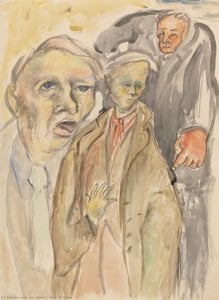
Mujer desnuda reclinada

Joy Hester's 'Mujer desnuda reclinada' (1955) is an emotionally charged Expressionist ink drawing capturing vulnerability and introspection through fluid lines & earthy tones, reflecting her unique vision.

Joy St Clair Hester (1920-1960): Artistă australiană modernistă renumită pentru schițe expresive cu penel și cerneală, explorând dragostea, pierderea și psihicul uman. O figură cheie a mișcării Angry Penguins/Heide Circle.

Achiziționați o imagine digitală de înaltă rezoluție, îmbunătățită, mult superioară previzualizării online.

Fiecare fișier este pregătit cu meticulozitate de specialiștii noștri interni, utilizând instrumente avansate și retușare manuală expertă. Ne asigurăm că fiecare imagine beneficiază de o claritate excepțională, o acuratețe precisă a culorilor și detalii fine.

Fișierul final este livrat prin e-mail în termen de 72 de ore, optimizat pentru utilizare imediată în medii profesionale, editoriale și de imprimare. Aceasta este aceeași calitate în care au încredere studiouri de design, edituri și galerii de top.

Imagine Digitală

Descărcați un fișier la rezoluție înaltă pentru afișare personală, imprimare și proiecte creative. (Comandă printul Comandă printulComandă pictură lucrată manual Comandă pictură lucrată manual)

Preț total

$ 24,90

Inclus în fiecare comandă de imagini digitale

Livrare digitală de expertiză, garantată

Când alegeți WahooArt.com, nu primiți doar o simplă imagine – primiți o operă de artă digitală îmbunătățită profesional, creată cu precizie și susținută de o garanție de satisfacție. Iată tot ceea ce primești odată cu comanda ta, în mod automat:

shipping_icon
Livrare rapidă prin e-mail

Fișierul imaginii digitale la rezoluție înaltă vă va fi trimis prin e-mail în termen de 72 de ore de la finalizarea comenzii – gata pentru utilizare imediată.

canvas_icon
Fișier digital optimizat prin IA

Opera ta de artă este optimizată profesional prin intermediul unor instrumente AI avansate și al editării manuale, asigurând un nivel maxim de detalii, claritate și acuratețe a culorilor.

insurance_icon
Retransmitere gratuită pe viață

Ai șters sau ai pierdut din greșeală fișierul? Nu îți face griji – ți-l vom retrimite oricând, gratuit.

tax_icon
Fără taxe de import – Întotdeauna

Bucură-te instant de noua ta operă de artă, fără taxe vamale, taxe de import sau costuri de livrare – descărcările digitale sunt întotdeauna fără taxe.

color_icon
Garanția acurateții culorilor

Asigurăm o reflectare cât mai fidelă a culorilor originale în imaginea ta digitală, prin utilizarea unor instrumente profesionale și a proceselor de gestionare a culorii.

return_icon
Garanție de satisfacție de 100 de zile

Dacă nu sunteți mulțumit de imaginea digitală achiziționată, o vom revizui sau vă vom returna 100% în termen de 100 de zile - fără nicio întrebare.

guarantee_icon
Garanție de returnare 100% a banilor

Nu ești mulțumit? Primești rambursarea integrală în termen de 100 de zile de la primirea fișierului digital – fără nicio întrebare.

discount_icon
Reduceri pentru comenzi în volum

Cumpără 3 imagini, economisește 10% - Cumpără 5, economisește 15% - Cumpără 10+, economisește 20%. Ideal pentru proiecte creative, galerii și agenții.

Informații rapide

  • Artist: Joy St Clair Hester
  • Influences:
    • Hester
    • O'Connor
  • Location: Art Gallery NSW
  • Movement: Expressionism
  • Medium: Ink wash/Watercolor
  • Artistic style: Modernist
  • Year: 1955

Test de cultură artistică

Fiecare întrebare are un singur răspuns corect.

Întrebare 1:
What is the primary medium used in Joy St Clair Hester’s ‘Mujer desnuda reclinada’?
Întrebare 2:
The artwork primarily focuses on:
Întrebare 3:
Joy St Clair Hester was associated with which artistic movement?
Întrebare 4:
What is the dominant color palette of ‘Mujer desnuda reclinada’?
Întrebare 5:
According to the provided information, what influenced Joy Hester’s artistic style?

A Portrait of Introspection: Joy St Clair Hester’s *Mujer Desnuda Reclinada*

Joy St Clair Hester's *Mujer Desnuda Reclinada*, painted in 1955, is not merely a depiction of the human form; it’s an intimate exploration of vulnerability, loss, and the quiet power of observation. This arresting work, rendered primarily in shades of white, cream, and charcoal against a profound dark background, embodies the core tenets of Hester's distinctive Expressionist style – a language born from personal experience and imbued with a haunting emotional resonance.

The subject, a reclining nude female figure, is presented with an arresting directness. Her pose, relaxed yet subtly alert, suggests both vulnerability and a quiet strength. The artist’s masterful use of fluid, almost hesitant lines defines the contours of her body, avoiding any overtly sensual portrayal. Instead, Hester focuses on capturing the essence of the form – its curves, its weight, its inherent dignity – through a deliberate restraint that amplifies the emotional impact. The simplicity of the palette and the emphasis on line create an atmosphere of profound introspection, inviting the viewer to contemplate the figure’s inner world.

Echoes of the Heide Circle and Australian Modernism

To fully appreciate *Mujer Desnuda Reclinada*, it's crucial to understand its context within the vibrant artistic circles of 1950s Australia. Hester was a key member of both the Heide Circle, centered around the Reed family’s home, and the Angry Penguins group – movements that challenged traditional art practices and sought to forge a distinctly Australian modern identity. The influence of these groups is evident in Hester's willingness to break free from academic constraints and embrace a more personal, emotionally charged approach to her work.

Her early life, marked by the loss of her father at a young age, profoundly shaped her artistic vision. This experience, coupled with the anxieties surrounding World War II and her own battle with Hodgkin’s disease, fueled a deep exploration of mortality and the human psyche – themes that resonate powerfully in *Mujer Desnuda Reclinada*. The painting can be seen as a meditation on fragility, resilience, and the enduring beauty found within moments of quiet contemplation.

The Language of Line: Technique and Style

Hester’s technique is characterized by a remarkable economy of line. She eschews detailed rendering in favor of bold, expressive strokes that define form and convey emotion with exceptional subtlety. The varying weights of the lines – thick for outlining major contours, thinner for suggesting texture and shadow – create a dynamic interplay of visual elements. The predominantly monochromatic palette further emphasizes this linear approach, allowing the lines themselves to carry the weight of meaning.

The painting’s flatness—a deliberate choice by Hester—contributes to its immediate impact. There's no illusion of depth or spatial perspective; instead, the viewer is drawn into a close encounter with the subject, invited to engage with her presence on an emotional level. The dark background serves not as a mere backdrop but as a crucial element in defining the figure’s luminosity and emphasizing her vulnerability.

Symbolism and Emotional Resonance

*Mujer Desnuda Reclinada* transcends a simple depiction of a nude form; it's a potent symbol of introspection, resilience, and the quiet dignity of the human spirit. The reclining pose itself suggests surrender, acceptance, and a willingness to confront one’s own vulnerabilities. The figure’s averted gaze invites the viewer to share in her silent contemplation, fostering a sense of empathy and connection.

Ultimately, this painting is a testament to Hester's extraordinary ability to distill complex emotions into simple, yet profoundly moving forms. It remains a powerful example of Australian Modernism—a poignant exploration of the human condition rendered with remarkable grace and emotional depth.


Biografie artist

Joy St Clair Hester (1920-1960): Australian Modernist renowned for emotionally charged ink drawings exploring love, loss, & the human psyche. A key figure of the Angry Penguins/Heide Circle.

Joy St Clair Hester, a pivotal figure in Australian Modernism, lived a life marked by both artistic fervor and personal hardship. Born in Elwood, Australia, in 1920, her early years were shadowed by the loss of her father, an event that would subtly yet profoundly influence the emotional depth of her later work. From her formative studies at St Michael’s Grammar School and Brighton Technical School, Hester demonstrated a clear artistic inclination, culminating in recognition at the National Gallery School in Melbourne where she won the Drawing Head from Life prize in 1938. This early success signaled not just technical skill but an emerging ability to capture the essence of human form—a talent that would become her signature. It was also during this period that Hester began to break free from traditional artistic constraints, seeking a more expressive and personal visual language.

Early Life and Artistic Training

Joy’s childhood in Elwood instilled within her a sensitivity to observation and emotion—qualities that would permeate her entire artistic career. Her father’s untimely death at the age of twelve profoundly impacted her worldview, fostering an introspective gaze that informed her exploration of psychological themes. Recognizing her innate aptitude for art, Hester pursued formal training diligently, attending St Michael’s Grammar School and Brighton Technical School before enrolling in Commercial Art at Brighton Technical School. This foundational education provided her with technical skills alongside a burgeoning understanding of artistic principles—skills she would hone further during her studies at the National Gallery School in Melbourne from 1937 to 1938. The Drawing Head from Life prize awarded to Hester underscored not only her mastery of drawing techniques but also her remarkable ability to convey profound emotion through visual representation. Her instructors encouraged experimentation and challenged conventional approaches, nurturing a spirit of innovation that would characterize her artistic journey.

The Heide Circle and Angry Penguins: Embracing Radical Experimentation

Joy’s artistic trajectory took its most decisive turn in 1938 with her encounter with Albert Tucker—a relationship that blossomed into both romantic companionship and collaborative partnership. This connection propelled her into the orbit of Sunday Reed, a champion of Australian art who recognized Hester’s potential and fostered her creative development. Together they formed part of the Heide Circle, alongside luminaries like Sidney Nolan, Arthur Boyd, and Charles Blackman—an environment brimming with intellectual stimulation and mutual encouragement for artistic exploration. The Heide Circle represented a radical departure from prevailing artistic norms, prioritizing subjective experience and challenging established conventions. Simultaneously, Hester became a founding member of the Contemporary Art Society (CAS) and, crucially, the sole female participant in the groundbreaking Angry Penguins movement. This association wasn’t merely coincidental; Hester’s work embodied the group’s rebellious spirit and unwavering commitment to Modernism—a defiance against conservative artistic sensibilities prevalent during that era. Her inclusion challenged societal expectations for women artists and solidified her position as a trailblazer within Australian art history.

A Distinctive Style: Watercolor, Ink, and Emotional Depth

Hester’s artistic style evolved dramatically throughout her life, reflecting her personal experiences and intellectual engagement. Initially influenced by traditional techniques—particularly drawing from life—she swiftly embraced watercolor and ink as her primary mediums, rejecting oil painting in favor of a more immediate and expressive approach. This decision allowed for unparalleled fluidity and spontaneity, mirroring the turbulent emotional landscape she sought to portray. Her distinctive technique involved bold lines rendered with meticulous detail—lines that pulsed with energy and conveyed profound psychological insight. Hester’s fascination with human anatomy stemmed from her belief that accurate representation was essential for conveying emotion effectively. She meticulously studied the human form, capturing subtle nuances of posture and gesture—elements that imbued her drawings with a palpable sense of presence. Her exploration of themes like fear, loss, and love—often depicted in starkly contrasting shades—demonstrated her willingness to confront uncomfortable truths and explore the complexities of human experience.

Major Achievements and Legacy

Joy St Clair Hester’s artistic output spanned several decades, producing an impressive body of work that continues to captivate audiences today. Her series *Face,* *Sleep,* and *Love* (1948–49)—created during a period marked by personal illness—remain among her most iconic creations. These drawings exemplify her masterful command of watercolor and ink, capturing the essence of human emotion with breathtaking sensitivity. The influence of artists like Ailsa O’Connor and Danila Vassilieff—who championed psychological depth and artistic integrity—is evident in Hester’s oeuvre. Her unwavering dedication to her craft—despite facing adversity—served as an inspiration for aspiring artists across Australia. Joy Hester's legacy extends beyond her individual artworks; she established a precedent for female artists pursuing unconventional paths and challenging societal limitations. Her enduring impact on Australian Modernism is undeniable, securing her place among the most influential figures of her generation. Her work continues to inspire contemplation and provoke dialogue about themes of mortality, love, and loss—themes that resonate powerfully with viewers today.
Joy St Clair Hester

Joy St Clair Hester

1920 - 1960 , Australia

Detalii rapide

  • Artistic Movement Or Style: Modernism, Expressionism
  • Artists Or Movements Influenced By This Artist:
    • Angry Penguins
    • Heide Circle
  • Artists Who Influenced This Artist:
    • Ailsa O'Connor
    • Danila Vassilieff
  • Date Of Birth: August 21, 1920
  • Date Of Death: December 4, 1960
  • Full Name: Joy St Clair Hester
  • Nationality: Australian
  • Notable Artworks:
    • Face series
    • Love series
    • The Lovers
  • Place Of Birth: Elsternwick, Australia