x
PrevizualizarePrevizualizare Previzualizare ARPrevizualizare AR Comandă printul Comandă printulCumpără imaginea Cumpără imaginea TrimiteTrimite
Detalii despre lucrareDetalii despre lucrare Adaugă la favorite Adaugă la favorite DescarcăDescarcă Produse similareProduse similare RadiografieRadiografie Diapozitive automateDiapozitive automate

Ferdinand I

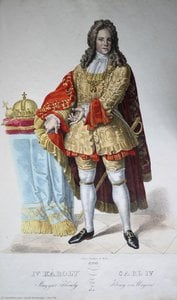
Discover the regal portrait of Ferdinand I by Josef Kriehuber, 1828. A detailed, realistic masterpiece showcasing royal authority, noble attire, and intricate symbolism. Perfect for art collectors and history enthusiasts.

Josef Kriehuber a fost un grafist austriac celebru pentru portrete ample ale societății vieniene din perioada Biedermeier, oferind o perspectivă unică asupra vieții de epocă prin peste 3000 imagini captivante și detaliate.

Reproducere pictată manual în ulei

Pictură în ulei pe pânză, realizată manual de artiștii noștri la dimensiunea și ramele dorite de dumneavoastră, pe comandă. (Comandă printul Comandă printulCumpără imaginea Cumpără imaginea)

P118B $10
P118H $10
P118W $10
P438Z $10
P508JH $12
P508YH $12
P805H $10
P805Z $10
P919BZ $10
P919G $10
P919XJ $10
P959ZH $10
P968JZ $12
W106C $8
W218G $10
W218JH $8
W218Y $10
W307PJ $10
W316G $10
W316PJ $8
W316Y $10
W398PJ $8
W4111J $10
W500HY $15
W500JH $15
W692G $12
W849H $8
W940BG $15
W953PJ $8

Standard
personalizat
CM
INCH

Alegeți dintre dimensiunile noastre prestabilite, care respectă proporțiile originale ale operei de artă.

lățime
înălțime

Puteți introduce propriile dimensiuni pentru a se potrivi unui anumit cadru sau spațiu. Dacă dimensiunea selectată nu corespunde proporțiilor imaginii originale, vom decupa opera de artă sau vom extinde pictura cu elemente suplimentare pictate manual. O simulare digitală vă va fi trimisă pentru aprobare înainte de începerea producției.
Vă rugăm să rețineți că previzualizarea de pe ecran nu reflectă decuparea sau extinderea reală. Doar macheta va arăta cu exactitate compoziția finală.
Deși sunt disponibile dimensiuni personalizate, vă recomandăm să selectați o dimensiune din lista predefinită pentru a păstra proporțiile originale.

Exemple de elemente ce pot fi personalizate: Înlocuiți fața cu fotografia clientului; Adăugați un animal de companie (de exemplu, înlocuiți pisica cu un câine); Includeți un mesaj ascuns în fundal; Schimbați peisajul sau elementele din fundal.
După plasarea comenzii, echipa WahooArt.com va contacta clientul prin e-mail pentru instrucțiuni și îi va furniza o previzualizare a machetei

Livrare în întreaga lume () în 3-4 săptămâni, în loc de cele 5 săptămâni standard. (30 August). Fără compromisuri în ceea ce privește calitatea.

why_choose_icon
Livrare expres gratuită la nivel mondial
why_choose_icon
Pânză de in de înaltă calitate
why_choose_icon
Asigurare completă pentru transport
why_choose_icon
Garanție de rambursare a taxelor vamale
why_choose_icon
Garanția fidelității culorilor
why_choose_icon
Politica de retur în 60 de zile (doar pentru defecte)
why_choose_icon
Garanție de rambursare 100%
why_choose_icon
Ofertă pentru comenzi multiple

Preț total

$ 272

reproduction

Ferdinand I

Tehnică de reproducere

Dimensiune reproducere

-

Preț total calculat

$ 272

Informații rapide

  • title: Ferdinand I
  • artist: Josef Kriehuber
  • notable_elements: Richly adorned armor, intricate embroidery, regal crown, scepter, formal pose
  • subject: Ferdinand I, a monarch depicted with regal attire, crown, scepter, and noble symbolism
  • style: Realistic, classical portraiture

Test de cultură artistică

Fiecare întrebare are un singur răspuns corect.

Întrebare 1:
Who is the artist of the portrait titled 'Ferdinand I' created in 1828?
Întrebare 2:
What is the primary subject depicted in this artwork?
Întrebare 3:
Which artistic style best describes this portrait?
Întrebare 4:
Which symbolic elements are prominently featured in the portrait of Ferdinand I?
Întrebare 5:
What technique is Josef Kriehuber most renowned for in his artworks?

Majestic Portrait of Ferdinand I: A Masterpiece of 19th-Century Regal Art

Step into the grandeur of the Austrian monarchy with this exquisite portrait of Ferdinand I, a distinguished ruler whose legacy is captured with meticulous detail and regal splendor. Created in 1828 by the renowned Austrian artist Josef Kriehuber, this artwork exemplifies the classical portraiture style that celebrates nobility, authority, and divine right. Its commanding presence makes it an ideal centerpiece for collectors, interior designers, and art enthusiasts seeking to elevate their space with a piece that embodies both historical significance and artistic excellence.

Subject and Symbolism: A Regal Sovereign

This portrait presents Ferdinand I in full regal attire, emphasizing his status as a sovereign and symbol of stability within the Habsburg Empire. Dressed in elaborate armor and richly embroidered garments, he wears a majestic crown and holds a scepter—traditional symbols of power and sovereignty. The regal cape, with its vibrant pink and gold accents, further accentuates his noble stature. The composition centers the figure prominently, conveying dominance and respect, while subtle details in his expression evoke a sense of dignity, responsibility, and contemplative leadership. This work not only honors the individual but also embodies the ideals of monarchy and divine authority that defined the era.

Artistic Style and Technique: Realism with Regal Grandeur

Josef Kriehuber’s masterful technique shines through in this highly detailed and realistic portrait. Employing lithography and fine brushwork, the artist captures the textures of metallic armor, soft fabrics, and intricate embroidery with exceptional precision. The use of light and shadow enhances the three-dimensionality of the figure, creating a lifelike presence that commands attention. The composition’s symmetry, combined with slight asymmetrical nuances in the pose, adds a dynamic yet balanced aesthetic. The neutral background ensures all focus remains on the subject, emphasizing his importance and the craftsmanship behind the work.

Historical Context and Cultural Significance

Painted during a period of political stability and imperial pride, this portrait reflects the ideals of 19th-century European monarchy. Ferdinand I, known for his diplomatic role and leadership, is immortalized here as a symbol of authority and continuity. The artwork serves as a visual testament to Austria’s rich history, capturing a moment when art and monarchy intertwined to reinforce legitimacy and national identity. As a collectible, it offers a glimpse into the grandeur of the Habsburg dynasty and the artistic traditions that celebrated royal figures with reverence and dignity.

Emotional Impact and Interior Inspiration

This portrait evokes a sense of awe and admiration, inspiring viewers with its regal elegance and historical gravitas. Its commanding presence makes it an ideal focal point in a sophisticated living room, office, or gallery space, adding a touch of aristocratic refinement. The detailed craftsmanship and noble symbolism invite contemplation and appreciation, making it a meaningful addition for those passionate about history, royalty, or fine art. Whether displayed as a standalone statement or part of a curated collection, this work promises to elevate any interior with its timeless beauty and emotional resonance.

A Timeless Investment for Art Lovers and Collectors

Owning a high-quality reproduction of this portrait allows art lovers and interior designers to bring a piece of 19th-century European history into their environment. Its artistic mastery, historical depth, and regal symbolism make it a valuable investment that combines aesthetic appeal with cultural significance. Perfect for framing in a classic or modern setting, this artwork offers a lasting impression of grandeur, craftsmanship, and historical storytelling—an enduring treasure for generations to come.

Biografie artist

A Chronicler of Viennese Society: The Life and Art of Josef Kriehuber

Born in Vienna on December 14th, 1800, Josef Kriehuber wasn’t merely an artist; he was a meticulous recorder of his era. He didn't seek to create grand historical narratives or mythological allegories – instead, his artistic vision focused intently on the intimate details of everyday life in 19th-century Vienna, making him one of the most prolific and insightful chroniclers of Viennese society through the revolutionary medium of lithography. Kriehuber’s journey began with formal training at the prestigious Vienna Academy under Hubert Maurer, a renowned landscape painter, but it was his embrace of lithography that truly defined his career, transforming him into an unparalleled visual historian. This innovative technique, allowing for rapid and affordable image reproduction, democratized portraiture, making it accessible to a wider audience than ever before – an audience he served with unwavering dedication and a keen eye for capturing the essence of their status, personality, and social standing. He wasn’t simply replicating likenesses; he was crafting visual records, meticulously documenting the spirit of an age.

The Biedermeier Portraitist: A Window into an Era

Kriehuber's artistic development blossomed within the context of the Biedermeier period (roughly 1815-1848), a time profoundly shaped by the aftermath of Napoleon’s tumultuous reign. This era, characterized by a deep yearning for domesticity, simplicity, and an appreciation for the commonplace, resonated deeply with Kriehuber's sensibilities. He wasn’t interested in grand pronouncements or theatrical displays; instead, he found beauty and significance in the quiet moments of daily life – a sentiment perfectly embodied by the Biedermeier aesthetic. While initially exploring landscape lithography, it was portraiture where his talent truly flourished. Over the course of his career, spanning nearly eight decades, Kriehuber produced an astonishing output of over 3000 lithographs – a staggering number that speaks not only to his exceptional skill but also to the immense demand for his work from a diverse clientele ranging from nobility and government officials to prominent merchants and ordinary citizens seeking a lasting image of themselves or their loved ones. His portraits weren’t idealized fantasies; they were remarkably accurate representations, imbued with a palpable sense of character and social standing, offering a rare glimpse into the lives of Viennese society.

Beyond Likeness: Capturing the Soul of Vienna

Kriehuber's artistic vision extended far beyond simply replicating physical appearances. He recognized the importance of documenting the urban landscape itself – particularly the vibrant atmosphere of Vienna’s Prater park, a beloved recreational space for all social classes. His lithographs depicting scenes from the Prater offer invaluable insights into 19th-century Viennese life and culture, revealing details about fashion, social interactions, and the leisure activities of the time. These weren't merely picturesque views; they were snapshots of a society at play, capturing the energy and excitement of a city embracing its newfound freedoms after decades of political upheaval. He skillfully portrayed the diverse attractions of the Prater – from carousel rides to fortune tellers – alongside the people who flocked there to enjoy them, creating a rich tapestry of everyday life. Through these studies, Kriehuber transformed himself into a visual chronicler, preserving for posterity the sights and sounds of a rapidly changing city.

Influences and Artistic Technique

Pinpointing specific artistic influences on Kriehuber proves challenging; he wasn’t overtly imitating a particular master or adhering to a strict stylistic school. However, his dedication to realism aligns with broader artistic trends of the time, reflecting a growing desire for accurate representation in art. He was a contemporary of other portrait artists, but distinguished himself through the sheer volume and consistency of his output, as well as his mastery of lithography – a medium he embraced with remarkable innovation. His technique involved meticulous preparatory sketches, followed by careful stone etching and printing, resulting in incredibly detailed and nuanced images. The subtle tonal variations achieved through lithography allowed him to capture not just physical likeness but also the mood and atmosphere of each scene. He wasn’t interested in grand gestures or dramatic compositions; instead, he focused on capturing the subtle nuances of expression and personality – a skill that made his portraits so remarkably engaging.

Legacy and Recognition: A Lasting Impression

Kriehuber's influence extended beyond his prolific output. He served as a teacher at the Theresianum Academy in Vienna, nurturing future generations of artists and passing on his technical expertise. In 1860, he received significant recognition with the Franz Joseph Order, acknowledging his contributions to Austrian art. However, the rise of photography towards the end of his life presented a challenge to his profession. As photographic portraiture became more accessible and affordable, demand for lithographic portraits declined, leading to financial hardship in his later years. Despite this setback, Kriehuber continued to work tirelessly until his death on May 30th, 1876, leaving behind an extraordinary body of work that continues to captivate and inform us today. His legacy lies not only in the sheer number of portraits he created but also in their historical significance as a visual record of 19th-century Central European society – a testament to his dedication, skill, and profound understanding of human nature. Collections of his works are held at the Albertina museum and the Austrian National Library, ensuring that his art will continue to be appreciated for generations to come. His work remains a poignant reminder of a bygone era, offering a unique window into the lives and times of those who shaped Vienna’s vibrant cultural landscape.

Josef Kriehuber

Josef Kriehuber

1800 - 1876 , Austria

Detalii rapide

  • Artistic Movement Or Style: Realism, Biedermeier
  • Artists Or Movements Influenced By This Artist: ['Friedrich Kriehuber']
  • Date Of Birth: 1800-12-14
  • Date Of Death: 1876-05-30
  • Full Name: Josef Kriehuber
  • Nationality: Austrian
  • Notable Artworks:
    • Portrete diverse
    • Scene Prater
  • Place Of Birth: Viena, Austria