CONSULTAȚIE GRATUITĂ ÎN ARTE VIZUALE

x
Comandă reproducere pictată Comandă reproducere pictatăCumpără imaginea Cumpără imaginea TrimiteTrimite
DetaliiDetalii Adaugă la favorite Adaugă la favorite DescarcăDescarcă SimilareSimilare Raze XRaze X DiaporamaDiaporama

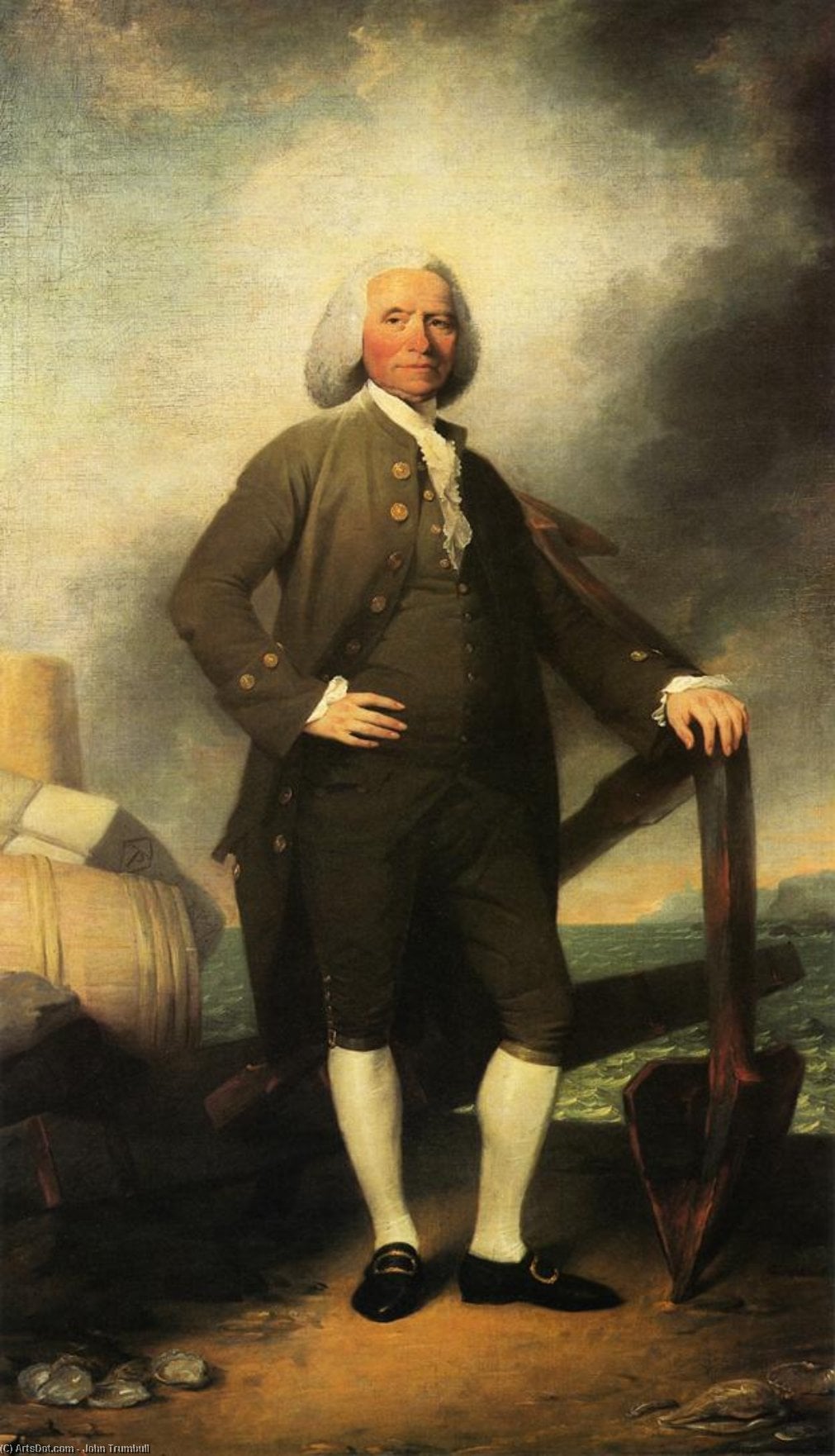
Patrick Tracy

Experience John Trumbull's Grand Manner neoclassicism in Patrick Tracy, a 1784 portrait capturing revolutionary American spirit; discover this historical masterpiece today.

John Trumbull (1756-1843), pictorul Revoluției Americane, a înregistrat vivid lupta pentru independență prin opere istorice emblematice precum Declarația Independenței. Descoperă moștenirea lui!

Giclée / Imprimare artistică

Print giclée sau pe canvas de calitate muzeală, cu producție rapidă și opțiuni flexibile de finisare.

P118B $10
P118H $10
P118W $10
P438Z $10
P508JH $12
P508YH $12
P805H $10
P805Z $10
P919BZ $10
P919G $10
P919XJ $10
P959ZH $10
P968JZ $12
W106C $8
W218G $10
W218JH $8
W218Y $10
W307PJ $10
W316G $10
W316PJ $8
W316Y $10
W398PJ $8
W4111J $10
W500HY $15
W500JH $15
W692G $12
W849H $8
W940BG $15
W953PJ $8

Standard
custom
CM
INCH

Alegeți dintre dimensiunile noastre prestabilite, care respectă proporțiile originale ale operei de artă.

lățime
înălțime

Puteți introduce propriile dimensiuni pentru a se potrivi unui anumit cadru sau spațiu. Dacă dimensiunea selectată nu corespunde proporțiilor imaginii originale, vom decupa lucrarea de artă sau vom extinde imaginea cu margini oglindite sau cu o culoare uniformă. Un mockup digital va fi trimis pentru aprobarea dumneavoastră înainte de începerea producției.
Vă rugăm să rețineți că previzualizarea de pe ecran nu reflectă decuparea sau extinderea reală. Doar mockup-ul va arăta cu exactitate compoziția finală.
Deși dimensiunile personalizate sunt disponibile, vă recomandăm să selectați o dimensiune din lista predefinită pentru a păstra proporțiile originale.

Livrare în întreaga lume () în 2 săptămâni, în loc de cele 4/5 săptămâni standard. (2 Iulie)

why_choose_icon
Livrare expres gratuită la nivel mondial
why_choose_icon
Pânză de in de înaltă calitate
why_choose_icon
Asigurare completă pentru transport
why_choose_icon
Garanție de rambursare a taxelor vamale
why_choose_icon
Garanția fidelității culorilor
why_choose_icon
Politica de retur de 60 de zile (doar pentru defecte)
why_choose_icon
Garanție 100% de rambursare
why_choose_icon
Reducere la comenzi multiple

Preț total

-

reproduction

Patrick Tracy

Giclée / Imprimare artistică

Dimensiune reproducere

-

Preț total calculat

-

Informații rapide

  • Medium: Oil on canvas
  • Location: National Gallery of Art, Washington, D.C.
  • Notable elements or techniques: Detailed portraiture; Grand Manner style
  • Subject or theme: Portrait
  • Year: 1784
  • Influences: Benjamin West
  • Artist: John Trumbull

Test de cunoștințe despre artă

Fiecare întrebare are un singur răspuns corect.

Întrebare 1:
What is the primary subject matter of Patrick Tracy?
Întrebare 2:
According to the description, what artistic style characterizes Trumbull's painting?
Întrebare 3:
What is depicted in the background of the painting?
Întrebare 4:
Who painted Patrick Tracy?
Întrebare 5:
What historical period does the painting represent?

Descriere obiect de colecție

A Portrait Steeped in Revolution: John Trumbull’s “Patrick Tracy”

John Trumbull's "Patrick Tracy," completed in 1784, transcends mere portraiture; it embodies the spirit of America’s formative years. Executed during a pivotal moment in history—the burgeoning independence movement—the painting captures not just an individual likeness but also the broader socio-political landscape of colonial Massachusetts. This remarkable artwork resides within the National Gallery of Art's collection and offers a fascinating glimpse into both artistic innovation and historical significance.
  • Subject Matter: The portrait depicts Patrick Tracy Jackson, a prominent warehouse owner and one of the founders of the Boston Manufacturing Company—a cornerstone in the industrial revolution’s genesis. Trumbull skillfully portrays Tracy with meticulous detail, emphasizing his dignified bearing and conveying an aura of quiet confidence.
  • Style & Technique: Trumbull adheres to the precepts of Grand Manner neoclassicism, championed by Benjamin West. The composition is balanced and harmonious, reflecting a desire for order and rationality—values central to Enlightenment thought. Employing oil paint on canvas, Trumbull achieves remarkable tonal gradation and textural richness, capturing the subtle nuances of Tracy’s skin tone and clothing fabric.
  • Historical Context: Painted against a backdrop of swirling clouds and an expansive sky, “Patrick Tracy” speaks directly to the anxieties and aspirations of its time. The depiction of Tracy standing on a beach—a symbol of maritime trade and exploration—underscores Massachusetts's economic importance during the Revolution. Furthermore, Trumbull’s inclusion of paddles subtly references Tracy’s involvement in seafaring activities, reinforcing the painting’s connection to America’s burgeoning commercial prowess.
  • Symbolism: The anchor held by Tracy serves as a potent emblem of stability and resilience—a visual representation of the unwavering determination required to forge a new nation amidst turbulent political upheaval. Trumbull's careful attention to detail extends beyond mere likeness; he imbues the portrait with symbolic significance, elevating it from a simple depiction of an individual to a meditation on virtue and fortitude.
  • Emotional Impact: “Patrick Tracy” evokes a palpable sense of nostalgia for a bygone era—a reminder of America’s early idealism and its commitment to republican values. The painting's serene atmosphere contrasts sharply with the tumultuous events unfolding around it, prompting contemplation about legacy and remembrance. Its enduring appeal lies in Trumbull’s ability to convey not only Tracy’s physical appearance but also his inner character—a testament to the power of art as a vehicle for communicating profound ideas.
Provenance: The painting descends from Patrick Tracy Jackson Sr., who bequeathed it to his daughter Hannah Tracy Jackson (Mrs. Jonathan Jackson), and subsequently passed through the hands of her son, Patrick Tracy Jackson Jr., and grandson, James Baldwin Jackson III. Its current location is within the National Gallery of Art’s permanent collection, ensuring its preservation for future generations. Associated Names: John Singleton Copley (attributed); Hannah Tracy Jackson; Jonathan Jackson; James Baldwin Jackson III.

Biografie artist

A Life Etched in Revolution: The World of John Trumbull

John Trumbull, a name synonymous with the visual narrative of America’s birth, was more than just a painter; he was a witness, a soldier, and a chronicler of a nation forging its identity. Born in Lebanon, Connecticut, in 1756, into a family steeped in patriotic fervor – his father, Jonathan Trumbull, served as governor throughout the Revolutionary War – young John’s destiny seemed inextricably linked with the unfolding drama of independence. A childhood accident tragically robbed him of sight in one eye, yet this perceived limitation may have paradoxically sharpened his observational skills, contributing to the meticulous detail that would become a hallmark of his artistic style. His formative education at Harvard College nurtured both intellectual curiosity and creative aspiration, equipping him with the tools necessary for scholarly pursuits alongside artistic exploration. Even before fully dedicating himself to painting, Trumbull’s life was already imbued with a sense of duty and service; sketching fortifications during the Siege of Boston – an early demonstration of his talent and commitment – foreshadowed his future role in immortalizing the Revolution on canvas.

From Battlefield to Brushstroke: Artistic Formation and Influences

The path to becoming “the Painter of the Revolution” wasn’t instantaneous. Initial financial constraints steered Trumbull toward diverse endeavors, but the irresistible allure of art ultimately prevailed. In 1780, he embarked upon a transformative journey to London, seeking guidance from Benjamin West, an American expatriate who had ascended to prominence as a history painter. Recognizing Trumbull's considerable potential, West championed his focus on scenes from the War of Independence, advocating for smaller-scale works and miniature portraits – a pragmatic approach that allowed Trumbull to hone his skills while establishing a respected clientele. Over the span of his prolific career, he produced approximately 250 miniatures, showcasing remarkable versatility and precision. However, West’s influence extended far beyond mere technique; he instilled in Trumbull an appreciation for classical history painting, inspiring him to infuse his canvases with dramatic composition and allegorical depth. This fusion of historical accuracy and artistic grandeur would define Trumbull's mature style—a stylistic hallmark that distinguishes his oeuvre from contemporaries. The experience wasn’t without its challenges; a brief but disconcerting arrest on suspicion of espionage – fueled by anxieties surrounding the execution of Major André – temporarily disrupted his London residency, yet ultimately solidified his unwavering devotion to portraying the American cause.

Immortalizing Independence: Masterpieces and Historical Significance

Trumbull's most enduring legacy resides in his monumental historical paintings, particularly those now enshrined within the Capitol Rotunda. The Declaration of Independence stands as his magnum opus—a meticulously crafted tableau capturing the momentous occasion with breathtaking fidelity. It transcends mere documentation; it strives to convey the gravity and solemnity inherent in this pivotal moment in American history. Famously, this painting found its way onto the reverse of the two-dollar bill, cementing its place within the iconography of the nation. Alongside this iconic work are The Surrender of Cornwallis at Yorktown and The Surrender of General Burgoyne—paintings that meticulously depict key battles of the Revolution with remarkable realism. Furthermore, Trumbull’s depiction of George Washington before the Battle of Trenton – a portrait imbued with symbolic resonance – exemplifies his ability to convey not only visual likeness but also psychological insight. These paintings weren't simply artistic creations; they functioned as powerful instruments of national commemoration, designed to galvanize patriotism and solidify a shared historical narrative. Trumbull undertook exhaustive research—consulting with veterans and scrutinizing contemporary accounts—to ensure the utmost accuracy in his depictions. His preparatory sketches—such as Study for Surrender of Cornwallis at Yorktown—reveal his painstaking planning process and unwavering dedication to detail. In an era devoid of photographic records, Trumbull’s paintings served as invaluable visual chronicles, shaping public understanding of the Revolution and its central figures.

A Lasting Legacy: Collections and Enduring Influence

John Trumbull's contributions extend beyond his celebrated canvases; he championed the arts within America with fervent conviction, serving as president of the American Academy of Fine Arts from 1816 to 1835—a role he undertook tirelessly to foster a vibrant artistic community. His paintings are now housed in prestigious institutions across the United States, including Yale University Art Gallery, the Smithsonian American Art Museum, and the Virginia Museum of Fine Arts—ensuring their accessibility for generations to come. The prominent display of his works within the Capitol Rotunda serves as a poignant testament to his lifelong commitment to both art and history.
  • His paintings continue to inspire artists and historians alike.
  • They offer invaluable insights into the aesthetics and ideals of the early American republic.
  • Trumbull’s unwavering adherence to historical precision established a precedent for future generations of American historical painters.
John Trumbull passed away in 1843, leaving behind an impressive body of work that continues to resonate with profound significance—a legacy secured as “the Painter of the Revolution,” an artist who not only captured history but actively contributed to its remembrance and interpretation.
Pictorul Revoluției

Pictorul Revoluției

1756 - 1843 , SUA

Detalii rapide

  • Artistic Movement Or Style: Pictură istorică
  • Artists Who Influenced This Artist: ['Benjamin West']
  • Date Of Birth: 6 iunie 1756
  • Full Name: John Trumbull
  • Nationality: American
  • Notable Artworks:
    • Declarația Independenței
    • Încoronarea lui George al III-lea
    • Bătălia de la Trenton
  • Place Of Birth: Lebanon, SUA