

Printuri giclée sau pe canvas de calitate muzeală, cu proces de producție rapid și opțiuni flexibile de finisare. ( Comandă pictură realizată manual Comută pe Imagine Digitală)





























Alegeți dintre dimensiunile noastre prestabilite, care respectă proporțiile originale ale operei de artă.

Introduceți lățimea și înălțimea necesare pentru a se potrivi ramei sau peretelui dumneavoastră. O printare poate fi doar tăiată, niciodată extinsă dincolo de dimensiunea imaginii originale, astfel încât o dimensiune cu o formă diferită va pierde o parte din imagine. Vă trimitem o simulare digitală pentru aprobare înainte de a imprima orice. Imaginea afișată pe această pagină nu prezintă tăierea reală — doar simularea arată acest lucru.
Livrare în întreaga lume () în 2 săptămâni, în loc de cele 4/5 săptămâni standard. (16 Noiembrie)
Faith
Dimensiune reproducere
John Phillip’s “Faith,” painted in 1864, isn't merely a portrait; it’s a carefully constructed tableau of piety and domestic tranquility, steeped in the cultural currents of late Victorian Scotland. The painting depicts a woman, likely a member of the Scottish upper-middle class, enveloped in a quiet moment of prayer or contemplation. Her posture is graceful yet grounded, her hands clasped gently before her chest – a gesture universally understood as signifying reverence. The muted palette—dominated by earthy browns, soft greens, and subtle blues—evokes a sense of warmth and domesticity, while the carefully rendered fabrics and modest jewelry speak to a life of quiet dignity. Beyond the immediate subject, the inclusion of two figures on either side adds layers of narrative; one appears to be reading, perhaps offering guidance or support, while the other seems absorbed in conversation, suggesting a community bound by shared faith.
Phillip’s style is deeply rooted in the artistic traditions he studied at the Royal Academy and, crucially, his association with the influential “Clique” of Victorian artists. This group, led by Richard Dadd, championed the works of William Hogarth and David Wilkie, seeking to capture the spirit of realism and dramatic storytelling. However, Phillip’s work transcends mere imitation; he infused these influences with a distinctly Scottish sensibility, evident in his meticulous attention to detail—the texture of the woman's shawl, the subtle play of light on her face, the architectural backdrop hinting at a modest church. The composition itself is carefully balanced, drawing the eye inward towards the central figure and creating a sense of intimate serenity.
It’s important to understand that “Faith” emerged from John Phillip's transformative journey to Spain in 1851. He was deeply moved by the religious fervor he witnessed there, particularly within the Catholic communities. This experience profoundly altered his artistic perspective, leading him to dedicate much of his later work to depicting Spanish life and culture – a period that earned him the affectionate moniker “Spanish Phillip.” The painting reflects this newfound inspiration; the subtle warmth of the lighting, reminiscent of the Spanish sun, and the overall atmosphere of quiet devotion are hallmarks of his Spanish-influenced style. The inclusion of elements like the rosary beads and the implied presence of a church subtly allude to the religious context of the scene.
Phillip’s background as a member of the Clique also shaped his artistic approach. The group's admiration for Hogarth, known for his satirical social commentary, is evident in the painting’s ability to subtly convey a sense of moral virtue and domestic harmony. However, Phillip’s work goes beyond mere social critique; it offers a poignant glimpse into the private world of faith—a realm of quiet contemplation and spiritual connection.
The symbolism within “Faith” is both subtle and profound. The woman's closed eyes suggest a deep level of concentration, inviting the viewer to share in her moment of prayer or reflection. The simple setting—a modestly furnished room—underscores the importance of faith as an internal experience rather than an outward display of wealth or status. The two figures flanking the central subject represent the community that supports and nurtures this individual’s spiritual journey, highlighting the interconnectedness of faith within a domestic sphere.
More broadly, “Faith” speaks to the enduring human need for connection—to God, to family, and to one another. The painting's quiet dignity and serene atmosphere evoke a sense of peace and tranquility, offering a respite from the complexities of modern life. It’s a testament to the power of faith to provide solace, guidance, and a profound sense of belonging.
Reproducing “Faith” in high quality offers a beautiful way to bring this evocative Victorian painting into your home or office. The meticulous detail and rich colors of the original are faithfully captured in our hand-painted reproductions, ensuring that you experience the full emotional impact of Phillip’s masterpiece. Whether displayed as a statement piece in a living room or a calming addition to a study, “Faith” will serve as a timeless reminder of the enduring power of devotion and human connection.
"Faith" este clasificată ca Recognized.
„Faith” împarte cu celelalte opere ale lui John Phillip stilul Victorian Scottish Painting și temele recurente: spanish realism, hogarth, wilkie, scottish piety, religious themes, victorian social commentary, faith, portraiture.
„Faith” a fost creat în 1864, făcând parte din mișcarea Victorian Scottish Painting.

Născut în peisajul aspre din Aberdeen, Scoția, în 1817, John Phillip ar fi depășit în cele din urmă mediul său modest pentru a deveni una dintre cele mai evocatoare voci ale erei victoriană. Cunoscut afectuos sub porecla „Spanish Phillip”, călătoria sa a fost una a unei transformări profunde, evoluând de la reprezentările meticuloase și sumbre ale vieții rurale scoțiene către canvașurile însorite și vibrante ale Europei de Sud. Primii săi ani au fost marcați de un talent înflorissant care a atras atenția unor patroni influenți, în special lui Lord Panmure, a cărui generozitate a oferit podul esențial pentru ca Phillip să ajungă la Royal Academy of Arts din Londra în 1836. În cadrul acestei instituții prestigioase, Phillip și-a găsit tribul artistic, alăturându-se grupului influent cunoscut sub numele de The Clique. Conducer de excentricul Richard Dadd, acest cerc de artiști împărtășea o reverență profundă pentru realismul narativ al lui William Hogarth și pentru peisajele dramatice ale lui David Wilkie, principii care ar fi format fundamentul măiestriei sale tehnice timpurii.
În anii săi de formare, pensula lui Phillip s-a dedicat demnității și suferinței poporului scoțian. El a surprins existența liniștită și adesea epuizantă a croperilor cu o precizie care vorbea direct sufletului patriei sale. Aceste lucrări timpurii erau caracterizate printr-o atenție meticuloasă la detalii și un sentiment de pietate domestică, reflectând correntul cultural al Scoției de la sfârșitul epocii victoriană. Totuși, o schimbare crucială a avut loc în 1851, la îndemnul sfatului medical de a căuta climate mai calde pentru sănătatea sa. Această pelerinaj în Spania nu a fost doar o călătorie de recuperare, ci o renaștere artistică. Pe măsură ce rătăcea prin străzile Sevillei și Madridului, umbrele Scoției au fost înlocuite de lumina strălucitoare a Andaluziei. Influența stăpânilor spanioli Bartolom Tamayo, Bartolomé Esteban Murillo și Diego Velázquez a început să îi pătrundă în operă, alterându-i fundamental paleta cromatică și abordarea formei.
Tranziția de la stilul detaliat, aproape documentar, al perioadei sale scoțiene, către o tehnică mult mai amplă și picturală, marchează cea mai fascinantă evoluție din cariera lui Phillip. Deși inițial a rezistat mișcării emergente Pre-Raphaelite, lucrările sale ulterioare, precum The Letter Writer, Seville, au început să exhibe o interacțiune subtilă cu calitățile lor luminoase. Pe măsură ce călătoriile sale îi aprofundau legătura cu spiritul spaniol, brushwork-ul său a devenit mai sigur și mai expresiv, oglindind evoluțiile de la sfârșitul carierei ale contemporanilor precum John Everett Millais. El s-a îndepărtat de contururile rigide către o explorare a texturii și a atmosferei, utilizând impasto pentru a captura căldura și praful peisajului spaniol.
Această maturizare stilistică a atins apogeu în anii 1860, unde compozițiile sale au devenit mai grandioase și mai rezonante emoțional. Capacitatea sa de a împleti următoarele elemente i-a definit perioada de maturitate:
Realizări majore precum The Early Career of Murillo (1864) și La Gloria (1865) stau ca mărturii ale acestei perioade de măiestrie. În aceste lucrări, Phillip nu a pictat doar subiecte; el a pictat însăși istoria artei, făcând omagiu stăpânilor care i-au inspirat propria sa metamorfoză. Moștenirea sa rămâne cea a unui constructor de punți — între tradițiile sumbre ale picturii de gen scoțiene și romantismul vibrant și plin de lumină al Mediteranei. Deși viața sa a fost tăiată de la vârsta de 50 de ani în 1867, John Phillip a lăsat în urmă o operă care continuă să încântă, invitând privitorii să iasă din ceții gri a Nordului și să pășească în strălucirea eternă și aurie a viselor sale spaniole.

1817 - 1867 , Regatul Unit

Embark on a visual journey through the radiant sunlight of Joaquín Sorolla's masterpieces. Discover the brilliance of Spanish Impressionism and learn how to bring this luminous legacy into your home with museum-quality, hand-painted oil reproductions from WahooArt.

Embark on a sophisticated exploration of Spanish art history, from the chiaroscuro mastery of Velázquez to the profound shadows of Goya. Discover how the dramatic light and emotional depth of Spain's greatest masters continue to inspire collectors and connoisseurs today.
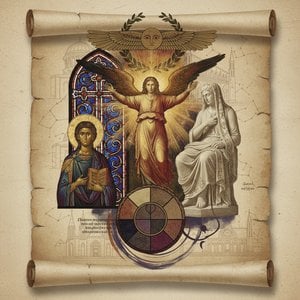
Explore the profound impact of spiritual themes in fine art. From Renaissance iconography to Baroque drama, discover how sacred symbolism and divine visions have shaped art history through a scholarly and reflective lens.

Uncover the hidden meanings behind 10 iconic masterpieces. From Surrealism to Renaissance, explore the stories, techniques, and deep symbolism of world-famous art. Find museum-quality reproductions and curated decor inspiration. Discover all masterpieces on WahooArt.com.

Immerse yourself in the profound legacy of Spanish Baroque art. From the spiritual intensity of Zurbarán to Goya’s emotive genius, explore museum-quality, hand-painted reproductions and bespoke commissions curated for the most discerning global collectors.
 Previzualizare

 Trimite prin felicitare
 Distribuie
 Detalii despre lucrare
 Ghid


 Descarcă imaginea
 Produse similare
 Radiografie
 Galerie foto
 Întrebări și răspunsuri

 Statistici


 Vezi mai mult









 Opțiunea cu sticlă este disponibilă doar pentru dimensiuni de sub 110 cm


