Printuri giclée sau pe canvas de calitate muzeală, cu proces de producție rapid și opțiuni flexibile de finisare. ( Comandă pictură realizată manual Comută pe Imagine Digitală)





























Alegeți dintre dimensiunile noastre prestabilite, care respectă proporțiile originale ale operei de artă.

Introduceți lățimea și înălțimea necesare pentru a se potrivi ramei sau peretelui dumneavoastră. O printare poate fi doar tăiată, niciodată extinsă dincolo de dimensiunea imaginii originale, astfel încât o dimensiune cu o formă diferită va pierde o parte din imagine. Vă trimitem o simulare digitală pentru aprobare înainte de a imprima orice. Imaginea afișată pe această pagină nu prezintă tăierea reală — doar simularea arată acest lucru.
Livrare în întreaga lume () în 2 săptămâni, în loc de cele 4/5 săptămâni standard. (16 Noiembrie)
William Pitt
Dimensiune reproducere
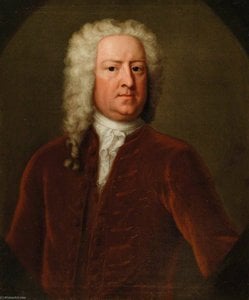
The gaze of William Pitt meets the viewer through this oil on canvas, a work emerging from the studio of John Hoppner. The portrait captures the statesman in a moment of heavy stillness, rendered with a sense of gravity that lingers on the surface. It is a work from circa 1805 or after, a period when the subject's presence in British politics was deeply felt. The scale of the image, measuring 55 1/2 in. x 42 1/2 in. (1410 mm x 1080 mm), gives the figure a physical weight that commands the space around it.
John Hoppner’s studio provides the hand behind this depiction, translating the likeness of the man into a study of light and shadow. The paint sits upon the canvas, building a presence that feels immediate and substantial. Every brushstroke contributes to the quiet intensity of the sitter, holding him in a permanent state of contemplation. The work exists as a direct encounter with a man who shaped the direction of a nation, frozen here in the medium of oil.
The subject emerges from a dark, indistinct background, positioned in a bust-length portrait that feels immediate and heavy with presence. He sits slightly off-center, his gaze directed toward the viewer's left, creating a sense of quiet, internal movement. Light descends from the upper left, carving out the contours of his face and neck with a soft, directional glow. This interplay of light and shadow grants the figure a palpable three-dimensional volume, pulling him forward from the atmospheric gloom behind him.
The color palette remains somber and grounded, relying on a restrained selection of earthy, muted tones. Browns, ochre, and cream dominate the scene, while subtle flesh tones define the skin. There is a tactile quality to the surface, where the texture of the canvas peeks through the layers of paint. The brushwork appears smooth and blended, particularly in the soft transitions of the background and the heavy folds of the clothing, yet it maintains enough definition to trace the sharp structure of the facial features and the weight of the coat.
The origins of this portrait trace back to a private commission by Lord Mulgrave, who sought to capture the likeness of the statesman. The artist began the work in December 1804, and the final brushstrokes were applied on the 28th of October, 1805. This specific version, identified as NPG L267, exists as a studio copy of the original portrait. While the primary work was intended for the Mulgrave family, the demand for the image grew rapidly among the subject's supporters, leading to many bespoke copies being produced by the artist's studio.
The movement of this painting through various collections reflects its enduring presence in British history. It currently resides within the collection of the Tate, though it is frequently seen on loan to the National Portrait Gallery in London. This arrangement allows the work to remain accessible to those tracing the political landscape of the era. The provenance of the piece is deeply intertwined with the social circles of the time, as the portrait's popularity ensured that many versions circulated among the elite of the Regency period.
The portrait stirs a profound tension between those who see its technical brilliance and those who recoil from its unflinching honesty. To some observers, the work represents the artist's finest achievement, a peak of his creative ability. Yet, this praise is met with sharp, visceral condemnation from those who knew the man behind the statesman. One contemporary observer famously dismissed the image as a vile picture, finding the depiction far too harsh to be a true likeness.
The debate centers on the psychological weight carried in the subject's expression. Critics have argued that the face appears anxious and diseased, as if reddened by wine and soured by the heavy burden of disappointment. There is a sense that the portrait captures a man at his breaking point, a version of the statesman that many found difficult to accept. This perceived severity led some to suggest that the likeness was almost too unflattering, questioning if such a grim portrayal should ever have been intended for a man of his standing.
While some find the work's power in its ability to strip away the veneer of political dignity, others see it as a departure from the idealized grace expected in high-society portraiture. The tension remains: is this a profound study of a man weathered by his duties, or a failure to capture the youthful spirit of a leader? The brushstrokes hold both the weight of a statesman's exhaustion and the controversy of a likeness that refuses to look away from the toll of power.
The portrait resides within the National Portrait Gallery in London, United Kingdom. Visitors find the subject waiting for them on the third floor, specifically positioned in Room 18. It exists as a vital part of the National Portrait Gallery collection, though its presence in the gallery is a temporary arrangement. The work is currently on loan from the Tate Gallery, which maintains its primary stewardship.
Walking through the halls of the museum, one encounters this depiction of the statesman in a space dedicated to the faces that shaped a nation. The lighting in the gallery room catches the subtle textures of the oil on canvas, allowing the viewer to observe the heavy shadows and the serious expression of the sitter. It remains a central fixture for those tracing the political history of the United Kingdom through its visual records.
The artist's hand moves through other lives and faces, capturing the essence of the Georgian era with a similar command of light. In one notable work, he presents Mrs. Jordan as Viola in 'Twelfth Night', a piece that highlights his celebrated ability to render women and children. This portrait reveals a specific skill that defined his career, much like the way he handles the textures and shadows in his other commissions. He moves between the heavy gravity of statesmen and the softer, more spirited depictions of his female sitters, always maintaining a sense of physical presence.
His reach extends into the highest circles of British society, where he finds himself painting the very figures who shape the nation. He captures the likeness of the Prince of Wales, a man whose patronage helped secure Hoppner's position among the elite. This ability to navigate the social landscape is evident in his portraits of influential men like Lord Hugh Seymour. Each sitter emerges from the dim, atmospheric backgrounds with a distinct vitality, whether they are members of the royal court or prominent figures of the military and aristocracy.
The artist's brush also finds its way to the faces of those who leave their own marks on history, such as in his portrait of Thomas Williams. Through these various subjects, a pattern of character emerges. He uses chiaroscuro to sculpt forms, pulling his subjects forward from the shadows to create a sense of depth. Whether he is working on a formal bust-length portrait or a more expansive composition, his touch remains loose and free, avoiding a rigid or overly precious finish in favor of a living, breathing likeness.
O reproducere a „William Pitt” se potrivește de minune într-un Office.
"William Pitt" de John Hoppner emană o atmosferă Classic și este recomandată pentru o Office. Întreaga dispoziție este ceea ce lucrarea aduce în spațiul din jurul său.
Pentru a achiziționa o ediție print a lucrării "William Pitt" de John Hoppner, vă este suficient să o comandați pe pagina dedicată Print Fine Art: o printă fine art pe canvas din bumbac sau pe hârtie canvas arhivistică.

John Hoppner s-a născut în Whitechapel, Londra, în anul 1758, într-o familie de părinți germani. Mama sa deținea o funcție de servitoare la palatul regal, o conexiune care a plasat familia într-o proximitate constantă de curtea regală încă de la început. Acest mediu de început i-a modelat traiectoria vieții, deși prima sa direcție a fost una muzicală, mai degrabă decât vizuală. Într-o etapă a tinereții, el a servit ca corist la capela regală, un rol care îi cerea disciplină, dar care, în cele din urmă, nu a putut să-i capteze interesul în fața inclinației sale naturale către artă.
Debutul său oficial în lumea artei a avut loc în 1775, când a intrat la Royal Academy. El și-a demonstrat rapid competența tehnică prin recunoașterea instituțională. În 1778, a primit o medală de argint pentru desenul după natur, o validare practică a abilităților sale de observare. Până în 1782, reușise să obțină medalia de aur a Academiei pentru pictura istorică, o realizare obținută prin lucrarea sa despre Regele Lear. Acest succes timpuriu a stabilit fundamentul tehnic necesar pentru pictura de portret a înaltei societăți, stil care avea să îi definească întreaga carieră.
John Hoppner și-a consolidat poziția în înaltele straturi ale societății britanice prin capturarea chipurilor celor mai influente figuri ale epocii. Abilitatea sa de a naviga printre comenzi de prestigiu din înalta societate a făcut ca portretele sale ale Prințului de Wales, ale Ducelui și Duciței de York, precum și ale lui Lord Rodney și Lord Nelson, să fie expuse în apartamentele de stat de la Palatul St. James. Aceste așezări nu erau simple elemente de decor, ci adevărate semne ale statutului său profesional. Deși pictura istorică i-a adus primele laude, a fost reprezentările sale de femei și copii cele care au fost recunoscute constant de către critici drept cele mai reușite realizări ale sale.
Stăpânirea sa asupra caracterului subiectului este, probabil, cea mai evidentă în pictură Mrs. Jordan as Viola in 'Twelfth Night', o operă aflată în prezent în colecția English Heritage din Londra, Regatul Unit. Această piesă demonstrează acea abilitate specifică ce i-a definit întreaga carieră. Dincolo de suprafața picturii, John Hoppner a interacționat profund cu cultura literară a timpului. În 1803, a publicat A Series of Portraits of Ladies, iar până în 1805, a lansat un volum de traduceri ale unor povești orientale, adaptate în versuri englezești. Aceste inițiative dezvăluie un artist a cărui influență s-a extins dincolo de atelier, pătrundând în țesătura intelectuală și socială a perioadei.
Identitatea tehnică a lui John Hoppner este indisolubil legată de măiestria sa în manipularea culorii. Considerat pe larg un colorist excepțional, acesta utiliza un control magistral al pigmentului pentru a sculpta trăsăturile subiectelor sale. Abordarea sa nu a fost niciodată una rigidă sau excesiv de minuțioasă; dimpotrivă, brushwork-ul său era definit de o anumită amploare și libertate. Această fluiditate i-a permis să transcendă simpla imitație, insuflând portretelor sale o vitalitate specifică, care a distins opera sa de tradițiile academice mai rigide ale epocii.
Umbra lui Joshua Reynolds planează asupra metodei de lucru a lui Hoppner. Acesta a fost profund influențat de Reynolds, adoptând un mod de execuție ce reflecta sensibilitățile maestrului consacrat. Această influență este cel mai vizibilă în modul în care picturile sale păstrează o subtilă reflexie a farmecului lui Reynolds, în special prin tratarea luminii și prin atmosfera picturală, moale, care îi învăluie subiecții. El nu s-a limitat la a copia stilul, ci a adaptat principiile acestuia pentru a-i servi propriilor nevoi expresive.
În practică, acest lucru a dat naștere unui stil care echilibra naturalismul cu o anumită grație aristocratică. Folosind chiaroscuro pentru a sculpta formele, el izbea figurile din fundaluri întunecate prin jocul dramatic al luminii și al umbrei. Această tehnică era deosebit de eficientă în reprezentarea texturilor, precum detaliile fine ale părului sau pliselele grele ale robei academice. Capacitatea sa de a gestiona aceste elemente a asigurat portretelor sale o prezență fizică ce rămâne perfect lizibilă și captivantă pentru ochiul modern.
Viața profesională a lui John Hoppner a fost definită de o competiție acerbă cu Thomas Lawrence. Această rivalitate nu era doar o chestiune de prestigiu, ci o luptă directă pentru atenția elitei londrezii. Tensiunea dintre acești doi pictori a devenit palpabilă între anii 1803 și 1809, perioadă în care aceștia au împărțit, într-adevăr, același asistent, pe Samuel Lane. Această suprapunere de personalitate subliniază cât de strâns și competitiv era piața de portrete în acea epocă.
Reteaua sa de contacte profesionale s-a extins prin colaborări semnificative, care au intersectat cele mai înalte straturi ale artei britanice. În jurul anului 1788, el a contribuit la o operă a lui Thomas Gainsborough, oferind contribuția sa specifică prin pictarea fundalului pentru portretul Charlottei, Condalesa Talbot. De asemenea, a lucrat strâns cu gravorul Charles Wilkin pentru a produce seria sa de portrete. Aceste parteneriate demonstrează modul în care opera sa se sprijina pe un sistem structurat de specialiști tehnici pentru a ajunge la un public mult mai vast.
Prezența lui John Hoppner în marile colecții internaționale confirmă influența sa care a depășit mult granițele Insulelor Britanice. În Statele Unite, Metropolitan Museum of Art din New York păstrează două dintre lucrile sale, în timp ce Taft Museum of Art din Cincinnati găzduiește alte două capodopere. Aceste piese oferă o privire directă asupra capacității sale remarcabile de a manipula culoarea și forma în cadrul portretisticii de înaltă societate a epocii sale.
În Regatul Unit, moștenirea sa artistică este distribuită în cadrul mai multor instituții de prestigiu. English Heritage din Londra păstrează o operă de o importanță majoră, fiind vorba despre Mrs Jordan as Viola in 'Twelfth Night', care constituie un exemplu elocvent al măiestriei sale în portretură. National Maritime Museum din Londra deține, de asemenea, una dintre picturile sale, asigurându-se astfel că influența sa rămâne vizibilă în istoria socială și navală britanică. În plus, Biblioteca Națională a🏴🏴Wales din Aberystwyth păstrează o lucrare în colecția sa.

1758 - 1810 , Regatul Unit
 Previzualizare

 Trimite prin felicitare
 Distribuie
 Detalii despre lucrare
 Ghid


 Descarcă imaginea
 Produse similare
 Radiografie
 Galerie foto
 Întrebări și răspunsuri

 Statistici


 Vezi mai mult









 Opțiunea cu sticlă este disponibilă doar pentru dimensiuni de sub 110 cm