


 1974
1974 153.0 x 153.0 cm
Achiziționați o imagine digitală de înaltă rezoluție, îmbunătățită, mult superioară previzualizării online.
Fiecare fișier este pregătit cu meticulozitate de specialiștii noștri interni, utilizând instrumente avansate și retușare manuală expertă. Ne asigurăm că fiecare imagine beneficiază de o claritate excepțională, o acuratețe precisă a culorilor și detalii fine.
Fișierul final este livrat prin e-mail în termen de 72 de ore, optimizat pentru utilizare imediată în medii profesionale, editoriale și de imprimare. Aceasta este aceeași calitate în care au încredere studiouri de design, edituri și galerii de top.
Descărcați un fișier la rezoluție înaltă pentru afișare personală, imprimare și proiecte creative. ( Comandă printul Comandă pictură lucrată manual)
Când alegeți WahooArt.com, nu primiți doar o simplă imagine – primiți o operă de artă digitală îmbunătățită profesional, creată cu precizie și susținută de o garanție de satisfacție. Iată tot ceea ce primești odată cu comanda ta, în mod automat:

Fișierul imaginii digitale la rezoluție înaltă vă va fi trimis prin e-mail în termen de 72 de ore de la finalizarea comenzii – gata pentru utilizare imediată.

Opera ta de artă este optimizată profesional prin intermediul unor instrumente AI avansate și al editării manuale, asigurând un nivel maxim de detalii, claritate și acuratețe a culorilor.

Ai șters sau ai pierdut din greșeală fișierul? Nu îți face griji – ți-l vom retrimite oricând, gratuit.

Bucură-te instant de noua ta operă de artă, fără taxe vamale, taxe de import sau costuri de livrare – descărcările digitale sunt întotdeauna fără taxe.

Asigurăm o reflectare cât mai fidelă a culorilor originale în imaginea ta digitală, prin utilizarea unor instrumente profesionale și a proceselor de gestionare a culorii.

Dacă nu sunteți mulțumit de imaginea digitală achiziționată, o vom revizui sau vă vom returna 100% în termen de 100 de zile - fără nicio întrebare.

Nu ești mulțumit? Primești rambursarea integrală în termen de 100 de zile de la primirea fișierului digital – fără nicio întrebare.

Cumpără 3 imagini, economisește 10% - Cumpără 5, economisește 15% - Cumpără 10+, economisește 20%. Ideal pentru proiecte creative, galerii și agenții.

Born on April 16, 1940, in Highland Park, New Jersey, Joan Snyder’s artistic journey began not within the hallowed halls of formal training but amidst the quiet rhythms of rural life. Her childhood, steeped in a sense of place and deeply connected to her family's heritage – a blend of Russian and German Jewish roots – would profoundly shape her visual language. This early grounding, coupled with an intuitive understanding of materials and process, laid the foundation for a career that would challenge conventions of abstract painting and forge a distinctly personal and powerfully expressive style.
Snyder’s formal artistic education commenced in 1962 at Douglass College, where she earned her Bachelor of Arts degree in Sociology. However, it was her subsequent enrollment in the Master of Fine Arts program at Rutgers University in 1963 that truly ignited her creative fire. Influenced by the expressive currents of German Expressionism – particularly artists like Ernst Ludwig Kirchner and Emil Nolde – as well as the pioneering work of Wassily Kandinsky and Alexei Jawlensky, Snyder began to experiment with layering materials and embracing a raw, emotional approach to painting. This early exploration was not merely about replicating visual forms but about translating internal experiences onto canvas, a process she would continue to refine throughout her career.
The early 1970s marked a pivotal period in Snyder’s artistic development. Responding to the dominance of color field painting and seeking to re-establish painting as a dynamic, process-oriented medium, she began creating what would become known as her "stroke paintings." These works, characterized by their deliberate use of grids overlaid with gestural brushstrokes, represented a radical departure from traditional abstract forms. The grid, initially employed as a structural device, quickly evolved into a means of deconstructing and reassembling the history of painting itself – a direct challenge to the established canon.
Snyder’s process during this period was intensely physical and intuitive. She would meticulously apply layers of gesso, paint, gauze, thread, and even glitter to the canvas, building up complex textures and surfaces that seemed to pulse with energy. These materials weren't simply applied; they were integrated into a ritualistic act, reflecting her deep connection to tradition and her desire to imbue her work with symbolic meaning. The “stroke paintings” weren’t about creating representational images but about exploring the very essence of painting – its materiality, its process, and its capacity for emotional resonance.
As Snyder moved into the late 1970s, she began to move beyond the formal constraints of the grid, incorporating symbols, text, and a wider range of materials into her paintings. This shift reflected a deepening engagement with personal experience and a desire to articulate complex emotional landscapes. Her work became increasingly autobiographical, grappling with themes of identity, gender, sexuality, and the legacy of trauma – particularly the Holocaust through the lens of her maternal grandmother’s story.
Snyder's exploration of female subjectivity was central to this period. She sought to challenge conventional representations of women in art and to create paintings that spoke directly to the experiences of women—her own, as well as those of others. Her use of materials like thread and fabric, often imbued with personal significance, further underscored her commitment to exploring the complexities of female identity.
Joan Snyder’s artistic vision has been widely recognized throughout her career, earning her numerous prestigious awards and accolades. She is a recipient of the MacArthur Fellowship (2007), a Guggenheim Memorial Fellowship (1983), and a National Endowment for the Arts Fellowship (1974). Her work has been exhibited extensively in major museums and galleries around the world, including the Whitney Museum of American Art, the Guggenheim Museum, Tate Modern, and the Jewish Museum.
Snyder’s influence extends far beyond her own body of work. She is considered a key figure in the feminist art movement of the 1970s and has inspired generations of artists to explore new approaches to painting and to challenge traditional artistic conventions. Her willingness to embrace experimentation, to incorporate unconventional materials, and to confront difficult emotional subjects has cemented her place as one of the most important and enduring painters of her generation. Today, Joan Snyder continues to paint with a fierce independence and unwavering commitment to her unique vision, reminding us of the power of art to connect us to ourselves, to each other, and to the deepest currents of human experience.
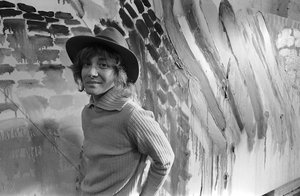
1940 - , United States of America

 Previzualizare
 Trimite
 Distribuie
 Detalii despre lucrare

 Descarcă
 Produse similare
 Radiografie
 Diapozitive automate
 Vezi mai mult


