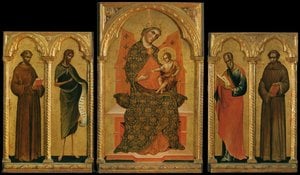
Pictură în ulei pe pânză, realizată manual de artiștii noștri la dimensiunea și ramele dorite de dumneavoastră, pe comandă. ( Comandă printul Cumpără imaginea)
Alegeți dintre dimensiunile noastre prestabilite, care respectă proporțiile originale ale operei de artă.

Puteți introduce propriile dimensiuni pentru a se potrivi unui anumit cadru sau spațiu. Dacă dimensiunea selectată nu corespunde proporțiilor imaginii originale, vom decupa opera de artă sau vom extinde pictura cu elemente suplimentare pictate manual. O simulare digitală vă va fi trimisă pentru aprobare înainte de începerea producției.
Vă rugăm să rețineți că previzualizarea de pe ecran nu reflectă decuparea sau extinderea reală. Doar macheta va arăta cu exactitate compoziția finală.
Deși sunt disponibile dimensiuni personalizate, vă recomandăm să selectați o dimensiune din lista predefinită pentru a păstra proporțiile originale.
Livrare în întreaga lume () în 3-4 săptămâni, în loc de cele 5 săptămâni standard. (6 Septembrie). Fără compromisuri în ceea ce privește calitatea.


Annunciation And Resurrection
Dimensiune reproducere

To step into the world of Joan Mates is to enter a period of profound spiritual intensity and burgeoning artistic curiosity. Born around 1370 in Vilafranca del Penedès, Spain, Mates emerged during a transformative era for Catalan art—a time when the rigid structures of the Gothic tradition began to breathe with the nascent naturalism of the early Renaissance. While much of his personal history remains shrouded in the mists of the fourteenth century, his artistic legacy is vividly preserved through works that pulse with a quiet, devotional power. His career was not merely a local phenomenon; it was part of an expanding European network, evidenced by his workshop's ability to produce altarpie and commissions that reached as far as Scotland and various regions across Aragon.
The foundations of Mates’s style were likely laid within the prestigious Catalan Gothic tradition. It is widely believed that he absorbed the techniques of masters such as Pere Serra, whose influential workshop set the standard for monumental altarpieces in the region. This early training instilled in him a reverence for clarity of form and theological precision, yet Mates possessed a unique ability to transcend mere imitation. He became an expressive painter, one who utilized sharp contrasts of line to achieve a striking intensity of effect. Rather than becoming lost in complex architectural settings, Mates focused his creative energy on the human figure, imbuing his subjects with a refined elegance that suggests the delicate influence of Franco-Flemish manuscript illumination.
The breadth of Mates’s achievements is best understood through his significant commissions for the great cathedrals and chapels of Catalonia. His ability to complete monumental tasks, such as finishing the retable of Saints Thomas and Anthony for the Barcelona Cathedral in 1409—a project left incomplete by Pere Serra—demonstrates both his technical skill and his standing within the professional guild system. His oeuvre is a tapestry of sacred narratives, ranging from the deeply personal to the grandly liturgical:
Ultimately, the historical significance of Joan Mates lies in his role as a transitional figure. He did not simply exist within the Gothic era; he helped navigate its evolution toward the Renaissance. By prioritizing the emotional resonance of the human figure and integrating international influences from the Flemish tradition, he helped craft a visual language that was both deeply rooted in Catalan identity and vibrantly connected to the broader currents of European art history. His works remain enduring testaments to a period when art served as the primary bridge between the mortal soul and the divine.

1370 - 1431 , Spain

 Previzualizare
 Trimite
 Distribuie
 Detalii despre lucrare

 Descarcă
 Produse similare
 Radiografie
 Diapozitive automate
 Vezi mai mult




































 Opțiunea cu sticlă este disponibilă doar pentru dimensiuni de sub 110 cm