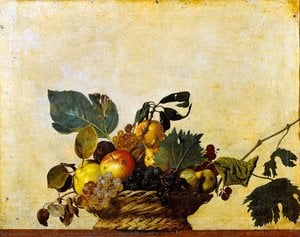
The Legacy of Jan van Os
Jan van Os stands as a central figure in a remarkable Dutch artistic dynasty, a painter whose life and work were deeply intertwined with the rich traditions of his homeland. Born in Middelharnis, Netherlands, he emerged from a lineage of creators that would leave an indelible mark on the history of still life painting. His early training under Aert Schouman in The Hague provided him with a foundational mastery that allowed him to navigate the evolving tastes of the eighteenth century. While his professional journey began with the expansive horizons of seascapes, he eventually found his true calling in the intimate, meticulously detailed world of floral and fruit compositions.
The artist's personal life was as much a part of the artistic landscape as his canvases. In 1775, he married Susanna de La Croix, an accomplished pastellist and the daughter of the portraitist Pieter Frederik de la Century. This union not only solidified his place within a community of skilled makers but also established a domestic environment where art was the primary language. Through this connection, Jan van Os became the patriarch of a family of painters, serving as a teacher to his children, including Maria Margaretha van Os and Pieter Gerardus van Os, ensuring that his technical precision and aesthetic sensibilities were passed down through generations.
Mastery of the Still Life
The brilliance of Jan van Os lies in his ability to breathe life into the inanimate. Drawing inspiration from the legendary Jan van Huysum, he perfected a style characterized by breathtaking realism and a vibrant use of color. His floral arrangements are often presented with a sense of theatrical elegance, frequently resting upon a marble ledge set against a deep green background that allows the petals to glow with an almost supernatural light. Every element of his work—from the delicate texture of a petal to the heavy sheen of ripening fruit—was rendered with an obsessive attention to detail that captivated the viewer.
Beyond mere decoration, his works often captured a sense of fleeting beauty and the passage of time. In masterpieces such as Still Life With Dead Bird, Fruit And Flowers, he blended the lushness of nature with more poignant, somber elements, creating a dialogue between life and decay. This ability to balance the exuberant vitality of a blooming rose with the stillness of a taxidermied bird demonstrates a profound emotional depth. His technique was not merely about imitation but about capturing the very essence of his subjects, making each composition a window into a meticulously observed world.
Historical Significance
The importance of Jan van Os extends far beyond his individual achievements as a painter and poet. He was a cornerstone of the Van Os family of artists, a group that helped sustain the prestige of Dutch painting during a period of significant transition. By recording himself in the painters' confraternity in 1773, he formally entered a lineage of professionals dedicated to the elevation of their craft. His influence is seen not only in his own oeuvre but also in the subsequent successes of his children, who carried his meticulous approach into the nineteenth century.
His contribution to the genre of still life remains a testament to the enduring power of observation. Through his work, the traditions of the Dutch Golden Age were preserved and reinterpreted for a new era, blending classical influences with a refined, late-eighteenth-century elegance. Today, his paintings serve as vital links to a period where the mastery of light, texture, and composition reached a pinnacle of sophistication, leaving behind a legacy of beauty that continues to resonate within the halls of art history.



 Previzualizare
 Comută pe versiunea Print
 Trimite prin felicitare
 Distribuie
 Detalii despre lucrare
 Ghid
Ghid

 Descarcă imaginea
 Produse similare
 Radiografie
 Galerie foto
 Q&A
Q&A Statistici
 Vezi mai mult