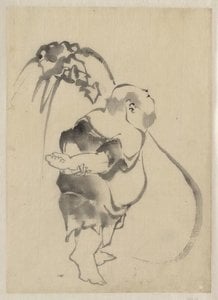
Viziunea unui negustor din Kyoto: Lumea lui Ito Jakuchu
Născut în 1716, în inima aglomeratului district Nishiki din Kyoto, Ito Jakuchu a apărut ca unul dintre cei mai originali și captivați artiști ai Japoniei. Spre deosebire de mulți dintre contemporanii săi, care urmăreau linii artistice consacrate, calea lui Jakuchu a fost modelată în mod unic de originile comerciale prospere ale familiei sale și de o implicare profund personală în filosofia budistă Zen. Tatăl său, Ito Genzaemon, era un grocer de succes, oferindu-i tânărului Jakuchu o educație confortabilă care i-a permis să își cultive talentul incipient pentru pictură încă de la o vârstă fragedă. Acest mediu comercial, totuși, i-a insuflat și o conștiință asupra schimbărilor sociale și a influenței tot mai mari a clasei de negustori din Kyoto — o perspectivă care avea să îi informeze subtil viziunea artistică. Deși se aștepta ca el să preia în cele din urmă afacerea familiei, pasiunea lui Jakuchu se afla în altă parte, un magnetism către capturarea esenței vieții prin pensulă și cerneală. După trecerea în neființă a tatălui său, când avea doar 23 de ani, Jakuchu a gestionat scurt magazinul înainte de a-l încredința fratelui său, dedicându-se în sfârșit pe deplin căutării artei.
Ruptura cu tradiția: Stil și tematică
Stilul artistic al lui Ito Jakuchu reprezintă o fuziune fascinantă între realismul meticulos și experimentarea ludică. Deși profund înrădăcinat în subiecte tradiționale japoneze — în special păsări, flori și peisaje — el a infuzat opera sa cu un spirit inovator care l-a distins de mulți dintre contemporanii săi. A câștigat notorietate alături de Maruyama Okyo pentru reprezentările sale realiste, însă Jakuch\\u00adchu s-a aventurat dincolo de simpla imitarea naturii. Picturile sale sunt caracterizate prin culori vibrante, compoziții dinamice și o dorință de a sfida perspectivele convenționale.
Străcsul, în special, a devenit un motiv recurent în opusul său, fiind ridicat din categoria animalelor umile de fermă în subiecte demne de o explorare artistică profundă. El nu picta pur și simplu *ceea* ce vedea, ci explora vitalitatea și caracterul inerent fiecărei creaturi. Dincolo de păsări, opera lui Jakuchu reflectă adesea temele budismului Zen — o liniște contemplativă, aprecierea pentru impermanență și venerația față de lumea naturală. Celebra sa lucrare
Liana de fasole, de exemplu, nu este doar un studiu botanic, ci o meditație asupra creșterii, degradării și interconectivității tuturor lucrurilor. Reprezentările sale policrome magistrale — *doshoku sai-e* — sunt deosebit de celebrate, evidențiind o atenție extraordinară la detalii și o paletă vibrantă rar întâlnită în pictura japoneză din acea perioadă.
Influența Zen și dezvoltarea artistică
Influența budismului Zen asupra artei lui Jakuchu este incontestabilă. El a devenit un frate laiar (*koji*) la templul Shokoku-ji din Kyoto, scufundându-se în principiile Zen care puneau accent pe experiența directă, intuiție și căutarea iluminării prin contemplare. Această ancorare spirituală i-a modelat profund abordarea artistică, cultivând un sentiment de detașare față de preocupările lumești și o concentrare neclintită pe capturarea esenței subiectelor sale. Se spune că a primit chiar și permisiunea specială de a studia picturile clasice chinezești din colecția templului, absorbind secole de tradiție artistică în timp ce își construia propria cale unică. Deși Jakuchu ar fi putut studia inițial sub îndrumarea lui Ōoka Shunboku, un artist al școlii Kano specializat în pictura cu păsări și flori, el a depășit rapid instruirea convențională, dezvoltând un stil idiosincratic care rezista oricărei categorisiri ușoare. Dorința sa de a sparge normele stabilite l-a aliniat cu „Linia Excentricilor” — o mișcare evidențiată de cartea influentă a lui Nobuo Tsuji, *Kisō no Keifu* (Linia Excentricilor). Această lucrare a apărut ca un apărător al artiștilor care au provocat convențiile artistice, consolidând locul lui Jakuchu ca o figură pivot în istoria artei japoneze.
Moștenire și redescoperire
În ciuda talentului și dedicării sale, Ito Jakuchu a rămas relativ necunoscut pe parcursul vieții sale. Abia în secolul al XX-lea opera sa a început să primească o recunoaștere largă, în mare parte datorită cercetărilor lui Tsuji, care au revoluționat percepția asupra picturii din perioada Edo. Susținerea lui Tsuji pentru Jakuchu ca figură cheie în „Linia Excentricilor” a declanșat un interes reînnoit pentru arta sa și l-a consacrat drept unul dintre cei mai importan$'i și inovatori pictori ai Japoniei. Influența sa poate fi văzută și în dezvoltarea
Ukiyo-e, genul popular de printuri pe lemn, demonstrând un impact mai larg asupra culturii artistice japoneze. Dispoziția lui Jakuchu de a experimenta cu perspectiva, culoarea și subiectele a deschis calea generațiilor viitoare de artiști de a sfida convențiile și de a explora noi posibilități creative. O biografie scrisă de monacul Zen Daiten Kenjo în 1766 oferă o perspectivă valoroasă asupra filosofiei artistice a lui Jakuchu, dezvăluind evitarea sa deliberată a figurilor umane — o alegere care subliniază concentrarea sa pe lumea naturală și pe frumusețea sa inerentă. Astăzi, Ito Jakuchu este sărbătorit nu doar pentru abilitatea sa tehnică, ci și pentru viziunea sa unică, fiind mărturia puterii durabile a unui artist care a îndrăznit să își creeze propria cale și să captureze spiritul timpului său cu o originalitate fără egal.
Lucrări Remarcabile
- Cinci sute de Arhați: O lucrare monumentală ce demonstrează abilitatea și dedicarea extraordinară a lui Jakuchu.
- Hanshan și Shide (Kanzan și Jittoku): Demonstrează capacitatea sa de a surprinde esența culturii și folclorului japonez.
- Crabi și bujori: Un exemplu esențial al stilului său caracteristic, îmbinând detaliul meticulos cu culoarea vibrantă.
- Liana de fasole: O capodoperă sumi-e care întruchipează filosofia Zen și prezintă detalii intricate.
- Două crane: Exemplifică măiestria sa artistică în reprezentarea subiectelor aviare cu grație și precizie.
- Pin bătrân: O lucrare impresionantă ce demonstrează tehnica sa magistrală de pensulă (101 x 40 cm, mătase).



 Vezi în context
 Comandă pictură realizată manual
 Trimite
 Distribuie
 Detalii
 Ghidul

 Descarcă
 Produse similare
 Radiografie
 Diaporama
 Statistici


 Citește mai mult






































 Opțiunea cu sticlă este disponibilă doar pentru dimensiuni de sub 110 cm