x
PrevizualizarePrevizualizare Previzualizare ARPrevizualizare AR Comandă printul Comandă printulCumpără imaginea Cumpără imaginea TrimiteTrimite
Detalii despre lucrareDetalii despre lucrare Adaugă la favorite Adaugă la favorite DescarcăDescarcă Produse similareProduse similare RadiografieRadiografie Diapozitive automateDiapozitive automate

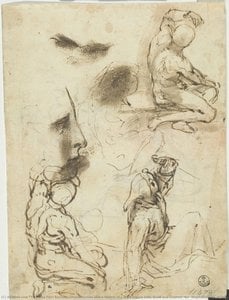
Cinci Capete Clasice

Descoperă pictura impresionantă "Cinci Capete Clasice" de Andrea del Sarto în stil Mannerist, realizată în tehnici complexe cu pen și cerneală alb-negru. Studiu artistic despre formă și expresie.

Discover Inigo Jones (1573-1652), the pioneering English architect who introduced classical architecture & Renaissance design to Britain. Explore his iconic works like Queen's House & Banqueting Hall, influenced by Palladio & Vitruvius.

Reproducere pictată manual în ulei

Pictură în ulei pe pânză, realizată manual de artiștii noștri la dimensiunea și ramele dorite de dumneavoastră, pe comandă. (Comandă printul Comandă printulCumpără imaginea Cumpără imaginea)

P118B $10
P118H $10
P118W $10
P438Z $10
P508JH $12
P508YH $12
P805H $10
P805Z $10
P919BZ $10
P919G $10
P919XJ $10
P959ZH $10
P968JZ $12
W106C $8
W218G $10
W218JH $8
W218Y $10
W307PJ $10
W316G $10
W316PJ $8
W316Y $10
W398PJ $8
W4111J $10
W500HY $15
W500JH $15
W692G $12
W849H $8
W940BG $15
W953PJ $8

Standard
personalizat
CM
INCH

Alegeți dintre dimensiunile noastre prestabilite, care respectă proporțiile originale ale operei de artă.

lățime
înălțime

Puteți introduce propriile dimensiuni pentru a se potrivi unui anumit cadru sau spațiu. Dacă dimensiunea selectată nu corespunde proporțiilor imaginii originale, vom decupa opera de artă sau vom extinde pictura cu elemente suplimentare pictate manual. O simulare digitală vă va fi trimisă pentru aprobare înainte de începerea producției.
Vă rugăm să rețineți că previzualizarea de pe ecran nu reflectă decuparea sau extinderea reală. Doar macheta va arăta cu exactitate compoziția finală.
Deși sunt disponibile dimensiuni personalizate, vă recomandăm să selectați o dimensiune din lista predefinită pentru a păstra proporțiile originale.

Exemple de elemente ce pot fi personalizate: Înlocuiți fața cu fotografia clientului; Adăugați un animal de companie (de exemplu, înlocuiți pisica cu un câine); Includeți un mesaj ascuns în fundal; Schimbați peisajul sau elementele din fundal.
După plasarea comenzii, echipa WahooArt.com va contacta clientul prin e-mail pentru instrucțiuni și îi va furniza o previzualizare a machetei

Livrare în întreaga lume () în 3-4 săptămâni, în loc de cele 5 săptămâni standard. (29 August). Fără compromisuri în ceea ce privește calitatea.

why_choose_icon
Livrare expres gratuită la nivel mondial
why_choose_icon
Pânză de in de înaltă calitate
why_choose_icon
Asigurare completă pentru transport
why_choose_icon
Garanție de rambursare a taxelor vamale
why_choose_icon
Garanția fidelității culorilor
why_choose_icon
Politica de retur în 60 de zile (doar pentru defecte)
why_choose_icon
Garanție de rambursare 100%
why_choose_icon
Ofertă pentru comenzi multiple

Preț total

$ 372

reproduction

Cinci Capete Clasice

Tehnică de reproducere

Dimensiune reproducere

-

Preț total calculat

$ 372

Informații rapide

  • Artist: Inigo Jones
  • Influences:
    • Palladio
    • Vitruvius
  • Year: 1639
  • Notable elements or techniques: Detailed hatching, cross-hatching and stippling
  • Title: Five Classical Heads
  • Dimensions: 8 x 20 cm
  • Subject or theme: Human form & expression

Test de cultură artistică

Fiecare întrebare are un singur răspuns corect.

Întrebare 1:
What artistic movement is “Five Classical Heads” primarily associated with?
Întrebare 2:
Who created the artwork “Five Classical Heads”?
Întrebare 3:
What technique was predominantly used in creating “Five Classical Heads”?
Întrebare 4:
In what year was “Five Classical Heads” completed?
Întrebare 5:
What is a key characteristic of Mannerist art that distinguishes it from earlier styles?

Andrea del Sarto’s “Five Classical Heads”: A Study in Mannerist Portraiture

The Florentine artist Andrea del Sarto’s “Five Classical Heads,” completed around 1639, stands as a cornerstone of Mannerist art—a stylistic movement that deliberately rejected the harmonious ideals of Renaissance sculpture and painting. More than just a depiction of human anatomy, it embodies a profound engagement with classical thought and represents a pivotal moment in artistic history. The drawing itself is executed with meticulous detail using pen and ink on laid paper, measuring 8 x 20 cm—a relatively modest scale that belies the ambition of its conception.
  • Composition & Technique: Sarto’s masterful hand demonstrates an unparalleled understanding of hatching, cross-hatching, and stippling techniques. These methods skillfully create a palpable sense of depth and volume, transforming flat paper into convincing representations of sculpted forms. The tightly arranged heads side by side emphasize the artist's preoccupation with geometric precision—a hallmark of Mannerist aesthetics.
  • Classical Influence: “Five Classical Heads” draws heavily from the sculptural traditions of ancient Greece and Rome. Sarto meticulously studied idealized human figures, mirroring the humanist principles championed during the Renaissance. The heads are positioned in poses reminiscent of classical statues—demonstrating a conscious effort to elevate portraiture beyond mere likeness.
  • Symbolism & Emotion: Despite its formal restraint, the drawing conveys subtle emotional nuances. Each head expresses a distinct mood—ranging from serene contemplation to intense focus—reflecting Mannerist artists’ fascination with psychological complexity. The artist's deliberate manipulation of shading and line work serves not only to define form but also to imbue the portraits with symbolic resonance.
  • Historical Context: Created during a period of artistic experimentation and intellectual debate, “Five Classical Heads” reflects the broader cultural landscape of Florence in the mid-17th century. Sarto’s work aligns with the Mannerist reaction against the prevailing stylistic conventions—a desire to push boundaries and explore new expressive possibilities.

Inigo Jones: Pioneer of Palladian Architecture

The British architect Inigo Jones (1573–1652) revolutionized English architecture by introducing the principles of Palladio and Vitruvius—a transformative influence that irrevocably shaped the visual culture of his era. Unlike many architects of his time who adhered to traditional Gothic styles, Jones championed classical ideals of proportion and symmetry—establishing London as a beacon of Renaissance design. His most celebrated achievements include Queen’s House and Banqueting Hall—monuments that stand as enduring testaments to his visionary genius.
  • Early Career & Patronage: Jones's unconventional path toward architectural success stemmed from an innate artistic talent recognized by a discerning patron—the Earl of Pembroke—who facilitated his journey to Italy. This formative experience instilled in him a profound appreciation for Palladio’s villas and Vitruvius’s treatise on architecture—inspiring him to adopt classical forms and techniques.
  • Iconic Buildings: Queen's House, completed in 1639, represents Jones’s triumph over stylistic convention—a daring departure from Gothic traditions that nonetheless adhered to Palladian rules of proportion. Similarly, Banqueting Hall embodies grandeur and ceremonial splendor—reflecting the aspirations of James I and establishing London as a center for Renaissance culture.
  • Influence on Theatre Design: Beyond his architectural endeavors, Jones profoundly impacted English theatre by pioneering movable scenery and the proscenium arch—innovations that fundamentally altered the theatrical experience. His collaborations with Ben Jonson cemented his reputation as a visionary artist—demonstrating his versatility and intellectual curiosity.

The Significance of Pen & Ink Drawing: Mastering Line Work

Andrea del Sarto’s “Five Classical Heads” exemplifies the mastery of pen and ink drawing—a technique characterized by its precision, subtlety, and expressive potential. The artist skillfully employs hatching, cross-hatching, and stippling to create a convincing illusion of three dimensions—transforming flat paper into textured surfaces that capture the contours of sculpted forms.
  • Detailed Observation: Sarto’s meticulous observation of human anatomy informs his artistic process—resulting in portraits that convey both anatomical accuracy and psychological depth. The artist's unwavering commitment to detail underscores Mannerist artists’ fascination with capturing the nuances of human expression.
  • Expressive Line Quality: The expressive line quality of “Five Classical Heads” contributes significantly to its emotional impact—reflecting Mannerist artists’ desire to convey psychological complexity through visual means. Variations in line density and tonal values enhance the drawing's dramatic effect.

A Legacy of Innovation & Artistic Vision

“Five Classical Heads,” alongside Inigo Jones’ architectural achievements, represents a watershed moment in European art history—a bold assertion of classical ideals against prevailing stylistic conventions. Sarto’s unwavering dedication to artistic excellence cemented his place as one of the most influential architects and artists of his time—inspiring generations of creatives to embrace innovation and explore new expressive possibilities.

Biografie artist

A Pioneer Forged in Classical Ideals

Inigo Jones, a name synonymous with the birth of classical architecture in England, stands as a monumental figure bridging the artistic sensibilities of the Renaissance and the burgeoning aesthetic landscape of the 17th century. Born in London in 1573, his origins remain somewhat shrouded in mystery—a Welsh lineage is suggested but never definitively confirmed by contemporary records. What *is* certain is that Jones’s path diverged from traditional architectural training; he wasn't apprenticed through a guild or established workshop. Early indications point to a background as a joiner, yet it was an innate artistic talent recognized by a discerning patron—perhaps the Earl of Pembroke or Rutland—that propelled him toward his destiny. Around 1603, this benefactor facilitated a transformative journey to Italy, a pilgrimage that would irrevocably shape Jones’s vision and establish the foundation for his groundbreaking work. This initial foray into Italian art and architecture was followed by a period serving King Christian IV in Denmark, contributing designs to Rosenborg and Frederiksborg Palaces—experiences crucial in honing his skills before returning to England with a burgeoning architectural philosophy.

From Stagecraft to Stone: The Evolution of an Artistic Vision

Jones initially gained prominence not through buildings, but through the ephemeral world of theatrical design. He revolutionized English stagecraft as a designer of masques—lavish, elaborate spectacles combining poetry, music, dance, and visual artistry—commissioned primarily by Queen Anne of Denmark. His innovations were radical: movable scenery, the introduction of the proscenium arch, and an overall commitment to spectacle that elevated these performances beyond mere entertainment. This period fostered a collaborative yet often contentious relationship with playwright Ben Jonson. While they worked together on numerous productions, their partnership was marked by a fundamental disagreement regarding the primacy of design versus literature in theatrical experience—Jonson favoring the power of words, Jones championing the impact of visual grandeur. Over 450 surviving drawings attest to Jones’s artistic development during this time, revealing an evolution from initial hesitancy in Renaissance draughtsmanship to a sophisticated “Italianate manner,” influenced by masters like Alfonso and Giulio Parigi. A second journey to Italy around 1606, guided by the ambassador Henry Wotton, proved pivotal, deepening his understanding of classical principles and solidifying his commitment to Palladian architecture—particularly Andrea Palladio’s *I quattro libri dell'architettura*, a volume Jones owned and meticulously annotated with references to Wotton. He also drew inspiration from the ancient Roman writer Vitruvius, prioritizing the authority of antiquity over contemporary Italian trends.

Architectural Manifestations: Defining a New Aesthetic

The culmination of Jones’s studies and evolving vision manifested in his architectural achievements, forever altering the landscape of English design. The Queen's House, Greenwich—begun for James I and completed under Charles I for Henrietta Maria—is widely considered his earliest surviving masterpiece and a landmark achievement. It stands as the first truly classical building in England, embodying Palladian principles of symmetry, proportion, and harmony. The elegant simplicity of its design, with its emphasis on geometric forms and refined detailing, was a stark departure from prevailing English styles. Equally significant is the Banqueting House, Whitehall—a magnificent example of Baroque architecture distinguished by its imposing scale and, most notably, the breathtaking ceiling painted by Peter Paul Rubens. Jones’s influence extended beyond individual structures to urban planning; he designed the layout for Covent Garden Square, which served as a model for subsequent developments in London's West End, establishing a new standard for elegant and organized public spaces. His appointment as Surveyor of the King’s Works in 1613, followed by Surveyor-General in 1615, cemented his position and allowed him to realize numerous ambitious projects under the patronage of both James I and Charles I.

A Lasting Legacy: The Father of English Classical Architecture

Inigo Jones’s historical significance lies not merely in the buildings he created but in the paradigm shift he instigated. He broke decisively with traditional English building styles, establishing a new aesthetic grounded in Roman antiquity and Renaissance ideals. His designs weren't simply imitations; they were thoughtful interpretations of classical principles adapted to an English context. He introduced a level of sophistication and refinement previously unseen in British architecture, influencing generations of architects who followed in his footsteps. His work represents the conscious adoption of a new visual language—one that emphasized order, reason, and harmony. While his architectural output wasn’t vast, its impact was profound. He laid the groundwork for a distinctly English classical tradition, shaping not only the physical landscape but also the cultural sensibilities of an era. Jones is rightfully regarded as the father of English classical architecture—a visionary who transformed the built environment and left an enduring legacy that continues to inspire awe and admiration today.

Inigo Jones

Inigo Jones

1573 - 1652 , United Kingdom

Detalii rapide

  • Artistic Movement Or Style: Classical architecture
  • Artists Or Movements Influenced By This Artist: ['English architecture']
  • Artists Who Influenced This Artist:
    • Andrea Palladio
    • Vitruvius
  • Date Of Birth: 1573
  • Date Of Death: 1652
  • Full Name: Inigo Jones
  • Nationality: English
  • Notable Artworks:
    • Queen's House
    • Banqueting House
    • Covent Garden Square
  • Place Of Birth: London, UK
Explorați opere de artă organizate pe teme, stiluri și caracteristici.