Obțineți un fișier gata de imprimare care depășește cu mult calitatea previzualizării web. Fiecare imagine digitală pe care o vindem provine dintr-un master de înaltă rezoluție din baza noastră de date — având, de regulă, o lățime între 5.000 și 15.000 de pixeli — astfel încât să puteți printa în format mare, să decupați strâns sau să reproduceți detalii fine cu încredere.
Niciun fișier nu părăsește studioul nostru fără să fie tratat. Un expert digital verifică nuanțele de culoare în raport cu pictura originală și le corectează acolo unde este necesar, apoi îmbunătățește claritatea și detaliile folosind instrumente profesionale de retușare — rămânând întotdeauna fidel gestului pictural și stilului artistului. Rezultatul este o imagine care seamănă cu tabloul propriu-zis, nu cu o scanare filtrată.
Aprobați înainte de finalizare: expertul nostru vă va trimite imaginea prin e-mail în termen de 72 de ore pentru revizuire. Nu sunteți mulțumit? Solicitați îmbunătățiri sau corecturi, ori cereți o restituire a plății dacă calitatea nu este pe măsura așteptărilor.
Aceasta este calitatea pe care se bazează editorii, studiourile de design, galeriile și tipăriturile.
Descărcați un fișier la rezoluție înaltă pentru afișare personală, imprimare și proiecte creative. ( Comută pe versiunea Print Comandă pictură realizată manual)
Când alegeți WahooArt.com, nu primiți doar o simplă imagine – primiți o operă de artă digitală îmbunătățită profesional, creată cu precizie și susținută de o garanție de satisfacție. Iată tot ceea ce primești odată cu comanda ta, în mod automat:
Fișierul imaginii digitale la rezoluție înaltă vă va fi trimis prin e-mail în termen de 72 de ore de la finalizarea comenzii – gata pentru utilizare imediată.
Opera ta de artă este optimizată profesional prin intermediul unor instrumente AI avansate și al editării manuale, asigurând un nivel maxim de detalii, claritate și acuratețe a culorilor.
Ai șters sau ai pierdut din greșeală fișierul? Nu îți face griji – ți-l vom retrimite oricând, gratuit.
Bucură-te instant de noua ta operă de artă, fără taxe vamale, taxe de import sau costuri de livrare – descărcările digitale sunt întotdeauna fără taxe.
Asigurăm o reflectare cât mai fidelă a culorilor originale în imaginea ta digitală, prin utilizarea unor instrumente profesionale și a proceselor de gestionare a culorii.
Dacă nu sunteți mulțumit de imaginea digitală achiziționată, o vom revizui sau vă vom returna 100% în termen de 100 de zile – fără nicio întrebare.
Nu ești mulțumit? Primești rambursarea integrală în termen de 100 de zile de la primirea fișierului digital – fără nicio întrebare.
Cumpără 3 imagini, economisește 10% - Cumpără 5, economisește 15% - Cumpără 10+, economisește 20%. Ideal pentru proiecte creative, galerii și agenții.
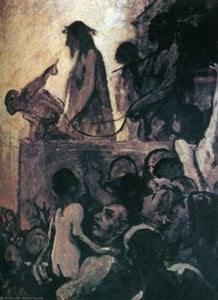
Honoré Daumier’s “The Republic” (1848) isn't merely a painting; it’s a potent distillation of the anxieties and aspirations swirling within post-revolutionary France. Captured with his signature blend of realism and biting satire, this oil on canvas presents a scene both familiar and profoundly unsettling – a woman, presumably a mother, holding her children close while simultaneously embodying the ideals of republican virtue. The composition immediately draws the eye to her central position; she’s not a regal figure or an idealized Madonna, but a common woman, weathered yet resolute, clutching a flag and a bottle—symbols that speak volumes about the precarious balance between nourishment and civic duty in a nation grappling with its new identity.
Daumier was deeply invested in documenting the social realities of his time. Born in Marseille in 1808, he witnessed firsthand the upheavals of the French Revolution and the subsequent political instability. His art became a relentless critique of the established order – the monarchy, the aristocracy, the Church, and the burgeoning bourgeoisie—all perceived as obstacles to genuine republicanism. “The Republic” is no exception; it’s a pointed commentary on the challenges faced by women in particular during this period of transition. The flag she holds isn't simply a symbol of national pride, but a visual representation of the ideals – liberty, equality, fraternity – that were supposed to underpin the new republic. The bottle, often interpreted as representing sustenance and motherhood, subtly suggests the vital role of family in sustaining these values.
Daumier’s technique is characterized by a remarkable directness and emotional intensity. He eschewed the polished surfaces and idealized forms favored by many of his contemporaries, opting instead for a rougher, more immediate style. The brushstrokes are visible, conveying a sense of urgency and immediacy. The palette is muted—earthy browns, ochres, and greys—reflecting the somber mood of the scene and emphasizing the weight of responsibility borne by the central figure. Notice how he uses light and shadow to sculpt her face, highlighting the lines etched by hardship yet radiating an undeniable strength. The background, featuring a simple chair and hinting at a boat, grounds the scene in a domestic setting, further emphasizing the woman’s role as the heart of the family and the embodiment of republican values.
He was heavily influenced by artists like Rubens, particularly in his use of dramatic chiaroscuro – the stark contrast between light and dark—to create a sense of theatricality. This technique amplifies the emotional impact of the painting, drawing attention to the woman’s face and gestures while simultaneously suggesting the turbulent political landscape surrounding her. Daumier's skill lay not just in his technical proficiency but also in his ability to imbue ordinary subjects with extraordinary significance.
Beyond its immediate depiction, “The Republic” is laden with symbolism. The flag, as mentioned earlier, represents the ideals of the republic, while the bottle speaks to the fundamental needs of family and community. However, the scene isn’t entirely optimistic. The woman's posture suggests a quiet determination rather than triumphant celebration. She’s not basking in victory; she’s enduring—a testament to the ongoing struggle for republican values. Some scholars have suggested that the children represent the future of France, entrusted to this woman’s care as she navigates the complexities of the new political order.
Daumier's work was often controversial during his lifetime, and “The Republic” is no exception. His unflinching critique of social injustice earned him both admirers and enemies. Yet, it remains a powerful and enduring image—a poignant reminder of the challenges inherent in establishing a truly democratic society and the vital role played by ordinary citizens in upholding its ideals.
Reproductions of “The Republic” capture the essence of Daumier’s artistic vision. Available in various sizes, this iconic artwork offers a unique opportunity to bring a touch of historical significance and social commentary into any space. The rich textures and dramatic lighting are faithfully reproduced, allowing you to appreciate the depth and complexity of Daumier's masterful technique. Whether displayed as a statement piece or incorporated into a more subtle interior design scheme, “The Republic” is sure to spark conversation and inspire reflection on the enduring values of liberty, equality, and fraternity.
Dimensiunile înregistrate pentru "The Republic" de Honoré Daumier sunt 73 x 60 cm. Reproducerile pot fi comandate în alte dimensiuni, păstrând aceleași proporții.
În ceea ce privește luminozitatea percepută, "The Republic" de Honoré Daumier este deep_shadow.
Statusul drepturilor de autor pentru "The Republic" de Honoré Daumier: opera este în domeniul public – drepturile de autor au expirat. Acest lucru determină dacă reproducerile imaginii pot fi realizate liber.


1808 - 1879 , Franța
 Previzualizare
 Trimite prin felicitare
 Distribuie
 Detalii despre lucrare
 Ghid
Ghid

 Descarcă imaginea
 Produse similare
 Radiografie
 Galerie foto
 Întrebări și răspunsuri
 Statistici


 Vezi mai mult