Vezi în context Previzualizare AR Comută pe versiunea Print Comandă pictură realizată manual Trimite
Detalii Ghid Adaugă la favorite Descarcă Produse similare Radiografie Diaporama Statistici

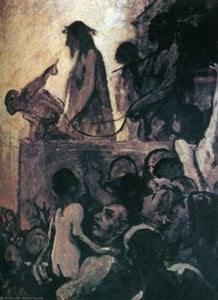
Penelopa's Dream

Honoré Daumier's 'Penelopa’s Dream,' from his iconic Ancient History series (1842), captures Penelope's contemplative repose amidst a fantastical tableau—a poignant lithograph reflecting myth and social critique.

Honoré Daumier (1808-1879): caricaturist şi pictor francez, satiric al societăţii. Opere revoluţionare, influenţă majoră în arta modernă.

Achiziționați o imagine digitală de înaltă rezoluție, îmbunătățită, mult superioară previzualizării online.

Fiecare fișier este pregătit cu meticulozitate de specialiștii noștri interni, utilizând instrumente avansate și retușare manuală expertă. Ne asigurăm că fiecare imagine beneficiază de o claritate excepțională, o acuratețe precisă a culorilor și detalii fine.

Fișierul final este livrat prin e-mail în termen de 72 de ore, optimizat pentru utilizare imediată în medii profesionale, editoriale și de imprimare. Aceasta este aceeași calitate în care au încredere studiouri de design, edituri și galerii de top.

Imagine Digitală

Descărcați un fișier la rezoluție înaltă pentru afișare personală, imprimare și proiecte creative. ( Comută pe versiunea Print Comandă pictură realizată manual)

Preț total

$ 24,90

Inclus în fiecare comandă de imagini digitale

Livrare digitală de expertiză, garantată

Când alegeți WahooArt.com, nu primiți doar o simplă imagine – primiți o operă de artă digitală îmbunătățită profesional, creată cu precizie și susținută de o garanție de satisfacție. Iată tot ceea ce primești odată cu comanda ta, în mod automat:

shipping_icon
Livrare rapidă prin e-mail

Fișierul imaginii digitale la rezoluție înaltă vă va fi trimis prin e-mail în termen de 72 de ore de la finalizarea comenzii – gata pentru utilizare imediată.

canvas_icon
Fișier digital optimizat prin IA

Opera ta de artă este optimizată profesional prin intermediul unor instrumente AI avansate și al editării manuale, asigurând un nivel maxim de detalii, claritate și acuratețe a culorilor.

insurance_icon
Retransmitere gratuită pe viață

Ai șters sau ai pierdut din greșeală fișierul? Nu îți face griji – ți-l vom retrimite oricând, gratuit.

tax_icon
Fără taxe de import – Întotdeauna

Bucură-te instant de noua ta operă de artă, fără taxe vamale, taxe de import sau costuri de livrare – descărcările digitale sunt întotdeauna fără taxe.

color_icon
Garanția fidelității culorilor

Asigurăm o reflectare cât mai fidelă a culorilor originale în imaginea ta digitală, prin utilizarea unor instrumente profesionale și a proceselor de gestionare a culorii.

return_icon
Garanție de satisfacție de 100 de zile

Dacă nu sunteți mulțumit de imaginea digitală achiziționată, o vom revizui sau vă vom returna 100% în termen de 100 de zile – fără nicio întrebare.

guarantee_icon
Garanție de returnare 100% a banilor

Nu ești mulțumit? Primești rambursarea integrală în termen de 100 de zile de la primirea fișierului digital – fără nicio întrebare.

discount_icon
Reduceri pentru comenzi în volum

Cumpără 3 imagini, economisește 10% - Cumpără 5, economisește 15% - Cumpără 10+, economisește 20%. Ideal pentru proiecte creative, galerii și agenții.

Detalii rapide

  • Location: Bibliotheque Nationale de France, Paris
  • Medium: Lithograph
  • Subject or theme: Mythology; Dreams; Satire
  • Notable elements or techniques: Line etching; Dramatic chiaroscuro
  • Artist: Honoré Daumier
  • Dimensions: 35 x 24 cm
  • Artistic style: Expressive draftsmanship

Chestionar de artă

Fiecare întrebare are un singur răspuns corect.

Întrebare 1:
What artistic movement is Honoré Daumier’s “Penelopa’s Dream” primarily associated with?
Întrebare 2:
The lithograph utilizes a technique known for producing images with sharp lines and tonal variations. What is this technique called?
Întrebare 3:
What mythological figure does the helmeted head symbolize in “Penelopa’s Dream”?
Întrebare 4:
The lighting in the artwork contributes to a particular mood. Describe the dominant effect of the light.
Întrebare 5:
Daumier’s “Ancient History” series aimed to critique societal issues. What is one possible interpretation of the artwork's satirical intent?

Honoré Daumier’s “Penelopa's Dream”: A Lithograph Embodied with Mythic Sorrow

Honoré Daumier’s “Penelopa’s Dream,” created in 1842, stands as a cornerstone of Realism within his oeuvre and a poignant meditation on themes of memory, longing, and the enduring power of myth. Published in Le Charivari, a satirical Parisian newspaper during a period rife with political upheaval—the Second Republic—this lithograph transcends mere visual representation to deliver a complex emotional narrative rooted in Homer’s Odyssey.

The artwork depicts Penelope, Odysseus's wife from Greek legend, reclining on a chair. She is surrounded by symbols of scholarly pursuits: scrolls and writing implements – an intentional juxtaposition highlighting the contrast between active engagement with the world and contemplative reflection. Above Penelope’s head floats a grotesque helmeted head, emerging from what appears to be her dreamscape. This fantastical element isn't merely decorative; it embodies anxieties surrounding past experiences and represents a confrontation with unresolved emotions.

  • Lithographic Technique: Daumier skillfully employed the lithographic process—stone etching combined with ink printing—to achieve remarkable tonal range and textural detail. The stone surface allowed for precise rendering of lines and shading, resulting in an image that possesses both immediacy and a palpable sense of physicality.
  • Composition & Perspective: Daumier’s flattened perspective contributes to the artwork's dreamlike atmosphere. Overlapping shapes and variations in line weight subtly suggest depth without resorting to traditional spatial recession, mirroring the elusive nature of memory and subconscious thought.
  • Color Palette: Primarily monochromatic—black and white—the palette reinforces the melancholic mood. Daumier’s masterful use of shading creates dramatic contrasts between light and dark, emphasizing Penelope's figure and highlighting the unsettling presence of the helmeted head.

The helmeted head is arguably the artwork’s most striking symbol. It represents a warrior spirit—Odysseus’s past battles—but simultaneously embodies Penelope’s internal struggle to reconcile her memories with the present reality. The overall emotional impact is one of profound sorrow and contemplation, capturing the essence of Penelope's enduring grief for Odysseus and her unwavering determination to persevere despite hardship.

“Penelopa’s Dream” isn’t simply a depiction of myth; it’s an exploration of human psychology—the way memory shapes perception and influences emotional response. Daumier’s masterful technique elevates the image beyond mere illustration, transforming it into a powerful statement about the complexities of human experience.

Further research suggests that this piece aligns perfectly with Daumier's broader artistic mission: to expose social injustices and challenge conventional narratives through satirical observation. Its enduring appeal lies in its ability to resonate with viewers across generations who recognize the universal themes of loss, resilience, and the transformative power of imagination.


Biografie artist

A Life Etched in Satire: The World of Honoré Daumier

Honoré-Victorin Daumier, a name synonymous with biting satire and unflinching social commentary, was born in Marseille on February 26th, 1808. His early life, steeped in the artistic traditions of his family—his father a glazier and poet, his godfather a painter—laid the groundwork for a career that would forever challenge the established order of 19th-century France. The echoes of his father’s turbulent poetic aspirations, coupled with the relocation to Paris in 1814, exposed young Daumier to the vibrant, yet often chaotic, energy of the capital city. Initially destined for a legal profession, a profound inclination towards art quickly superseded all other ambitions. He began his artistic journey as an apprentice under Alexandre Lenoir, absorbing the classical techniques and dramatic chiaroscuro favored by Rubens—a style that would profoundly influence his own distinctive approach. Lenoir’s emphasis on observation and capturing the essence of form provided Daumier with a crucial foundation, but it was his independent study at the Académie Suisse, alongside a deep appreciation for the works of the Louvre's masters, that truly shaped his artistic vision. This early training wasn’t merely about technical proficiency; it was a deliberate immersion in the world of art, preparing him to translate his keen observations into powerful visual statements.

The Sharpened Pen: Caricature and Social Commentary

Daumier’s career ignited with explosive force following the 1830 Revolution, an event that fundamentally reshaped France and simultaneously provided a fertile ground for his burgeoning satirical talent. He swiftly established himself as a master lithographer, initially working anonymously for various publications before gaining recognition through his work with *Le Charivari*, a fiercely independent comic journal founded by Charles Philipon. It was within the pages of *Le Charivari* that Daumier’s genius truly blossomed. His caricatures weren't mere humorous depictions; they were scathing indictments of the bourgeoisie, the legal system, and the political establishment—a deliberate provocation aimed at exposing hypocrisy and challenging authority. His unflinching portrayal of King Louis-Philippe in a particularly biting caricature led to his imprisonment for six months in 1832 – an experience that, rather than silencing him, solidified his commitment to using art as a weapon against injustice. The sheer volume of his output during this period is astonishing—thousands of lithographs documenting the social and political landscape of France with remarkable precision and satirical wit. These images weren’t simply entertainment; they were visual manifestos, capturing the spirit of dissent and offering a critical commentary on the societal ills of the time.

Beyond Caricature: Painting and Sculptural Visions

While Daumier is overwhelmingly celebrated for his lithography, to reduce him solely to caricature would be a profound disservice. He was also a dedicated painter and sculptor, though recognition for these works came later in his life. His paintings, often depicting scenes of everyday Parisian life—the third-class carriage, the laundresses, the lawyers—are imbued with a remarkable sense of realism and empathy. He eschewed idealized portrayals, instead offering unflinching depictions of hardship, poverty, and the struggles of ordinary people. Daumier’s technique was characterized by loose brushwork and dramatic lighting, anticipating some of the techniques later embraced by the Impressionists – a testament to his forward-thinking approach. His sculptural work, largely created in clay (many pieces remaining unbaked during his lifetime), reveals a similar commitment to capturing the human form with honesty and emotional depth. These sculptures, rediscovered after his death, demonstrate a remarkable talent for modeling and an ability to convey psychological complexity through physical gesture – suggesting a profound understanding of the human condition.

A Lasting Legacy: Influence and Historical Significance

Honoré Daumier’s impact on art history is undeniable. He bridged the gap between Romanticism and Realism, paving the way for future generations of artists who sought to depict the world as it truly was—warts and all. His unflinching social commentary profoundly influenced artists like Gustave Courbet and Édouard Manet, while his innovative use of lithography revolutionized printmaking, transforming it from a craft into a powerful medium for political expression. Daumier’s work continues to resonate today, reminding us of the enduring power of art to challenge authority, expose injustice, and bear witness to the human condition. The Musée d'Orsay in Paris houses a significant collection of his paintings and sculptures, offering visitors a unique opportunity to immerse themselves in the world he so vividly portrayed. Furthermore, his lithographs are widely accessible through collections like those found on WahooArt, ensuring that his satirical genius continues to provoke thought and inspire dialogue across generations. Daumier wasn’t merely an artist; he was a chronicler of his time—a visual poet who used his talent to give voice to the voiceless and hold power accountable. His legacy endures as a testament to the enduring relevance of art as a force for social change, reminding us that even a single image can spark revolution.

Honoré Daumier

Honoré Daumier

1808 - 1879 , Franța

Informații esențiale

  • Artistic Movement Or Style: Realism, Satiră
  • Artists Or Movements Influenced By This Artist:
    • Impressionism
    • Modern art
  • Artists Who Influenced This Artist:
    • Alexandre Lenoir
    • David
  • Date Of Birth: 26 februarie 1808
  • Date Of Death: 10 februarie 1879
  • Full Name: Honoré-Victorin Daumier
  • Nationality: Francez
  • Notable Artworks:
    • Rue Transnonain
    • Les gens de justice
    • Ecce Homo
  • Place Of Birth: Marsilia, Franța