CONSULTAȚIE GRATUITĂ ÎN ARTE VIZUALE

x
Comandă tipăritul Comandă tipăritulCumpără imaginea Cumpără imaginea TrimiteTrimite
DetaliiDetalii Adaugă la favorite Adaugă la favorite DescarcăDescarcă SimilareSimilare Raze XRaze X DiaporamaDiaporama

Burden

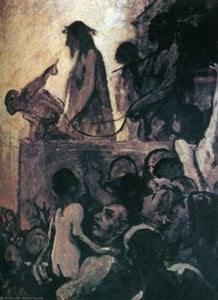
Daumier’s monochrome ‘Burden,’ a masterful Impressionistic Realism portrait housed in St. Petersburg's Hermitage Museum, captures Victorian womanhood’s quiet strength amidst societal constraints—a timeless piece to contemplate and cherish.

Honoré Daumier (1808-1879): caricaturist şi pictor francez, satiric al societăţii. Opere revoluţionare, influenţă majoră în arta modernă.

Reproducere manuală în ulei

Pictură în ulei pe pânză, pictată manual, la dimensiunea și ramele dorite de dumneavoastră, realizată la comandă de artiștii noștri.

P118B $10
P118H $10
P118W $10
P438Z $10
P508JH $12
P508YH $12
P805H $10
P805Z $10
P919BZ $10
P919G $10
P919XJ $10
P959ZH $10
P968JZ $12
W106C $8
W218G $10
W218JH $8
W218Y $10
W307PJ $10
W316G $10
W316PJ $8
W316Y $10
W398PJ $8
W4111J $10
W500HY $15
W500JH $15
W692G $12
W849H $8
W940BG $15
W953PJ $8

Standard
custom
CM
INCH

Alegeți dintre dimensiunile noastre prestabilite, care respectă proporțiile originale ale operei de artă.

lățime
înălțime

Puteți introduce propriile dimensiuni pentru a se potrivi unui anumit cadru sau spațiu. Dacă dimensiunea selectată nu corespunde proporțiilor imaginii originale, vom decupa opera de artă sau vom extinde pictura cu elemente suplimentare pictate manual. O simulare digitală vă va fi trimisă pentru aprobare înainte de începerea producției.
Vă rugăm să rețineți că previzualizarea de pe ecran nu reflectă decuparea sau extinderea reală. Doar macheta va arăta cu exactitate compoziția finală.
Deși sunt disponibile dimensiuni personalizate, vă recomandăm să selectați o dimensiune din lista predefinită pentru a păstra proporțiile originale.

Exemple de elemente ce pot fi modificate: Înlocuiți fața cu fotografia clientului; Adăugați un animal de companie (de exemplu, înlocuiți pisica cu un câine); Includeți un mesaj ascuns în fundal; Schimbați peisajul sau elementele din fundal.
După plasarea comenzii, echipa WahooArt.com va trimite clientului instrucțiuni prin e-mail și îi va furniza o previzualizare a machetei

Livrare în întreaga lume () în 3/4 săptămâni, în loc de cele 5 săptămâni standard. (3 Iulie). Fără compromisuri în ceea ce privește calitatea.

why_choose_icon
Livrare expres gratuită la nivel mondial
why_choose_icon
Pânză de in de înaltă calitate
why_choose_icon
Asigurare completă pentru transport
why_choose_icon
Garanție de rambursare a taxelor vamale
why_choose_icon
Garanția fidelității culorilor
why_choose_icon
Politica de retur de 60 de zile (doar pentru defecte)
why_choose_icon
Garanție 100% de rambursare
why_choose_icon
Reducere la comenzi multiple

Preț total

-

reproduction

Burden

Tehnică de reproducere

Dimensiune reproducere

-

Preț total calculat

-

Informații rapide

  • Influences: Rubens
  • Dimensions: 130 x 98 cm
  • Notable elements or techniques: Black and white printmaking
  • Medium: Oil on canvas
  • Artist: Honoré Daumier
  • Artistic style: Social satire
  • Title: Burden

Test de cunoștințe despre artă

Fiecare întrebare are un singur răspuns corect.

Întrebare 1:
What is the primary subject matter depicted in ‘Burden’?
Întrebare 2:
In what museum is ‘Burden’ housed?
Întrebare 3:
What artistic technique is prominently employed in ‘Burden’?
Întrebare 4:
Approximately when was ‘Burden’ created?
Întrebare 5:
What is Daumier's artistic style characterized by?

Descriere operă de artă

A Portrait of Resilience: Honoré Daumier’s “Burden”

The painting "Burden," executed by Honoré Daumier in 1850, stands as a poignant testament to the everyday struggles faced by women during the Victorian era. More than just a depiction of a woman carrying her child, it's an arresting exploration of vulnerability and determination rendered with masterful draughtsmanship and imbued with subtle symbolic resonance. Located within the esteemed Hermitage Museum in St. Petersburg, Russia—a repository of artistic treasures spanning centuries—the artwork’s enduring appeal lies not only in its aesthetic beauty but also in its profound commentary on societal pressures and maternal fortitude.

Style and Technique: Impressionistic Realism

Daumier's approach transcends simple realism; he achieves an evocative impressionistic style through meticulous observation and skillful manipulation of tonal values. Unlike the polished surfaces favored by academic painters, Daumier’s canvas retains a palpable texture—a deliberate choice that underscores the physicality of the subject matter and enhances its emotional impact. The artist employs a predominantly monochrome palette of shades of grey, skillfully layering tones to create depth and luminosity. This technique allows him to convey not just visual information but also psychological nuance, capturing the woman's weary gaze and conveying an unspoken sense of resilience despite her arduous task. Daumier’s masterful use of hatching and cross-hatching contributes significantly to this textural richness, creating a surface that mimics the roughness of fabric and subtly mirroring the weight borne by the mother.

Historical Context: Victorian Societal Constraints

“Burden” emerged during a period defined by significant social reforms and evolving gender roles—the Victorian era in Britain and France. Women faced considerable limitations regarding education, employment opportunities, and legal rights, yet they persevered with unwavering devotion to their families. Daumier’s painting captures this spirit of perseverance, portraying the woman as steadfastly carrying her child through a bustling urban environment. The backdrop—a nondescript street scene—serves as a symbolic representation of the challenges confronting women navigating societal expectations and striving for autonomy amidst constraints. It speaks volumes about the quiet heroism inherent in domestic life and the unwavering commitment to nurturing future generations.

Symbolism: Weight, Responsibility, and Maternal Strength

The central image – the woman carrying her child – is laden with symbolism. The “burden” itself represents not merely physical weight but also the emotional and psychological responsibilities associated with motherhood—the sacrifices made, the anxieties endured, and the unwavering love that sustains a family. Daumier’s deliberate choice of monochrome reinforces this symbolic significance, stripping away distracting colors to focus on the core emotion: fortitude. The woman's posture exudes quiet dignity, conveying an inner strength born from hardship and tempered by compassion. Her gaze directs upwards—a gesture of hope and aspiration—suggesting a belief in overcoming obstacles and securing a brighter future for her child.

Emotional Impact: A Momentary Pause for Reflection

Ultimately, “Burden” compels viewers to contemplate the quiet dignity of motherhood and the enduring spirit of resilience. Daumier’s masterful technique transcends mere representation; he invites contemplation on themes of vulnerability, perseverance, and unwavering devotion. The painting's understated beauty—achieved through skillful tonal modulation and textural detail—promotes a contemplative mood, prompting reflection on the sacrifices made by women throughout history to nurture their families and contribute to society. It remains a powerful reminder that strength resides not in grand gestures but in steadfast commitment to one’s values and responsibilities – a timeless message conveyed with remarkable artistry.

Biografie artist

A Life Etched in Satire: The World of Honoré Daumier

Honoré-Victorin Daumier, a name synonymous with biting satire and unflinching social commentary, was born in Marseille on February 26th, 1808. His early life, steeped in the artistic traditions of his family—his father a glazier and poet, his godfather a painter—laid the groundwork for a career that would forever challenge the established order of 19th-century France. The echoes of his father’s turbulent poetic aspirations, coupled with the relocation to Paris in 1814, exposed young Daumier to the vibrant, yet often chaotic, energy of the capital city. Initially destined for a legal profession, a profound inclination towards art quickly superseded all other ambitions. He began his artistic journey as an apprentice under Alexandre Lenoir, absorbing the classical techniques and dramatic chiaroscuro favored by Rubens—a style that would profoundly influence his own distinctive approach. Lenoir’s emphasis on observation and capturing the essence of form provided Daumier with a crucial foundation, but it was his independent study at the Académie Suisse, alongside a deep appreciation for the works of the Louvre's masters, that truly shaped his artistic vision. This early training wasn’t merely about technical proficiency; it was a deliberate immersion in the world of art, preparing him to translate his keen observations into powerful visual statements.

The Sharpened Pen: Caricature and Social Commentary

Daumier’s career ignited with explosive force following the 1830 Revolution, an event that fundamentally reshaped France and simultaneously provided a fertile ground for his burgeoning satirical talent. He swiftly established himself as a master lithographer, initially working anonymously for various publications before gaining recognition through his work with *Le Charivari*, a fiercely independent comic journal founded by Charles Philipon. It was within the pages of *Le Charivari* that Daumier’s genius truly blossomed. His caricatures weren't mere humorous depictions; they were scathing indictments of the bourgeoisie, the legal system, and the political establishment—a deliberate provocation aimed at exposing hypocrisy and challenging authority. His unflinching portrayal of King Louis-Philippe in a particularly biting caricature led to his imprisonment for six months in 1832 – an experience that, rather than silencing him, solidified his commitment to using art as a weapon against injustice. The sheer volume of his output during this period is astonishing—thousands of lithographs documenting the social and political landscape of France with remarkable precision and satirical wit. These images weren’t simply entertainment; they were visual manifestos, capturing the spirit of dissent and offering a critical commentary on the societal ills of the time.

Beyond Caricature: Painting and Sculptural Visions

While Daumier is overwhelmingly celebrated for his lithography, to reduce him solely to caricature would be a profound disservice. He was also a dedicated painter and sculptor, though recognition for these works came later in his life. His paintings, often depicting scenes of everyday Parisian life—the third-class carriage, the laundresses, the lawyers—are imbued with a remarkable sense of realism and empathy. He eschewed idealized portrayals, instead offering unflinching depictions of hardship, poverty, and the struggles of ordinary people. Daumier’s technique was characterized by loose brushwork and dramatic lighting, anticipating some of the techniques later embraced by the Impressionists – a testament to his forward-thinking approach. His sculptural work, largely created in clay (many pieces remaining unbaked during his lifetime), reveals a similar commitment to capturing the human form with honesty and emotional depth. These sculptures, rediscovered after his death, demonstrate a remarkable talent for modeling and an ability to convey psychological complexity through physical gesture – suggesting a profound understanding of the human condition.

A Lasting Legacy: Influence and Historical Significance

Honoré Daumier’s impact on art history is undeniable. He bridged the gap between Romanticism and Realism, paving the way for future generations of artists who sought to depict the world as it truly was—warts and all. His unflinching social commentary profoundly influenced artists like Gustave Courbet and Édouard Manet, while his innovative use of lithography revolutionized printmaking, transforming it from a craft into a powerful medium for political expression. Daumier’s work continues to resonate today, reminding us of the enduring power of art to challenge authority, expose injustice, and bear witness to the human condition. The Musée d'Orsay in Paris houses a significant collection of his paintings and sculptures, offering visitors a unique opportunity to immerse themselves in the world he so vividly portrayed. Furthermore, his lithographs are widely accessible through collections like those found on WahooArt, ensuring that his satirical genius continues to provoke thought and inspire dialogue across generations. Daumier wasn’t merely an artist; he was a chronicler of his time—a visual poet who used his talent to give voice to the voiceless and hold power accountable. His legacy endures as a testament to the enduring relevance of art as a force for social change, reminding us that even a single image can spark revolution.
Honoré Daumier

Honoré Daumier

1808 - 1879 , Franța

Detalii rapide

  • Artistic Movement Or Style: Realism, Satiră
  • Artists Or Movements Influenced By This Artist:
    • Impressionism
    • Modern art
  • Artists Who Influenced This Artist:
    • Alexandre Lenoir
    • David
  • Date Of Birth: 26 februarie 1808
  • Date Of Death: 10 februarie 1879
  • Full Name: Honoré-Victorin Daumier
  • Nationality: Francez
  • Notable Artworks:
    • Rue Transnonain
    • Les gens de justice
    • Ecce Homo
  • Place Of Birth: Marsilia, Franța
Explorați opere de artă organizate pe teme, stiluri și caracteristici.