x
PrevizualizarePrevizualizare Previzualizare ARPrevizualizare AR Comandă printul Comandă printulComandă pictură lucrată manual Comandă pictură lucrată manual TrimiteTrimite
Detalii despre lucrareDetalii despre lucrare Adaugă la favorite Adaugă la favorite DescarcăDescarcă Produse similareProduse similare RadiografieRadiografie Diapozitive automateDiapozitive automate

The Man-Tree

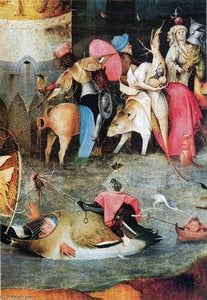
Hieronymus Bosch’s "The Man-Tree" depicts a tranquil scene of a man and bird amidst fantastical nature, showcasing the artist's unique style from the Northern Renaissance period. Discover this captivating artwork and bring its timeless beauty into your space.

Descoperiți misteriosul Hieronymus Bosch (1450-1516), pictor olandez genial, renumit pentru viziunile sale suprarealiste și simbolism complex. Explorează operele sale iconice, temele religioase și scene din coșmaruri – o influență de neclintit în istoria artei.

Achiziționați o imagine digitală de înaltă rezoluție, îmbunătățită, mult superioară previzualizării online.

Fiecare fișier este pregătit cu meticulozitate de specialiștii noștri interni, utilizând instrumente avansate și retușare manuală expertă. Ne asigurăm că fiecare imagine beneficiază de o claritate excepțională, o acuratețe precisă a culorilor și detalii fine.

Fișierul final este livrat prin e-mail în termen de 72 de ore, optimizat pentru utilizare imediată în medii profesionale, editoriale și de imprimare. Aceasta este aceeași calitate în care au încredere studiouri de design, edituri și galerii de top.

Imagine Digitală

Descărcați un fișier la rezoluție înaltă pentru afișare personală, imprimare și proiecte creative. (Comandă printul Comandă printulComandă pictură lucrată manual Comandă pictură lucrată manual)

Preț total

$ 24,90

Inclus în fiecare comandă de imagini digitale

Livrare digitală de expertiză, garantată

Când alegeți WahooArt.com, nu primiți doar o simplă imagine – primiți o operă de artă digitală îmbunătățită profesional, creată cu precizie și susținută de o garanție de satisfacție. Iată tot ceea ce primești odată cu comanda ta, în mod automat:

shipping_icon
Livrare rapidă prin e-mail

Fișierul imaginii digitale la rezoluție înaltă vă va fi trimis prin e-mail în termen de 72 de ore de la finalizarea comenzii – gata pentru utilizare imediată.

canvas_icon
Fișier digital optimizat prin IA

Opera ta de artă este optimizată profesional prin intermediul unor instrumente AI avansate și al editării manuale, asigurând un nivel maxim de detalii, claritate și acuratețe a culorilor.

insurance_icon
Retransmitere gratuită pe viață

Ai șters sau ai pierdut din greșeală fișierul? Nu îți face griji – ți-l vom retrimite oricând, gratuit.

tax_icon
Fără taxe de import – Întotdeauna

Bucură-te instant de noua ta operă de artă, fără taxe vamale, taxe de import sau costuri de livrare – descărcările digitale sunt întotdeauna fără taxe.

color_icon
Garanția acurateții culorilor

Asigurăm o reflectare cât mai fidelă a culorilor originale în imaginea ta digitală, prin utilizarea unor instrumente profesionale și a proceselor de gestionare a culorii.

return_icon
Garanție de satisfacție de 60 de zile

Dacă nu sunteți mulțumit de imaginea digitală achiziționată, o vom revizui sau vă vom returna 100% în termen de 60 de zile – fără nicio explicație necesară.

guarantee_icon
Garanție de returnare 100% a banilor

Nu ești mulțumit? Obține o rambursare completă în termen de 60 de zile de la primirea fișierului tău digital – fără întrebări.

discount_icon
Reduceri pentru comenzi în volum

Cumpără 3 imagini, economisește 10% - Cumpără 5, economisește 15% - Cumpără 10+, economisește 20%. Ideal pentru proiecte creative, galerii și agenții.

Informații rapide

  • Movement: Netherlandish
  • Artist: Hieronymus Bosch
  • Location: Private Collection
  • Notable elements: Clock, birds, boat
  • Artistic style: Symbolist, Surreal
  • Subject or theme: Humanity & Nature
  • Title: The Man-Tree

A Vision of Harmony: Exploring Hieronymus Bosch’s “The Man-Tree”

Hieronymus Bosch's "The Man-Tree," a captivating and profoundly unsettling image, stands as one of the Netherlandish master’s most enigmatic works. Painted during his prolific career between 1490 and 1510, this piece embodies the artist’s signature blend of religious allegory, fantastical imagery, and meticulous detail – qualities that continue to fascinate and challenge viewers centuries later. The painting depicts a solitary figure, often interpreted as humanity itself, seated within the gnarled embrace of an enormous tree, a scene brimming with symbolic weight and unsettling beauty.

  • Subject Matter: At its core, “The Man-Tree” presents a striking juxtaposition of human form and natural world. The central figure, a man seemingly absorbed in contemplation, is inextricably linked to the tree, suggesting a profound connection between humanity and nature – a theme prevalent in medieval thought but rendered with Bosch’s characteristic surrealism.
  • Composition & Technique: Bosch's masterful technique is immediately apparent. He employs a meticulous oil-based paint application, layering colors and textures to create an incredibly rich and detailed surface. The use of sfumato – the subtle blurring of lines and edges – adds to the painting’s dreamlike quality, further immersing the viewer in its strange and captivating world.

Symbolism Rooted in Late Medieval Thought

Bosch's work is saturated with symbolism drawn from late medieval religious texts, folklore, and contemporary anxieties. The tree itself is a potent symbol – representing both life and death, fertility and corruption, the divine and the demonic. Its twisted branches and grotesque forms evoke images of the Tree of Knowledge in Genesis, hinting at humanity’s fall from grace and its inherent vulnerability. The numerous birds scattered throughout the scene are often interpreted as messengers or symbols of temptation, while the clock hanging from a branch speaks to the fleeting nature of time and human mortality. The presence of the boat in the background adds another layer of complexity, potentially representing a journey through life or a connection to the earthly realm.

Historical Context: Painted during a period of intense religious upheaval and societal anxieties, “The Man-Tree” reflects the concerns of its time. The rise of Protestantism challenged the authority of the Catholic Church, while widespread social unrest fueled fears of corruption and moral decay. Bosch’s art served as a visual commentary on these issues, offering a critical perspective on human behavior and spiritual values.

Emotional Impact & Artistic Legacy

"The Man-Tree" is not merely a beautiful painting; it's an emotionally charged experience. The scene evokes a sense of unease, wonder, and perhaps even dread – feelings that are central to Bosch’s artistic vision. His ability to capture such powerful emotions through seemingly simple imagery has ensured his enduring legacy as one of the most original and influential artists in Western art history. The painting's unsettling beauty continues to provoke questions about humanity's place in the world, making it a timeless masterpiece that resonates with viewers across generations.

Replicating a Masterpiece: WahooArt’s Hand-Painted Reproduction

WahooArt offers meticulously crafted, hand-painted reproductions of Hieronymus Bosch’s “The Man-Tree,” ensuring the preservation of this iconic artwork for discerning collectors and interior designers. Our skilled artisans employ traditional techniques and archival materials to faithfully recreate Bosch's intricate details and evocative atmosphere. Each reproduction is a testament to our commitment to artistic excellence, providing you with a stunning addition to your collection or a captivating focal point in your space.


Biografie artist

A Netherlandish Enigma: The Life and Art of Hieronymus Bosch

Born around 1450 in the vibrant, bustling town of ’s-Hertogenbosch in the Netherlands—then part of Brabant—Hieronymus Bosch, originally Jheronimus van Aken, remains one of art history’s most compelling and mysterious figures. His world was steeped in late medieval religious fervor, folklore, and a growing sense of societal unease, all of which would profoundly shape his uniquely unsettling artistic vision. Coming from a family with a long tradition of painting—his grandfather, Jan van Aken, and father, Anthonius van Aken, were both artists—Bosch likely received his earliest training within the family workshop, absorbing the techniques and conventions of Netherlandish painting. However, even in his formative years, he began to diverge from established norms, hinting at the extraordinary imagination that would define his career. Biographical details are frustratingly scarce; records are fragmented, leaving much open to speculation and interpretation, adding to the aura of mystique surrounding both the man and his work. He married Aleyt Goyaerts van den Meerveen sometime before 1481, a union that provided him with some financial security through her family’s holdings, but little else is known about their personal life.

Fantastical Visions and Symbolic Depths

Bosch's artistic style is instantly recognizable—a captivating blend of meticulous detail and wildly imaginative imagery. He primarily worked with oil on oak panels, demonstrating a masterful command of the medium, achieving luminous colors and intricate textures. While his early works show influences from traditional Netherlandish painting, particularly in their realism and attention to detail, he quickly moved beyond mere imitation, developing a profoundly original vision. His paintings are not simply representations of reality; they are allegorical landscapes populated by bizarre creatures, hybrid beings, and unsettling scenes that seem plucked from dreams—or nightmares. Religious themes form the core of much of his work, but these are rarely straightforward depictions of biblical stories. Instead, Bosch uses symbolism to explore complex moral and theological concepts, often focusing on the dangers of sin, the fragility of earthly pleasures, and the inevitability of divine judgment. His creatures—grotesque demons, fantastical animals, and strangely human figures—are not merely decorative elements; they are embodiments of vice, temptation, and spiritual corruption. The blending of the sacred and the profane, the beautiful and the grotesque, creates a uniquely unsettling effect that continues to captivate viewers centuries later.

Masterpieces of Moral Allegory

Among Bosch’s most celebrated achievements is The Garden of Earthly Delights (c. 1490-1510), a triptych that remains one of the most enigmatic and debated works in art history. When opened, it presents a panoramic vision of paradise, earthly life, and hell—a complex allegorical representation of humanity’s fall from grace. The left panel depicts the Garden of Eden, teeming with fantastical creatures and lush vegetation; the central panel portrays a world consumed by sensual pleasure and unrestrained desire; and the right panel offers a terrifying glimpse into the torments of hell. The Triptych of the Last Judgement (c. 1480-1490) is another powerful example of his skill in portraying both heavenly bliss and infernal torment, while The Ascent of the Blessed (c. 1480-1490) demonstrates his ability to create ethereal and dreamlike scenes. Even smaller works like Epiphany (c. 1495) showcase his innovative use of oil on wood and complex symbolism, revealing a mind constantly grappling with profound questions about faith, morality, and the human condition.

Influences and Artistic Development

Identifying Bosch’s direct influences is a challenging task, given the originality of his vision. Scholars suggest possible connections to medieval folklore, religious texts—particularly those emphasizing apocalyptic themes—and the prevailing anxieties of the time, including fears of heresy and social upheaval. However, it's clear that he synthesized these elements into something entirely new and uniquely his own. His early works show a clear debt to the conventions of Netherlandish painting, particularly in their realism and attention to detail. Yet, as he matured, Bosch began to experiment with new techniques and compositional strategies, developing a style characterized by its meticulous detail, vibrant colors, and unsettling imagery. He was also influenced by the work of other artists, including Jan van Eyck and Rogier van der Weyden, but ultimately forged his own distinctive path. The influence of the *Grotesque* tradition is evident in many of his works, a style that emphasized the bizarre and fantastical, often with a satirical or critical edge.

Legacy and Enduring Influence

Bosch’s work has had a profound and lasting impact on art history. He is considered one of the pioneers of Surrealism, inspiring generations of artists with his dreamlike imagery and exploration of the subconscious. His paintings continue to fascinate and provoke debate, solidifying his place as a master of Netherlandish painting and a visionary artist whose influence extends far beyond his own time. The unsettling beauty of his creations—the grotesque creatures, the bizarre landscapes, the moral allegories—remains deeply resonant today, inviting viewers to contemplate the complexities of human nature and the eternal struggle between good and evil. His paintings offer valuable insights into the religious, social, and psychological climate of the late 15th and early 16th centuries, challenging conventional norms and paving the way for new forms of artistic expression. He died in 1516, leaving behind a body of work that continues to haunt and inspire, ensuring his enduring legacy as one of art history’s most singular and unforgettable voices.

Hieronymus Bosch

Hieronymus Bosch

1450 - 1516 , Olanda

Detalii rapide

  • Artistic Movement Or Style: Surrealism, Simbolism
  • Artists Or Movements Influenced By This Artist: ['Pieter Bruegel cel Bătrân']
  • Date Of Birth: c. 1450
  • Date Of Death: 1516
  • Full Name: Hieronymus Bosch
  • Nationality: Olandez
  • Notable Artworks:
    • Gardenul Placerilor Pamantesti
    • Judecata de Sus
    • Ascensiunea Sfintilor
    • Epifania
  • Place Of Birth: Den Bosch, Olanda