


 Oil On CanvasWallArtFauvism
 1919Modern
 100.0 x 60.0 cm
Pictură în ulei pe pânză, realizată manual de artiștii noștri la dimensiunea și ramele dorite de dumneavoastră, pe comandă. ( Comandă printul Cumpără imaginea)





























Alegeți dintre dimensiunile noastre prestabilite, care respectă proporțiile originale ale operei de artă.

Puteți introduce propriile dimensiuni pentru a se potrivi unui anumit cadru sau spațiu. Dacă dimensiunea selectată nu corespunde proporțiilor imaginii originale, vom decupa opera de artă sau vom extinde pictura cu elemente suplimentare pictate manual. O simulare digitală vă va fi trimisă pentru aprobare înainte de începerea producției.
Vă rugăm să rețineți că previzualizarea de pe ecran nu reflectă decuparea sau extinderea reală. Doar macheta va arăta cu exactitate compoziția finală.
Deși sunt disponibile dimensiuni personalizate, vă recomandăm să selectați o dimensiune din lista predefinită pentru a păstra proporțiile originale.
Livrare în întreaga lume () în 3-4 săptămâni, în loc de cele 5 săptămâni standard. (6 Septembrie). Fără compromisuri în ceea ce privește calitatea.


The Black Table
Dimensiune reproducere
“The Black Table,” painted in 1919 by Henri Matisse, presents a serene domestic scene imbued with the artist’s signature vibrancy. The painting depicts a woman seated at a black table, her form gently framed by potted plants and a vase of flowers resting on her lap. The composition is carefully balanced; the dark table acts as an anchor, contrasting beautifully with the lighter hues of the woman's dress (a striking blue) and the vibrant yellows of her hat. Two potted plants flank the scene – one positioned near the top left corner and another towards the bottom right, adding depth and visual interest. A cup sits on a nearby surface, subtly contributing to the overall sense of quiet intimacy. The chair itself features a cushion, further softening the composition.
This work exemplifies Matisse’s mastery of Fauvism, an art movement characterized by bold, non-naturalistic colors and expressive brushwork. Matisse rejected traditional representational techniques, instead prioritizing emotional impact through color. In “The Black Table,” the use of blue and yellow is particularly noteworthy – these complementary colors create a harmonious balance while simultaneously generating visual excitement. The application of paint is fluid and deliberate; lines are often simplified or abstracted, contributing to the painting’s overall sense of decorative elegance. Notice how Matisse uses flat planes of color rather than detailed shading, a hallmark of his style.
Created in 1919, “The Black Table” reflects a period of relative calm for Matisse following World War I. Having settled on the French Riviera, he began to explore themes of domesticity and leisure with renewed focus. The Fauvist movement, which had initially caused controversy, was gaining recognition as a significant force in modern art. Matisse’s work during this time demonstrated a shift towards greater clarity and simplification, while retaining the vibrant color palette that defined his style. “The Black Table” stands as a testament to Matisse's ability to synthesize these elements into a cohesive and compelling visual experience.
Beyond its aesthetic appeal, "The Black Table" evokes a sense of tranquility and quiet contemplation. The woman’s relaxed posture and the still life arrangement suggest a moment of peaceful repose. While not overtly symbolic, the black table itself can be interpreted as representing stability and grounding amidst the vibrant colors surrounding it. The flowers symbolize beauty and fleeting moments, while the overall composition conveys a feeling of harmonious balance – a reflection of Matisse's artistic philosophy and his desire to create art that celebrates life’s simple pleasures.


1869 - 1954 , Franța
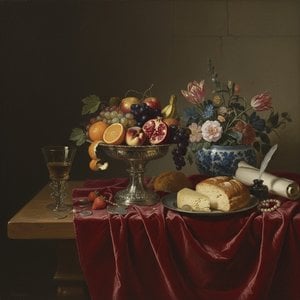
Embark on a sophisticated journey through the history of still life art. From Dutch Golden Age masterpieces to Baroque opulence, explore the profound symbolism and timeless beauty of the world's most exquisite table compositions.

 Previzualizare
 Trimite
 Distribuie
 Detalii despre lucrare

 Descarcă
 Produse similare
 Radiografie
 Diapozitive automate
 Vezi mai mult







 Opțiunea cu sticlă este disponibilă doar pentru dimensiuni de sub 110 cm


