PrevizualizarePrevizualizare Previzualizare ARPrevizualizare AR Comandă pictură lucrată manual Comandă pictură lucrată manualComută pe Imagine Digitală Comută pe Imagine Digitală TrimiteTrimite
Detalii despre lucrareDetalii despre lucrare Adaugă la favorite Adaugă la favorite DescarcăDescarcă Produse similareProduse similare RadiografieRadiografie Diapozitive automateDiapozitive automate StatisticiStatistici

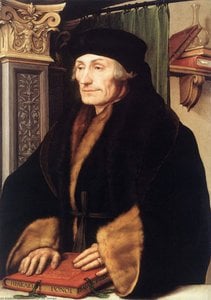
Erasmus

Witness the brilliance of Hans Holbein's 'Portrait of Erasmus'! This iconic Renaissance masterpiece captures the humanist scholar’s intellect & spirit. Explore detail, symbolism & artistry.

Hans Holbein cel Tânăr (1497-1543): Maestru în pictură realistă renascentistă, cunoscut pentru portrete regale Tudor precum Henricul VIII și detalii minuțioase. Descoperă opere impresionante!

Giclée / Imprimare artistică

Printuri giclée sau pe canvas de calitate muzeală, cu proces de producție rapid și opțiuni flexibile de finisare. (Comandă pictură lucrată manual Comandă pictură lucrată manualComută pe Imagine Digitală Comută pe Imagine Digitală)

P118B $10
P118H $10
P118W $10
P438Z $10
P508JH $12
P508YH $12
P805H $10
P805Z $10
P919BZ $10
P919G $10
P919XJ $10
P959ZH $10
P968JZ $12
W106C $8
W218G $10
W218JH $8
W218Y $10
W307PJ $10
W316G $10
W316PJ $8
W316Y $10
W398PJ $8
W4111J $10
W500HY $15
W500JH $15
W692G $12
W849H $8
W940BG $15
W953PJ $8

Standard
personalizat
CM
INCH

Alegeți dintre dimensiunile noastre prestabilite, care respectă proporțiile originale ale operei de artă.

lățime
înălțime

Puteți introduce propriile dimensiuni pentru a se potrivi unui anumit cadru sau spațiu. Dacă dimensiunea selectată nu corespunde proporțiilor imaginii originale, vom decupa lucrarea de artă sau vom extinde imaginea cu margini oglindite sau cu o culoare uniformă. Un mockup digital va fi trimis pentru aprobarea dumneavoastră înainte de începerea producției.
Vă rugăm să rețineți că previzualizarea de pe ecran nu reflectă decuparea sau extinderea reală. Doar mockup-ul va arăta cu exactitate compoziția finală.
Deși dimensiunile personalizate sunt disponibile, vă recomandăm să selectați o dimensiune din lista predefinită pentru a păstra proporțiile originale.

Livrare în întreaga lume () în 2 săptămâni, în loc de cele 4/5 săptămâni standard. (12 Septembrie)

why_choose_icon
Livrare expres gratuită la nivel mondial
why_choose_icon
Pânză de in de înaltă calitate
why_choose_icon
Asigurare completă pentru transport
why_choose_icon
Garanție de rambursare a taxelor vamale
why_choose_icon
Garanția fidelității culorilor
why_choose_icon
Politica de retur de 100 de zile (doar pentru defecte)
why_choose_icon
Garanție de rambursare 100%
why_choose_icon
Ofertă pentru comenzi multiple

Preț total

$ 68

reproduction

Erasmus

Giclée / Imprimare artistică

Dimensiune reproducere

-

Preț total calculat

$ 68

Informații rapide

  • Artist: Hans Holbein the Younger
  • Subject or theme: Portraiture; Humanism
  • Artistic style: Northern Renaissance
  • Influences: Classical Art
  • Location: Musée du Louvre, Paris
  • Medium: Oil on panel
  • Year: 1523

Test de cultură artistică

Fiecare întrebare are un singur răspuns corect.

Întrebare 1:
What is the primary subject depicted in Hans Holbein the Younger’s painting, Erasmus?
Întrebare 2:
In what artistic style is Holbein’s portrait characterized?
Întrebare 3:
What historical period does the painting Erasmus exemplify?
Întrebare 4:
The background of the painting features a floral patterned wall, which serves to:
Întrebare 5:
What is Holbein known for achieving in his portraits?

A Window into Renaissance Thought: The Soul of Erasmus

In the quiet, focused atmosphere of Hans Holbein the Younger’s 1523 masterpiece, we encounter more than just a likeness; we enter the very mind of the Northern Renaissance. The Portrait of Erasmus of Rotterdam is a profound meditation on humanism, capturing the essence of a man whose intellect would irrevocently reshape European theology and philosophy. As you gaze upon this oil on panel, you are not merely observing a scholar at work, but witnessing the birth of modern critical thought. Holbein does not rely on grand gestures or opulent surroundings to command attention; instead, he utilizes a masterful intimacy that draws the viewer into the private, contemplative world of one of history's most influential thinkers.

The subject, Desiderius Erasmus, sits as a beacon of intellectual fervor. Captured in a moment of intense concentration, his head is turned slightly, eyes perhaps tracing the lines of a text or lost in the profound weight of his own reflections. There is a palpable sense of movement in his hands—the delicate act of writing upon parchment that suggests the ongoing, restless nature of scholarly pursuit. This is not a static monument to a dead man, but a living, breathing portrait of a mind in motion, making it an extraordinary piece for any collection seeking to evoke depth, wisdom, and the timeless pursuit of knowledge.

The Mastery of Holbein: Precision and Light

To behold a Holbein is to witness the pinnacle of Northern Renaissance technique. The artist’s ability to manipulate oil paint on a small scale achieves an astonishing level of realism that feels almost tactile. Every subtle nuance of Erasmus’s weathered features, every fold in his dark, scholarly robes, and the very texture of the parchment he holds are rendered with breathtaking precision. Holbein employs a sophisticated use of light and shadow—a technique known as chiaroscendo—to create a sense of three-dimensional volume that makes the figure emerge from the panel with startling vitality.

The composition is anchored by a classic pyramidal structure, a choice that instills a sense of stability and monumental dignity within the relatively small dimensions of the work. This structural strength is balanced by a muted, somber palette that directs all emotional energy toward the subject's face and hands. For the discerning collector or interior designer, this painting offers a sophisticated aesthetic; its understated elegance allows it to serve as a powerful focal point in a study, library, or formal living space, providing an atmosphere of quiet prestige and intellectual gravity.

Symbolism and the Legacy of Humanism

Beyond the technical brilliance lies a rich tapestry of symbolic meaning. The presence of the book and the act of writing are not merely biographical details; they are symbols of the humanist movement itself—the belief in the power of classical learning, literacy, and the reform of institutions through reasoned inquiry. The subtle interplay between the dark attire of the scholar and the soft, luminous skin tones creates a visual metaphor for the light of knowledge piercing through the shadows of ignorance. Even the background, with its delicate textures, serves to ground the subject in a world of tangible reality while allowing his intellectual presence to remain transcendent.

Owning a high-quality reproduction of this work is an invitation to surround oneself with the spirit of the Renaissance. It is a piece that speaks to the enduring value of education, the beauty of meticulous craftsmanship, and the profound impact of a single, well-reasoned thought. Whether placed in a contemporary setting to provide historical contrast or in a traditional room to enhance its classical dignity, Erasmus remains an evocative masterpiece that continues to inspire awe and contemplation centuries after its creation.


Biografie artist

A Life Etched in Detail: The World of Hans Holbein the Younger

Born around 1497 in Augsburg, Germany, Hans Holbein the Younger emerged as a defining figure of the Northern Renaissance—a master portraitist whose work continues to resonate with breathtaking realism and psychological depth. His upbringing within an artistically gifted family laid the foundation for his exceptional talent; his father, Hans Holbein the Elder, was a respected painter and printmaker who instilled in young Hans a meticulous approach to observation and technique. This early training wasn’t merely about mastering brushstrokes or mixing pigments—it was about learning to *see*, to capture not just likeness but the very essence of a subject. Holbein's initial artistic explorations occurred within his father’s workshop, where he honed his skills before embarking on a journey that would lead him through Switzerland and ultimately to the heart of the English court.

From Basel to the Tudor Court: A Rising Star

After completing his apprenticeship, Holbein traveled extensively throughout Switzerland, establishing himself as an independent artist with a growing reputation. He spent several formative years in Basel, creating not only striking portraits but also religious works and intricate woodcut designs—most notably the haunting series depicting the *Dance of Death*. These early pieces reveal a burgeoning mastery of composition and a developing fascination with capturing the complexities of human emotion. His father’s influence was paramount; Holbein inherited his meticulous attention to detail and unwavering dedication to artistic excellence. The Basel workshop fostered an environment where observation reigned supreme—a crucial element in Holbein's future success as a portraitist. He skillfully blended German artistic traditions with influences from the Italian Renaissance, absorbing techniques that would elevate his craft to unprecedented heights. It was in 1526 that fate intervened, drawing Holbein towards England, an event that would irrevocably alter his artistic trajectory. He arrived bearing a letter of introduction from Erasmus, the renowned humanist scholar, which opened doors to the influential circles of English society. His talent quickly captivated prominent figures like Sir Thomas More, who became both a patron and a subject for several compelling portraits. This connection proved pivotal, leading to Holbein’s appointment as a court painter to King Henry VIII in 1536—a position he held, with some interruptions, until his untimely death in 1543. During this period, Holbein documented the grandeur of Tudor England and immortalized its rulers, solidifying his place in history as one of the most celebrated artists of his time.

The Art of Perception: Style and Masterpieces

Holbein's artistic style is characterized by an extraordinary commitment to realism, achieved through painstaking attention to detail in rendering textures, fabrics, and the subtle nuances of facial features. He didn’t simply *paint* portraits; he meticulously constructed them, layer upon layer, capturing not just physical appearances but also the personality and inner life of his sitters. His innovative compositions further enhanced the impact of his work, often employing symbolic objects or backgrounds to convey deeper meaning. The Ambassadors (1533) stands as a testament to this approach—a complex and symbolically rich double portrait showcasing both Holbein’s technical brilliance and intellectual depth. The anamorphic skull subtly embedded within the painting serves as a stark *memento mori*, reminding viewers of the inevitability of death. This masterful use of perspective and symbolism exemplifies Holbein's dedication to conveying more than just visual likeness—he aimed to capture the spirit of his subjects and communicate profound philosophical ideas. His numerous portraits of Henry VIII established a lasting image of royal power, portraying him with unflinching honesty and capturing his regal demeanor. He skillfully rendered Henry VIII’s physical features with remarkable accuracy, reflecting Holbein's unwavering commitment to realism. Beyond technical skill, Holbein possessed an exceptional ability to convey psychological depth—a hallmark of his portraits that distinguishes them from earlier depictions of monarchs. Other notable works include the stunning *Portrait of Nikolaus Kratzer* (1528), a masterpiece of realism and scientific detail—a testament to Holbein’s fascination with observation and his desire to represent subjects in their entirety. He didn't merely record appearances—he captured moments in time, preserving them for posterity.

Legacy and Influence: A Lasting Impression

Holbein’s artistic journey was shaped by a confluence of influences, blending the precision of German artistic traditions with the compositional principles of the Italian Renaissance. He admired the work of Albrecht Dürer and other German masters while also studying Italian art during his travels, absorbing their techniques and incorporating them into his own unique style. His legacy is profound; Holbein’s portraits set a new standard for realism and psychological insight in portraiture, influencing generations of artists who followed. His depictions of key figures during the Tudor period provide invaluable insights into the lives and personalities of those who shaped English history. He remains one of the most admired and studied painters of the Renaissance—a master whose work continues to inspire and enthrall audiences worldwide.
Hans Holbein cel Tânăr

Hans Holbein cel Tânăr

1497 - 1543 , Germania

Detalii rapide

  • Artistic Movement Or Style: Renaissance Kunst
  • Artists Or Movements Influenced By This Artist: ['Spätere Porträtkunst']
  • Artists Who Influenced This Artist: ['Albrecht Dürer']
  • Date Of Birth: c. 1497
  • Date Of Death: October or November 1543
  • Full Name: Hans Holbein der Jüngere
  • Nationality: Germanisch-Schwäbisch
  • Notable Artworks:
    • Die Botschafter
    • Porträt Heinrich VIII.
    • Porträt Erasmus
  • Place Of Birth: Augsburg, Germania
Explorați opere de artă organizate pe teme, stiluri și caracteristici.