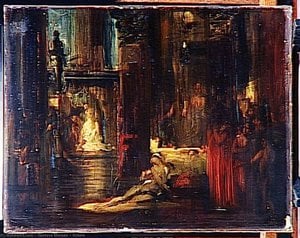
Biografie artist
A Dream Weaver of Symbolism: The Life and Art of Gustave Moreau
Gustave Moreau, un nume sinonim cu frumusețea eterică și adâncimea enigmatică a picturii simboliste, a apărut în secolul al XIX-lea din Paris ca o voce artistică singulară. Născut în 1826 într-o familie burgheză – tatăl său arhitect și arhivist – viața timpurie a lui Moreau a fost impregnată de curiozitate intelectuală și sensibilitate estetică. De la o vârstă fragedă, a demonstrat un dar remarcabil pentru desenare, hrănit prin instruire academică tradițională la École des Beaux-Arts sub figuri precum François-Édouard Picot. Cu toate acestea, calea artistică a lui Moreau s-ar abate brusc de la curentele dominante ale vremii – Realismul și Impresionismul. Nu era interesat să captureze momente fugare sau realitate obiectivă; în schimb, căuta să dezvăluie restrângerile ascunse ale mitului, religiei și psihicului uman prin intermediul unui limbaj vizual profund personal și simbolic. Călătoria sa a fost una de explorare interioară, traducând emoții subiective și aspirații spirituale pe pânze cu o atenție obsesivă la detalii și o paletă vibrantă, adesea opulentă.
The Forge of Imagination: Influences and Artistic Development
Dezvoltarea artistică a lui Moreau nu s-a născut într-un vid. Deși respingea tendințele dominante ale erei sale, el a fost inspirat de surse diverse. Utilizarea dramatică a culorii și a subiectelor exotice găsite în operele lui Eugène Delacroix au rezonat profund cu el, aprinzând o pasiune pentru pictura narativă impregnată de intensitate emoțională. De asemenea, admiraa maeștrii Renașterii precum Michelangelo și Leonardo da Vinci, admirându-le măiestria compoziției, a anatomiei și a perspicacității psihologice. Cu toate acestea, Moreau nu copia doar acești artiști; el sintetiza influențele lor într-un ceva cu totul nou. Călătoriile sale în Italia în anii 1850 au avut un rol decisiv, imersându-l în arta antichității și a Renașterii, oferindu-i o bogăție de motive și indicii stilistice care să populizeze operele sale viitoare. A copiat meticulos vechi picturi, nu ca pe un exercițiu de reproducere, ci ca pe o modalitate de a absorbi tehnicile lor și de a dezvălui secretele lor. Această dedicare față de meșteșug, combinată cu interesul său în creștere pentru mitologie și literatură, a pus bazele viziunii sale artistice unică.
A World of Symbols: Themes and Techniques
Pânzele lui Moreau nu sunt doar ilustrații ale miturilor sau poveștilor biblice; ele sunt alegorii complexe care invită la contemplare și interpretare. A explorat narațiuni precum cele despre Salome, Orfeu, Jupiter și Semele, nu pentru a le relata literalmente, ci pentru a explora adevărurile lor subiacente psihologice și spirituale. Canvasele sale sunt pline de imagini simbolice – șerpi reprezentând tentația, bijuterii semnificând dorințele terestre și figuri care personifică concepte abstracte precum durerea, pierderea sau redempțiunea. A creat cu măiestrie o atmosferă onirică prin detalii complicate, texturi bogate și o juxtapunere adesea tulburătoare de lumină și umbră. Tehnica lui Moreau era caracterizată de stratificarea minuțioasă a culorilor, creând suprafețe care strălucesc cu culori iridescente și evocă un sentiment de frumusețe supranaturală. Utilizarea foliei de aur a accentuat și mai mult acest efect, împrumutând operei sale o calitate bizantină care sublinia dimensiunea lor spirituală. Nu era preocupat să captureze texturi realiste sau perspective; în schimb, el prioritiza puterea expresivă a culorii și a formei pentru a transmite starea de spirit și semnificația.
Legacy and Influence: The Enduring Power of Symbolism
Deși a fost întâmpinat inițial cu reacții mixte, Moreau a devenit o figură centrală în nașterea mișcării simboliste în anii 1890. Spre deosebire de unii dintre contemporanii săi care au căutat activ atenția publicului, el a rămas relativ reclusiv, preferând să lucreze independent și să evite dezbaterile artistice. Cu toate acestea, influența sa a fost incontestabilă. În 1893, a acceptat o catedră la École des Beaux-Arts, unde a avut un impact profund asupra generațiilor de artiști, inclusiv Henri Matisse și Georges Rouault. L-a îndrumat pe studenții săi să îmbrățișeze imaginația, simbolismul și expresia individuală, îndemnându-i să se elibereze de normele artistice convenționale. Deși Simbolismul a slăbit în popularitate după moartea lui Moreau în 1898, opera sa a fost reevaluată semnificativ în a doua jumătate a secolului XX. Astăzi, este lăudat pe scară largă ca fiind unul dintre cei mai importanți reprezentanți ai mișcării și un precursor al artei moderne. Muzeul Național Gustave Moreau, situat în fosta sa casă și atelier din Paris, servește drept mărturie a moștenirii sale durabile – un sanctuar unde vizitatorii se pot scufunda în lumea fascinantă a acestui artist extraordinar. Pânzele sale continuă să rezoneze cu publicul de astăzi, oferind perspective asupra adâncimilor ascunse ale sufletului uman și ne amintesc de puterea artei de a transcende limitele realității.



 Vezi în context
 Comandă pictură realizată manual
 Trimite
 Distribuie
 Detalii
 Ghid
Ghid

 Descarcă
 Produse similare
 Radiografie
 Diaporama
 Statistici
 Citește mai mult






































 Opțiunea cu sticlă este disponibilă doar pentru dimensiuni de sub 110 cm