Previzualizare Previzualizare AR Comandă pictură realizată manual Comută pe Imagine Digitală Trimite prin felicitare
Detalii despre lucrare Ghid Adaugă la favorite Descarcă imaginea Produse similare Radiografie Galerie foto Statistici

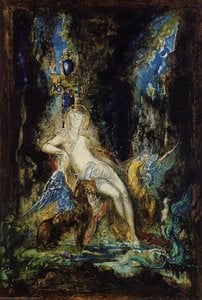
Goddess on the Rocks

Discover Gustave Moreau’s ‘Goddess on the Rocks,’ a mesmerizing Symbolist watercolor. Explore its mythology, dramatic beauty & unique artistic vision.

Descoperă operele simboliste ale lui Gustave Moreau (1826-1898), maestru al picturii mitologice și biblice! Influat de Delacroix și Matisse, exploră lumea onirică și semnificațiile ascunse în arta acestui geniu francez.

Giclée / Imprimare artistică

Printuri giclée sau pe canvas de calitate muzeală, cu proces de producție rapid și opțiuni flexibile de finisare. ( Comandă pictură realizată manual Comută pe Imagine Digitală)

Corner sample of the P118B picture frame: polistiren turnat, 5 cm wide and 3 cm thick
P118B lei10
Corner sample of the P118H picture frame: polistiren turnat, 5 cm wide and 3 cm thick
P118H lei10
Corner sample of the P118W picture frame: polistiren turnat, 5 cm wide and 3 cm thick
P118W lei10
Corner sample of the P438Z picture frame: polistiren turnat, 5.5 cm wide and 3.5 cm thick
P438Z lei10
Corner sample of the P508JH picture frame: polistiren turnat, 7 cm wide and 3.5 cm thick
P508JH lei12
Corner sample of the P508YH picture frame: polistiren turnat, 7 cm wide and 3.5 cm thick
P508YH lei12
Corner sample of the P805H picture frame: polistiren turnat, 5 cm wide and 3.5 cm thick
P805H lei10
Corner sample of the P805Z picture frame: polistiren turnat, 5 cm wide and 3.5 cm thick
P805Z lei10
Corner sample of the P919BZ picture frame: polistiren turnat, 7 cm wide and 3.5 cm thick
P919BZ lei10
Corner sample of the P919G picture frame: polistiren turnat, 7 cm wide and 3.5 cm thick
P919G lei10
Corner sample of the P919XJ picture frame: polistiren turnat, 7 cm wide and 3.5 cm thick
P919XJ lei10
Corner sample of the P959ZH picture frame: polistiren turnat, 5 cm wide and 3 cm thick
P959ZH lei10
Corner sample of the P968JZ picture frame: polistiren turnat, 6 cm wide and 4 cm thick
P968JZ lei12
Corner sample of the W106C picture frame: lemn masiv, 5 cm wide and 3 cm thick
W106C lei8
Corner sample of the W218G picture frame: lemn masiv, 5 cm wide and 3 cm thick
W218G lei10
Corner sample of the W218JH picture frame: lemn masiv, 5 cm wide and 3 cm thick
W218JH lei8
Corner sample of the W218Y picture frame: lemn masiv, 5 cm wide and 3 cm thick
W218Y lei10
Corner sample of the W307PJ picture frame: lemn masiv, 6 cm wide and 3 cm thick
W307PJ lei10
Corner sample of the W316G picture frame: lemn masiv, 6 cm wide and 3 cm thick
W316G lei10
Corner sample of the W316PJ picture frame: lemn masiv, 6 cm wide and 3 cm thick
W316PJ lei8
Corner sample of the W316Y picture frame: lemn masiv, 6 cm wide and 3 cm thick
W316Y lei10
Corner sample of the W398PJ picture frame: lemn masiv, 5 cm wide and 3 cm thick
W398PJ lei8
Corner sample of the W4111J picture frame: lemn masiv, 6.5 cm wide and 3.5 cm thick
W4111J lei10
Corner sample of the W500HY picture frame: lemn masiv, 7 cm wide and 5 cm thick
W500HY lei15
Corner sample of the W500JH picture frame: lemn masiv, 7 cm wide and 5 cm thick
W500JH lei15
Corner sample of the W692G picture frame: lemn masiv, 8 cm wide and 4 cm thick
W692G lei12
Corner sample of the W849H picture frame: lemn masiv, 5 cm wide and 3 cm thick
W849H lei8
Corner sample of the W940BG picture frame: lemn masiv, 7.5 cm wide and 4.5 cm thick
W940BG lei15
Corner sample of the W953PJ picture frame: lemn masiv, 6 cm wide and 3.5 cm thick
W953PJ lei8

Standard
personalizat
CM
INCH

Alegeți dintre dimensiunile noastre prestabilite, care respectă proporțiile originale ale operei de artă.

lățime
înălțime

Introduceți lățimea și înălțimea necesare pentru a se potrivi ramei sau peretelui dumneavoastră. O printare poate fi doar tăiată, niciodată extinsă dincolo de dimensiunea imaginii originale, astfel încât o dimensiune cu o formă diferită va pierde o parte din imagine. Vă trimitem o simulare digitală pentru aprobare înainte de a imprima orice. Imaginea afișată pe această pagină nu prezintă tăierea reală — doar simularea arată acest lucru.

Livrare în întreaga lume () în 2 săptămâni, în loc de cele 4/5 săptămâni standard. (26 Octombrie)

Livrare expres gratuită la nivel mondial
Pânză de in de înaltă calitate
Asigurare completă pentru transport
Garanție de rambursare a taxelor vamale
Garanția fidelității culorilor
Politica de retur în 100 de zile (doar pentru defecte de fabricație)
Garanție de rambursare 100%
Ofertă pentru comenzi multiple

Preț total

lei 315

Goddess on the Rocks

Giclée / Imprimare artistică

Dimensiune reproducere

-

Preț total calculat

lei 315

Informații rapide

  • Notable elements or techniques: Clock, bird, lush landscape
  • Year: 1890
  • Influences: Delacroix
  • Artistic style: Symbolist, detailed
  • Medium: Watercolor

Test de cunoștințe despre artă

Fiecare întrebare are un singur răspuns corect.

Întrebare 1:
Gustave Moreau’s ‘Goddess on the Rocks’ is a prime example of which art movement?
Întrebare 2:
What symbolic object is prominently featured above the goddess’s head in ‘Goddess on the Rocks’?
Întrebare 3:
The rocky landscape in the painting can be interpreted as representing what?
Întrebare 4:
What is a key characteristic of Moreau’s artistic technique as demonstrated in ‘Goddess on the Rocks’?
Întrebare 5:
What is the significance of the bird perched on the goddess's shoulder?

A Dreamscape of Femininity and Time

Gustave Moreau’s *Goddess on the Rocks*, completed in 1890, is not merely a painting; it's an immersion into the heart of Symbolism – a movement that dared to prioritize the evocative power of imagery and subjective experience over strict realism. This captivating watercolor transports viewers to a realm steeped in mythology, sensuality, and the poignant awareness of time’s passage. The reclining nude figure, draped across a landscape both lush and desolate, immediately commands attention with an ethereal beauty underscored by a pervasive sense of mystery. It is a work that doesn't simply depict; it invites contemplation.

Decoding the Layers of Symbolism

Moreau was a master of imbuing his canvases with layers of symbolic meaning, and *Goddess on the Rocks* stands as a prime example of this skill. The goddess herself embodies a compelling duality – vulnerability intertwined with potent power. Her languid pose suggests both repose and a latent energy waiting to be unleashed. The gentle placement of her hands upon her breasts emphasizes femininity, hinting at themes of creation or nurturing life itself. But it is the details that truly unlock the painting’s deeper resonance. A bird perched delicately on her shoulder acts as a messenger, often associated with the soul or spiritual realms, adding an air of mysticism and otherworldly connection. Perhaps most strikingly, a clock suspended above her head serves as a stark memento mori – a poignant reminder of time's relentless march and the ephemeral nature of beauty and existence. The rocky landscape surrounding her can be interpreted as representing the harsh realities of life, providing a dramatic contrast to the goddess’ serene form.

Moreau’s Artistic Technique & Style

Moreau’s technique is characterized by meticulous detail and a rich, jewel-toned palette that seems to glow from within. Though executed in watercolor, the painting possesses a density and luminosity often associated with oil painting – a testament to his masterful control of the medium. His brushwork is expressive yet controlled, creating textures that evoke both the softness of flesh and the ruggedness of stone. The dramatic lighting—strong contrasts between light and shadow—heightens the emotional intensity and draws the eye to key elements within the composition. *Goddess on the Rocks* exemplifies Moreau’s unique style: a fusion of academic precision with fantastical imagination, resulting in an aesthetic that is both alluring and unsettling. He wasn't simply painting what he saw; he was visualizing the unseen realms of myth and emotion.

Historical Context & The Symbolist Vision

Emerging in the late 19th century as a reaction against the perceived limitations of Realism and Impressionism, Symbolism sought to explore inner worlds, dreams, and spiritual truths. Artists like Moreau rejected the objective representation of reality, instead focusing on conveying emotions and ideas through symbolic imagery. Moreau was a leading figure in this movement, profoundly influencing artists such as Matisse and Rouault with his visionary approach. His work resonated with a growing sense of disillusionment with modernity and a yearning for something beyond the material world – a return to myth, spirituality, and the power of imagination. *Goddess on the Rocks* is not just a product of its time; it embodies the very spirit of Symbolism.

Emotional Resonance & Interior Design

*Goddess on the Rocks* evokes a complex range of emotions – serenity, melancholy, mystery, and perhaps even a touch of foreboding. The painting’s dreamlike quality invites contemplation and allows viewers to project their own interpretations onto its enigmatic scene. As an element in interior design, this artwork would lend itself beautifully to spaces seeking a sophisticated and evocative atmosphere. Its muted color palette complements both classic and contemporary settings, while its symbolic depth provides a compelling focal point for conversation and reflection. The painting’s themes of femininity, time, and the natural world make it particularly well-suited for bedrooms, libraries, or living rooms designed to inspire tranquility and introspection. It is a piece that speaks not just to the eye, but to the soul. For those seeking to delve deeper into Moreau’s world, a visit to the Musée National Gustave-Moreau in Paris is highly recommended.

Întrebări și răspunsuri

Unde pot găsi opere de artă similare cu "Goddess on the Rocks" de Gustave Moreau?

Pagina Lucrări similare pentru "Goddess on the Rocks" de Gustave Moreau prezintă opere de artă similare.

Imaginea pentru "Goddess on the Rocks" de Gustave Moreau poate fi reprodusă liber?

În ceea ce privește drepturile de autor, "Goddess on the Rocks" este în domeniul public – drepturile de autor au expirat.

Care sunt culorile dominante în "Goddess on the Rocks" de Gustave Moreau?

Identitatea cromatică a operei "Goddess on the Rocks" de Gustave Moreau: o paletă Earthy, dominată de Rosy Brown (#ccb081).


Biografie artist

A Dream Weaver of Symbolism: The Life and Art of Gustave Moreau

Gustave Moreau, un nume sinonim cu frumusețea eterică și adâncimea enigmatică a picturii simboliste, a apărut în secolul al XIX-lea din Paris ca o voce artistică singulară. Născut în 1826 într-o familie burgheză – tatăl său arhitect și arhivist – viața timpurie a lui Moreau a fost impregnată de curiozitate intelectuală și sensibilitate estetică. De la o vârstă fragedă, a demonstrat un dar remarcabil pentru desenare, hrănit prin instruire academică tradițională la École des Beaux-Arts sub figuri precum François-Édouard Picot. Cu toate acestea, calea artistică a lui Moreau s-ar abate brusc de la curentele dominante ale vremii – Realismul și Impresionismul. Nu era interesat să captureze momente fugare sau realitate obiectivă; în schimb, căuta să dezvăluie restrângerile ascunse ale mitului, religiei și psihicului uman prin intermediul unui limbaj vizual profund personal și simbolic. Călătoria sa a fost una de explorare interioară, traducând emoții subiective și aspirații spirituale pe pânze cu o atenție obsesivă la detalii și o paletă vibrantă, adesea opulentă.

The Forge of Imagination: Influences and Artistic Development

Dezvoltarea artistică a lui Moreau nu s-a născut într-un vid. Deși respingea tendințele dominante ale erei sale, el a fost inspirat de surse diverse. Utilizarea dramatică a culorii și a subiectelor exotice găsite în operele lui Eugène Delacroix au rezonat profund cu el, aprinzând o pasiune pentru pictura narativă impregnată de intensitate emoțională. De asemenea, admiraa maeștrii Renașterii precum Michelangelo și Leonardo da Vinci, admirându-le măiestria compoziției, a anatomiei și a perspicacității psihologice. Cu toate acestea, Moreau nu copia doar acești artiști; el sintetiza influențele lor într-un ceva cu totul nou. Călătoriile sale în Italia în anii 1850 au avut un rol decisiv, imersându-l în arta antichității și a Renașterii, oferindu-i o bogăție de motive și indicii stilistice care să populizeze operele sale viitoare. A copiat meticulos vechi picturi, nu ca pe un exercițiu de reproducere, ci ca pe o modalitate de a absorbi tehnicile lor și de a dezvălui secretele lor. Această dedicare față de meșteșug, combinată cu interesul său în creștere pentru mitologie și literatură, a pus bazele viziunii sale artistice unică.

A World of Symbols: Themes and Techniques

Pânzele lui Moreau nu sunt doar ilustrații ale miturilor sau poveștilor biblice; ele sunt alegorii complexe care invită la contemplare și interpretare. A explorat narațiuni precum cele despre Salome, Orfeu, Jupiter și Semele, nu pentru a le relata literalmente, ci pentru a explora adevărurile lor subiacente psihologice și spirituale. Canvasele sale sunt pline de imagini simbolice – șerpi reprezentând tentația, bijuterii semnificând dorințele terestre și figuri care personifică concepte abstracte precum durerea, pierderea sau redempțiunea. A creat cu măiestrie o atmosferă onirică prin detalii complicate, texturi bogate și o juxtapunere adesea tulburătoare de lumină și umbră. Tehnica lui Moreau era caracterizată de stratificarea minuțioasă a culorilor, creând suprafețe care strălucesc cu culori iridescente și evocă un sentiment de frumusețe supranaturală. Utilizarea foliei de aur a accentuat și mai mult acest efect, împrumutând operei sale o calitate bizantină care sublinia dimensiunea lor spirituală. Nu era preocupat să captureze texturi realiste sau perspective; în schimb, el prioritiza puterea expresivă a culorii și a formei pentru a transmite starea de spirit și semnificația.

Legacy and Influence: The Enduring Power of Symbolism

Deși a fost întâmpinat inițial cu reacții mixte, Moreau a devenit o figură centrală în nașterea mișcării simboliste în anii 1890. Spre deosebire de unii dintre contemporanii săi care au căutat activ atenția publicului, el a rămas relativ reclusiv, preferând să lucreze independent și să evite dezbaterile artistice. Cu toate acestea, influența sa a fost incontestabilă. În 1893, a acceptat o catedră la École des Beaux-Arts, unde a avut un impact profund asupra generațiilor de artiști, inclusiv Henri Matisse și Georges Rouault. L-a îndrumat pe studenții săi să îmbrățișeze imaginația, simbolismul și expresia individuală, îndemnându-i să se elibereze de normele artistice convenționale. Deși Simbolismul a slăbit în popularitate după moartea lui Moreau în 1898, opera sa a fost reevaluată semnificativ în a doua jumătate a secolului XX. Astăzi, este lăudat pe scară largă ca fiind unul dintre cei mai importanți reprezentanți ai mișcării și un precursor al artei moderne. Muzeul Național Gustave Moreau, situat în fosta sa casă și atelier din Paris, servește drept mărturie a moștenirii sale durabile – un sanctuar unde vizitatorii se pot scufunda în lumea fascinantă a acestui artist extraordinar. Pânzele sale continuă să rezoneze cu publicul de astăzi, oferind perspective asupra adâncimilor ascunse ale sufletului uman și ne amintesc de puterea artei de a transcende limitele realității.
Gustave Moreau

Gustave Moreau

1826 - 1898 , Franța

Detalii rapide

  • Artistic Movement Or Style: Simbolism
  • Artists Or Movements Influenced By This Artist:
    • Matisse
    • Rouault
  • Artists Who Influenced This Artist:
    • Delacroix
    • Michelangelo
    • Leonardo
  • Date Of Birth: 6 aprilie 1826
  • Date Of Death: 18 aprilie 1898
  • Full Name: Gustave Moreau
  • Nationality: Francez
  • Notable Artworks:
    • Salomé
    • Jupiter
    • Orfeu
    • Apariția
    • Desdemona
  • Place Of Birth: Paris, Franța
Explorați opere de artă organizate pe teme, stiluri și caracteristici.