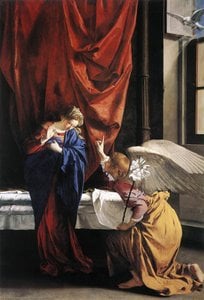
The Annunciation (1620) by Giulio Cesare Procaccini, hand-painted oil painting reproduction by a master artist
Previzualizare Previzualizare AR Comută pe versiunea Print Comută pe Imagine Digitală Trimite prin felicitare
Detalii despre lucrare Ghid Adaugă la favorite Descarcă imaginea Produse similare Radiografie Galerie foto Q&A Statistici

The Annunciation Hand-painted oil painting reproduction

Dimensiuni
237.0 x 164.0 cm

Experience Baroque drama with Procaccini's Annunciation, featuring dramatic chiaroscuro and vibrant color; discover this masterpiece today.

Discover Giulio Cesare Procaccini, Italian Baroque painter (1574-1625). Explore his Milanese & Genoese works – altarpieces, frescoes, & early Baroque style.

Reproducere pictată manual în ulei

Pictură în ulei pe pânză, pictată manual de artiștii noștri la dimensiunea și ramele dorite de dumneavoastră, pe comandă. ( Comută pe versiunea Print Comută pe Imagine Digitală)

Corner sample of the P118B picture frame: polistiren turnat, 5 cm wide and 3 cm thick
P118B lei10
Corner sample of the P118H picture frame: polistiren turnat, 5 cm wide and 3 cm thick
P118H lei10
Corner sample of the P118W picture frame: polistiren turnat, 5 cm wide and 3 cm thick
P118W lei10
Corner sample of the P438Z picture frame: polistiren turnat, 5.5 cm wide and 3.5 cm thick
P438Z lei10
Corner sample of the P508JH picture frame: polistiren turnat, 7 cm wide and 3.5 cm thick
P508JH lei12
Corner sample of the P508YH picture frame: polistiren turnat, 7 cm wide and 3.5 cm thick
P508YH lei12
Corner sample of the P805H picture frame: polistiren turnat, 5 cm wide and 3.5 cm thick
P805H lei10
Corner sample of the P805Z picture frame: polistiren turnat, 5 cm wide and 3.5 cm thick
P805Z lei10
Corner sample of the P919BZ picture frame: polistiren turnat, 7 cm wide and 3.5 cm thick
P919BZ lei10
Corner sample of the P919G picture frame: polistiren turnat, 7 cm wide and 3.5 cm thick
P919G lei10
Corner sample of the P919XJ picture frame: polistiren turnat, 7 cm wide and 3.5 cm thick
P919XJ lei10
Corner sample of the P959ZH picture frame: polistiren turnat, 5 cm wide and 3 cm thick
P959ZH lei10
Corner sample of the P968JZ picture frame: polistiren turnat, 6 cm wide and 4 cm thick
P968JZ lei12
Corner sample of the W106C picture frame: lemn masiv, 5 cm wide and 3 cm thick
W106C lei8
Corner sample of the W218G picture frame: lemn masiv, 5 cm wide and 3 cm thick
W218G lei10
Corner sample of the W218JH picture frame: lemn masiv, 5 cm wide and 3 cm thick
W218JH lei8
Corner sample of the W218Y picture frame: lemn masiv, 5 cm wide and 3 cm thick
W218Y lei10
Corner sample of the W307PJ picture frame: lemn masiv, 6 cm wide and 3 cm thick
W307PJ lei10
Corner sample of the W316G picture frame: lemn masiv, 6 cm wide and 3 cm thick
W316G lei10
Corner sample of the W316PJ picture frame: lemn masiv, 6 cm wide and 3 cm thick
W316PJ lei8
Corner sample of the W316Y picture frame: lemn masiv, 6 cm wide and 3 cm thick
W316Y lei10
Corner sample of the W398PJ picture frame: lemn masiv, 5 cm wide and 3 cm thick
W398PJ lei8
Corner sample of the W4111J picture frame: lemn masiv, 6.5 cm wide and 3.5 cm thick
W4111J lei10
Corner sample of the W500HY picture frame: lemn masiv, 7 cm wide and 5 cm thick
W500HY lei15
Corner sample of the W500JH picture frame: lemn masiv, 7 cm wide and 5 cm thick
W500JH lei15
Corner sample of the W692G picture frame: lemn masiv, 8 cm wide and 4 cm thick
W692G lei12
Corner sample of the W849H picture frame: lemn masiv, 5 cm wide and 3 cm thick
W849H lei8
Corner sample of the W940BG picture frame: lemn masiv, 7.5 cm wide and 4.5 cm thick
W940BG lei15
Corner sample of the W953PJ picture frame: lemn masiv, 6 cm wide and 3.5 cm thick
W953PJ lei8

Standard
personalizat
CM
INCH

Alegeți dintre dimensiunile noastre prestabilite, care respectă proporțiile originale ale operei de artă.

lățime
înălțime

Introduceți lățimea și înălțimea necesare pentru a se potrivi ramei sau peretelui dumneavoastră. Această lucrare este pictată manual, așa că, pentru o dimensiune cu o formă diferită, artistul poate picta puțin mai mult în jurul imaginii sau poate tăia puțin din margini — dumneavoastră decideți. Vă vom trimite o simulare digitală pentru aprobare înainte de a începe pictarea. Imaginea afișată pe această pagină nu reprezintă rezultatul real — doar simularea este reprezentativă.

Exemple de elemente ce pot fi personalizate: Înlocuiți fața cu fotografia clientului; Adăugați un animal de companie (de exemplu, înlocuiți pisica cu un câine); Includeți un mesaj ascuns în fundal; Schimbați peisajul sau elementele din fundal.
După plasarea comenzii, echipa WahooArt.com va contacta clientul prin e-mail pentru instrucțiuni și îi va furniza o previzualizare a machetei

Livrare în întreaga lume () în 3-4 săptămâni, în loc de cele 5 săptămâni standard. (2 Noiembrie). Fără compromisuri în ceea ce privește calitatea.

Livrare expres gratuită la nivel mondial
Pânză de in de înaltă calitate
Asigurare completă pentru transport
Garanție de rambursare a taxelor vamale
Garanția fidelității culorilor
Politica de retur în 100 de zile (doar pentru defecte de fabricație)
Garanție de rambursare 100%
Ofertă pentru comenzi multiple

Preț total

lei 1293

The Annunciation

Tehnică de reproducere

Dimensiune reproducere

-

Preț total calculat

lei 1293

Informații rapide

  • Title: The Annunciation
  • Artistic style: Baroque
  • Movement: Baroque
  • Location: The Louvre, Paris
  • Medium: Oil on canvas

Test de cunoștințe despre artă

Fiecare întrebare are un singur răspuns corect.

Întrebare 1:
What is the title of this painting?
Întrebare 2:
In which city is The Annunciation currently housed?
Întrebare 3:
Who created this masterpiece?
Întrebare 4:
What artistic style is characterized by dramatic use of color, light and shadow?
Întrebare 5:
The painting depicts the moment when...

A Moment of Divine Revelation

In the masterpiece The Annunciation, created in 1620, Giulio Cesare Procaccini captures the profound moment when the angel Gabriel announces to the Virgin Mary that she will bear a son, Jesus. The composition is defined by a sense of movement and energy, with the figures of Gabriel and Mary arranged along a diagonal line. Through the masterful use of chiaroscuro, the artist employs strong contrasts between light and dark to instill the scene with drama and tension, adding significant depth and volume to the figures.

The painting is rich with symbolic elements that deepen its narrative impact. A lily is featured as a symbol of purity and innocence, while a book represents knowledge and wisdom. The vibrant colors and intricate details highlight Procaccini's technical skill, particularly in how light and shadow interact within the frame.

Visual Composition and Detail

The foreground of this oil on canvas features two central figures: a woman dressed in blue robes and a man wearing red garments. The woman is depicted kneeling before the man, who holds a book or manuscript, suggesting an interaction of revelation. Above these figures, three cherubs are seen playing with a butterfly, adding an element of joy and innocence to the scene.

The background presents a dark landscape situated under a cloudy sky, providing a sharp contrast to the brightly lit figures in the foreground. The use of vibrant blues and reds draws the viewer's attention to the importance of the central characters within the composition.

Întrebări și răspunsuri

Care este culoarea dominantă în "The Annunciation" de Giulio Cesare Procaccini?

Culoarea dominantă a operei "The Annunciation" de Giulio Cesare Procaccini este Espresso (#462727).

Ce dimensiune de print pentru "The Annunciation" de Giulio Cesare Procaccini se potrivește cu camera recomandată?

Pentru o Living Room, recomandăm pentru "The Annunciation" o dimensiune de tipar de Large.

Pot vedea o previzualizare a "The Annunciation" de Giulio Cesare Procaccini înainte de a comanda?

Pagina de Previzualizare în spațiu pentru „The Annunciation” vă permite să vizualizați opera de artă înainte de a comanda.


Biografie artist

The Master of Milanese Drama: The Life and Legacy of Giulio Cesare Procaccini

Giulio Cesare Procaccini stands as a pivotal figure in the burgeoning artistic landscape of early Baroque Milan, marking a decisive transition from Mannerist formalism to the expressive dynamism that would define an era. Born in Bologna in 1574, he descended from a lineage steeped in profound artistic tradition; his father, Ercole Procaccini the Elder, was himself a notable Mannerist painter. This heritage profoundly shaped his formative years, instilling within him an appreciation for nuanced stylistic complexities and a technical rigor that would later allow him to masterfully blend grace with grandeur. Around 1585, spurred by the influential patronage of Pierro Visconti, the family relocated to Milan, establishing a crucial connection with one of Italy’s wealthiest art collectors and fostering an environment ripe for the artistic experimentation that would become Procaccini's hallmark.

The artist's creative journey began not with the brush, but with the chisel. His early training was rooted in sculptural endeavors, primarily focused on the sacred spaces of the Milanese Duomo and Santa Maria presso San Celso. This tactile foundation in sculpture left an indelible mark on his later paintings, manifesting in a unique sense of volume, weight, and anatomical presence. However, he eventually transitioned to painting, recognizing its unparalleled capacity for conveying intense emotion and celestial light. During this period of development, Procaccini moved within the highest intellectual circles of Milan, associating with luminaries such as Giovanni Battista Crespi, known as Il Cerano, and Pier Francesco Mazzucchelli, or Il Morazzone. Under the spiritual and material guidance of Cardinal Federico Borromeo, Procaccini's creative output was propelled toward greatness, allowing him to capture the very spirit of the Counter-Reformation.

A Symphony of Light and Devotion

Procaccini’s mature style is a breathtaking synthesis of various European influences, most notably the vibrant colorism of the Venetian school and the sweeping, energetic compositions of Peter Paul Rubens. His works are characterized by a dramatic use of chiaroscuro, where deep shadows dance against luminous highlights to create a sense of theatrical movement. In masterpieces such as The Annunciation, one can witness this Baroque drama firsthand, as vibrant colors and swirling drapery evoke a profound sense of divine intervention. His ability to manipulate light allowed him to breathe life into religious narratives, transforming static icons into living, breathing moments of spiritual ecstasy.

His technical prowess is perhaps most evident in his large-scale religious commissions, which served both as artistic triumphs and instruments of faith. Notable examples include:

  • Madonna and Child with Sts Francis and Dominic and Angels: A monumental oil on canvas commissioned for the church of Madonna dei Miracoli in Corbetta, where he masterfully blends Mannerist elegance with a new, surging Baroque energy.
  • The Six Quadroni: Perhaps his most celebrated achievement, these large canvases depicting Saint Charles Borromeo were commissioned for the Basilica della Santissima Annunziata del Vastato in Genoa, showcasing his ability to handle epic, monumental scale.
  • St Sebastian Tended by Angels: A work that highlights his delicate touch and his ability to weave together themes of suffering and divine tenderness through fluid, rhythmic compositions.

Historical Significance and Artistic Triumph

The historical significance of Giulio Cesare Procaccini lies in his role as a bridge between two worlds. He took the sophisticated, often artificial elegance of the Mannerist period and infused it with a new, visceral humanity that resonated with the religious fervor of 17th-century Italy. His work does not merely depict a scene; it invites the viewer into a sensory experience of the divine. Through his mastery of color, light, and movement, he helped establish Milan as a major center of Baroque excellence, leaving behind a legacy of altarpieces and frescoes that continue to captivate the modern imagination with their profound emotional depth and technical brilliance.

Giulio Cesare Procaccini

Giulio Cesare Procaccini

1574 - 1625 , Italy

Detalii rapide

  • Full Name: Giulio Cesare Procaccini
  • Nationality: Italian
  • Date Of Birth: 1574
  • Date Of Death: 1625
  • Place Of Birth: Bologna, Italy
  • Notable Artworks:
    • St Sebastian Tended by Angels
    • Holy Family with John the Baptist and an Angel
    • Circumcision
    • Last Supper
    • Scourging of Christ
    • Ecce Homo
  • Artistic Movement Or Style: Baroque
  • Artists Who Influenced This Artist: ['Ercole Procaccini']
  • Artists Or Movements Influenced By This Artist: ['Rubens']