Vezi în context Previzualizare AR Comandă pictură realizată manual Treci la imagine digitală Trimite
Detalii Adaugă la favorite Descarcă Produse similare Radiografie Diaporama Statistici

Sacred conversation

Discover Giorgione’s 'Sacred Conversation,' a serene Renaissance masterpiece showcasing luminous oil painting & classical composition. Explore Venetian art's beauty.

Descoperă Giorgione (1477/8-1510), pictorul venețian emblematic al Renașterii! Admira opere impresionante precum "Tempesta" și "Concert pastoral", caracterizate de culoare vibrantă și atmosferă poetică.

Giclée / Imprimare artistică

Printuri giclée sau pe canvas de calitate muzeală, cu proces de producție rapid și opțiuni flexibile de finisare. ( Comandă pictură realizată manual Treci la imagine digitală)

P118B $10
P118H $10
P118W $10
P438Z $10
P508JH $12
P508YH $12
P805H $10
P805Z $10
P919BZ $10
P919G $10
P919XJ $10
P959ZH $10
P968JZ $12
W106C $8
W218G $10
W218JH $8
W218Y $10
W307PJ $10
W316G $10
W316PJ $8
W316Y $10
W398PJ $8
W4111J $10
W500HY $15
W500JH $15
W692G $12
W849H $8
W940BG $15
W953PJ $8

Dimensiuni standard
personalizat
CM
INCH

Alegeți dintre dimensiunile noastre prestabilite, care respectă proporțiile originale ale operei de artă.

lățime
înălțime

Puteți introduce propriile dimensiuni pentru a se potrivi unui anumit cadru sau spațiu. Dacă dimensiunea selectată nu corespunde proporțiilor imaginii originale, vom decupa lucrarea de artă sau vom extinde imaginea cu margini oglindite sau cu o culoare uniformă. Un mockup digital va fi trimis pentru aprobarea dumneavoastră înainte de începerea producției.
Vă rugăm să rețineți că previzualizarea de pe ecran nu reflectă decuparea sau extinderea reală. Doar mockup-ul va arăta cu exactitate compoziția finală.
Deși dimensiunile personalizate sunt disponibile, vă recomandăm să selectați o dimensiune din lista predefinită pentru a păstra proporțiile originale.

Livrare în întreaga lume () în 2 săptămâni, în loc de cele 4/5 săptămâni standard. (17 Septembrie)

why_choose_icon
Livrare expres gratuită la nivel mondial
why_choose_icon
Pânză de in premium
why_choose_icon
Asigurare completă pentru transport
why_choose_icon
Garanție de rambursare a taxelor vamale
why_choose_icon
Garanția fidelității culorilor
why_choose_icon
Politica de retur în 100 de zile (doar pentru defecte)
why_choose_icon
Garanție de rambursare 100%
why_choose_icon
Reducere pentru comenzi multiple

Preț total

$ 68

reproduction

Sacred conversation

Giclée / Imprimare artistică

Dimensiune reproducere

-

Preț total

$ 68

Detalii rapide

  • subject: Madonna and Child with two female figures; Presentation of Jesus at the Temple (likely)
  • movement: High Renaissance, Venetian School
  • title: Sacred conversation
  • artist: Giorgione
  • medium: Oil on canvas
  • year: 1505

Chestionar de artă

Fiecare întrebare are un singur răspuns corect.

Întrebare 1:
To which artistic period does 'Sacred Conversation' by Giorgione primarily belong?
Întrebare 2:
Giorgione is known for prioritizing what element in his paintings, distinguishing him from Florentine artists?
Întrebare 3:
The composition of 'Sacred Conversation' is described as what shape, providing a sense of stability?
Întrebare 4:
What painting technique is prominently used in 'Sacred Conversation', contributing to its rich textures and luminous effects?
Întrebare 5:
The scene depicted in 'Sacred Conversation' is likely a representation of what religious event?

A Moment of Divine Encounter: Giorgione’s *Sacred Conversation*

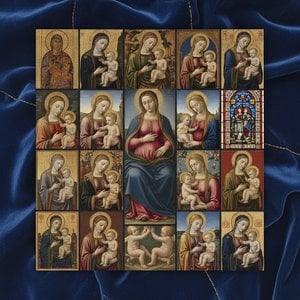
This exquisite oil painting by Giorgione, created around 1505, exemplifies the blossoming artistry of the High Renaissance in Venice. More than a simple depiction of religious figures, it's a carefully constructed scene radiating serenity and spiritual contemplation – a hallmark of Giorgione’s unique style. The artwork presents the Virgin Mary cradling the infant Jesus, engaged in intimate conversation with two female saints, often identified as Saint Lucy and Saint Catherine of Alexandria.

Style & Technique: Venetian Lyricalism

Giorgione, alongside Titian, was instrumental in defining the distinctive *Venetian School* of painting. Unlike the Florentine emphasis on linear perspective and precise draftsmanship, Giorgione prioritized color, atmosphere, and a poetic sensibility. This is beautifully evident here. The composition isn’t rigidly structured; instead, it flows organically with soft contours and diffused light. He masterfully employed oil paints in layers – a technique that allows for rich textures, luminous skin tones, and the subtle play of light across fabrics. Notice how forms seem to emerge from the shadows rather than being sharply defined. The use of *sfumato*—a softening or blurring of outlines—creates an ethereal quality, inviting quiet contemplation.

Composition & Symbolism

The pyramidal composition anchors the scene with Mary and Jesus at its apex, drawing the viewer’s eye to the central figures. However, it's not a static arrangement. The figures are positioned within a richly decorated interior, yet the space feels intimate rather than grandiose. A window opens onto a hazy landscape – a typical feature in Giorgione’s work that adds depth and a sense of mystery. The ‘Sacred Conversation’ (or *conversazione sacra*), as this type of painting is known, wasn't intended to depict a specific biblical event but rather to foster personal devotion through the imagined interaction between holy figures. The objects held by the saints – often symbolic attributes – further enrich the narrative; though their precise meanings remain open to interpretation, adding to the artwork’s enigmatic allure.

Historical Context & Giorgione's Legacy

Giorgione’s career was tragically short, ending at the age of 33. Consequently, his *oeuvre* is small and often debated – attribution can be challenging. However, his impact on Venetian painting was immense. He moved away from strict narrative representation towards a more evocative and atmospheric style that profoundly influenced Titian and subsequent generations of artists. The early 16th century in Venice was a period of great artistic innovation, fueled by the city’s wealth, cosmopolitan atmosphere, and unique relationship with light and color. Giorgione's work embodies this spirit of experimentation and refinement.

Emotional Impact & Interior Design

*Sacred Conversation* evokes a sense of peaceful reverence and intimate spirituality. The soft colors, gentle lighting, and harmonious composition create a calming atmosphere. This artwork would be a stunning focal point in a variety of interior settings – from a traditional library or study to a more contemporary living space. Its muted palette complements both warm and cool color schemes, while its elegant proportions lend themselves well to various wall sizes. A high-quality reproduction captures the subtle nuances of Giorgione’s technique, bringing a touch of Renaissance grace and tranquility into any home.
  • Style: High Renaissance, Venetian School
  • Medium: Oil on canvas
  • Date: c. 1505
  • Dimensions: Unknown

Biografie artist

Giorgione (1477/8-1510), a Key High Renaissance Venetian Painter

Giorgio Barbarelli da Castelfranco, known to the world as Giorgione, remains one of the most elusive and captivating figures in Renaissance art. Born in the small town of Castelfranco Veneto near Venice around 1477 or 1478 – the exact year is debated – his tragically short life, ending around 1510 at the age of thirty-two or thirty-three, belies an artistic impact that continues to resonate centuries later. Unlike many of his contemporaries whose lives are well documented, Giorgione’s story is shrouded in mystery, pieced together from scant historical records and the often romanticized accounts of Giorgio Vasari. What we do know suggests a man deeply immersed in the vibrant culture of Venice, a city that fostered both artistic innovation and a sensual appreciation for beauty. He likely apprenticed under Giovanni Bellini, a leading Venetian painter, absorbing the established traditions before forging his own unique path. Early commissions included portraits of prominent figures like Doge Agostino Barbarigo, demonstrating an immediate talent for capturing likeness and status. However, it was in his departure from conventional subject matter and his revolutionary approach to painting that Giorgione truly distinguished himself.

Early Life and Artistic Training

Giorgio Barbarelli’s origins are relatively obscure. He was born into a noble family, though details about his parents remain elusive. His formative years were spent in Castelfranco Veneto, where he received an education focused on humanist studies – a hallmark of the Venetian intellectual landscape at the time. Crucially, he began his artistic training under Giovanni Bellini, arguably Venice’s most influential painter and a master of Venetian tradition. Bellini instilled in Giorgione a profound understanding of perspective and draughtsmanship, yet Giorgione swiftly rejected these conventions, recognizing their limitations in conveying emotion and atmosphere. This decision would prove to be pivotal in shaping his distinctive artistic style.

A Revolutionary Style: Color, Atmosphere, and *Sfumat*

Giorgione’s artistic style marked a significant break from the Florentine preoccupation with linear perspective and precise draftsmanship. He championed color, atmosphere, and an evocative moodiness that became hallmarks of the Venetian school. His technique involved softening outlines, employing subtle gradations of tone – *sfumato* – to create atmospheric effects, and prioritizing overall harmony over meticulous detail. This wasn’t merely a technical choice; it reflected a fundamentally different artistic sensibility. Giorgione sought not to replicate reality but to capture its essence, its fleeting emotions, and its poetic resonance. He famously described his aim as “to make the painting seem to breathe,” capturing the elusive beauty of nature and human experience. This approach wasn’t merely about achieving visual realism; it was about conveying a deeper truth – a sense of mystery and contemplation that captivated audiences and influenced generations of artists. Consider *The Tempest*, Giorgione's masterpiece. The hazy landscape, rendered with delicate gradations of color, evokes the drama of impending storm without resorting to dramatic chiaroscuro—the stark contrast between light and dark—a technique favored by Leonardo da Vinci and Michelangelo. Instead, Giorgione’s palette is rich in muted hues, creating an ethereal glow that envelops the figures within.

Notable Works and Artistic Legacy

Giorgione produced a relatively small number of paintings during his lifetime, yet each work possesses extraordinary artistic merit and continues to inspire admiration. Among his most celebrated creations are *Pastoral Concert*, depicting musicians gathered in a serene meadow—a scene devoid of narrative complexity but brimming with visual beauty and symbolic resonance; *Sleeping Venus*, an enigmatic portrait that embodies Venetian ideals of feminine grace and sensual allure; and *Judith*, which showcases Giorgione’s masterful handling of color and form. His influence extended far beyond his own output, shaping the artistic sensibilities of Titian and other Venetian painters who would carry forward his innovations in color and atmospheric painting. Giorgione's embrace of *sfumato*—the subtle blending of colors to create soft transitions—became a defining characteristic of Venetian art, distinguishing it from Florentine realism and establishing Venice as a beacon of artistic creativity. He remains a symbol of artistic freedom, innovation, and the power of suggestion – a painter who dared to prioritize feeling over form, atmosphere over accuracy, and poetry over narrative.

A Final Mystery: The Enduring Enigma

Giorgione’s death in 1510 remains shrouded in speculation. Vasari attributed his demise to malaria, but recent scholarship suggests that he may have succumbed to tuberculosis—a tragic fate for a man who had achieved such remarkable artistic success. Despite the paucity of biographical information, Giorgione's legacy persists as one of the most profound and influential figures in Renaissance art. His pioneering approach to painting continues to fascinate scholars and artists alike, prompting ongoing debates about his motivations, inspirations, and artistic vision. He stands as a testament to the transformative power of imagination—a painter who dared to transcend convention and capture the elusive beauty of human experience with unparalleled grace and subtlety.
Giorgione

Giorgione

1477 - 1510 , Italia

Informații rapide

  • Artistic Movement Or Style: Renașterea venețiană
  • Artists Or Movements Influenced By This Artist: ['Titian']
  • Artists Who Influenced This Artist:
    • Giovanni Bellini
    • Mantegna
  • Date Of Birth: 1477/78 sau 1473/74
  • Date Of Death: 1510
  • Full Name: Giorgio Barbarelli da Castelfranco Zorzo
  • Nationality: Italian
  • Notable Artworks:
    • Tempestă
    • Apusul
    • Magna Domenă a Castelfranco
  • Place Of Birth: Castelfranco Veneto, Italia
Explorați opere de artă organizate pe teme, stiluri și caracteristici.