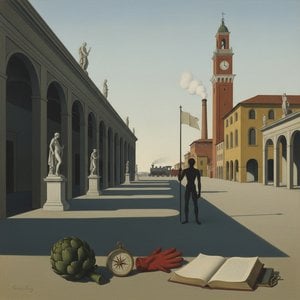
A Dreamscape of the Mind: The Life and Art of Giorgio de Chirico
Giorgio de Chirico, născut în 1888 în Volos, Grecia, într-o familie italiană – o mamă genoveză și un tată sicul – a avut o călătorie artistică impregnată atât de moștenirea clasică, cât și de un sentiment emergent de alienare modernă. Educația sa timpurie la Politehnica din Atena i-a oferit o bază în tehnici tradiționale, dar studiile sale ulterioare în Munchen au aprins cu adevărat spiritul său creativ. Acolo, în fermentul intelectual al Europei prebelșice, a întâlnit operele lui Arnold Böcklin și Max Klinger, artiști ale căror imagini simbolice și imagini tulburătoare au rezonat profund cu propria sa estetică în dezvoltare. La fel de influențatori au fost curentele filosofice ale vremii – scrierile lui Friedrich Nietzsche, Arthur Schopenhauer și Otto Weininger – care explorau teme precum existențialismul, iraționalitatea dorinței umane și natura subiectivă a realității. Aceste idei s-ar dovedi centrale în viziunea artistică revoluționară a lui de Chirico.
The Birth of Metaphysical Painting
Aproximativ în 1909, un stil unic a început să emergi din explorările lui de Chirico – un stil pe care el însuși l-a numit „artă metafizică”. Nu era doar o inovație stilistică; era o încercare profundă de a captura realitățile ascunse sub suprafața vieții cotidiene, de a dezvălui poezia tulburătoare care se ascunde în spațiile familiare. Un moment decisiv a avut loc într-o vizită la Florența și o experiență în Piazza Santa Croce, care a stârnit seria sa iconică „Piață Metafizică”. Aceste picturi sunt caracterizate de statul lor tulburător, umbre lungi dramatice, perspective ilogice și prezența arhitecturii clasice juxtapuse cu elemente deranjante precum manechinii fără chip și statuile impozante. Efectul este profund tulburtor, evocând nostalgie, izolare și un angoșă aproape insuportabilă pentru ceva pierdut sau inaccesibil. De Chirico a fondat *Scuola Metafisica*, influențând profund Surrealismul, deși ulterior s-ar distanța de interpretările sale asupra operei sale. Pânzele sale nu erau destinate să ilustreze visele, ci mai degrabă să reprezinte o realitate dincolo de lumea vizibilă – un domeniu în care timpul și spațiul sunt fluide și unde granițele dintre conștiință și subconștient se estompează. Piese notabile precum *The Vexations of the Thinker*, *The Enigma of an Autumn Afternoon* și *The Song of Love* exemplifică această estetică tulburătoare, invitând privitorii să mediteze asupra misterelor existenței și a fragilității percepției umane.
A Shift in Style and a Lasting Legacy
După Primul Război Mondial, în jurul anului 1919, calea artistică a lui de Chirico a luat o întorsare neașteptată. A respins abordarea sa metafizică timpurie, îmbrățișând în schimb un stil neoclasic sau neo-baroc mai tradițional. Această schimbare a fost întâmpinată cu o critică considerabilă; mulți critici au lamentat pierderea spiritului inovator care a definit lucrarea sa timpurie și l-au acuzat că a abandonat viziunea sa originală. Cu toate acestea, de Chirico a rămas ferm în alegerile sale artistice, revizitând teme din trecutul său, dar le-a redat cu o sensibilitate estetică diferită. A continuat să picteze și să expună pe tot parcursul vieții sale, explorând diferite stiluri și subiecte, menținând în același timp un angajament constant față de măiestria tehnică. În ciuda criticilor, influența sa asupra generațiilor ulterioare de artiști nu poate fi subestimată. Utilizarea sa inovatoare a spațiului, a perspectivei și a simbolismului a pus la îndoială normele artistice convenționale și a deschis calea pentru noi forme de expresie.
Influences and Enduring Impact
Opera lui de Chirico stă ca o punte crucială între mișcarea simbolistă din sfârșitul secolului al XIX-lea și ascensiunea Surrealismului la începutul secolului al XX-lea. A fost direct influențat de artiști precum Arnold Böcklin și Max Klinger, ale căror imagini evocatoare au rezonat cu fascinația sa pentru mitologia și subconștientul. Filosofii precum Nietzsche și Schopenhauer i-au oferit un cadru pentru explorarea temelor existențialismului, a alienării și a căutării sensului într-o lume aparent lipsită de sens. Cu toate acestea, viziunea lui de Chirico s-a extins mult dincolo de Surrealism. Artiști precum René Magritte și Salvador Dalí au fost profund inspirați de picturile sale metafizice, adoptând tehnicile sale de juxtapunere, perspectivă ilogică și simbolism pentru a crea propriile lor lumi onirice. Lucrarea sa a avut, de asemenea, un impact asupra mișcărilor ulterioare precum Realismul magic, care căuta să reprezinte realitatea cotidiană cu un sentiment sporit de mister și profunzime psihologică. Astăzi, picturile lui de Chirico sunt expuse în muzee importante din întreaga lume, inclusiv Muzeul dedicat operei sale din apropierea Scărilor Spaniole din Roma, asigurând că moștenirea sa ca una dintre cele mai importante figuri ale artei secolului al XX-lea rămâne sigură. A lăsat în urmă nu doar un corp de opere de artă, ci și o nouă modalitate de a vedea – o modalitate de a percepe lumea ca un loc de semnificații ascunse, frumusețe tulburătoare și mister persistent.
Key Influences & Artistic Lineage
- Influenced By: Arnold Böcklin, Max Klinger, Friedrich Nietzsche, Arthur Schopenhauer.
- Influenced: Surrealism, particularly artists like René Magritte and Salvador Dalí. His work also impacted later movements such as Magic Realism.



 Vezi în context
 Comandă pictură realizată manual
 Trimite
 Distribuie
 Detalii
 Ghidul

 Descarcă
 Produse similare
 Radiografie
 Diaporama
 Statistici
 Citește mai mult






































 Opțiunea cu sticlă este disponibilă doar pentru dimensiuni de sub 110 cm