CONSULTAȚIE GRATUITĂ ÎN ARTE VIZUALE

x
Comandă reproducere pictată Comandă reproducere pictatăCumpără imaginea Cumpără imaginea TrimiteTrimite
DetaliiDetalii Adaugă la favorite Adaugă la favorite DescarcăDescarcă SimilareSimilare Raze XRaze X DiaporamaDiaporama

Untitled

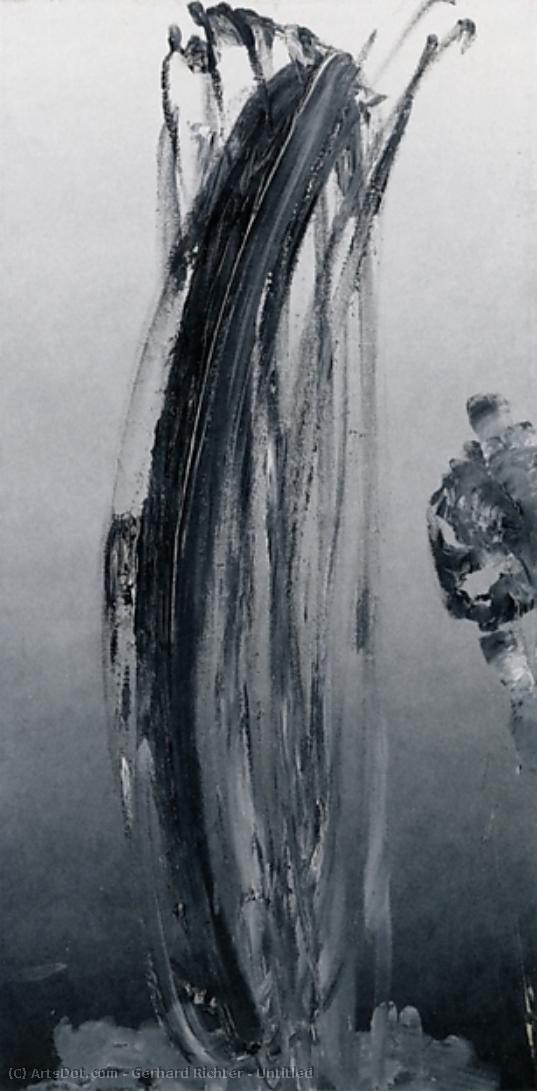
Explore Gerhard Richter’s Untitled (1968) – a powerful abstract painting in shades of grey & black. Thick impasto & fluid forms evoke energy and chaos. A key work by the German master.

Descoperă arta lui Gerhard Richter (n. 1932): picturi abstracte și fotorealiste, 'Realism Capitalist', scheme de culori și multe altele. Un artist german influent, cunoscut pentru explorarea limitelor artei moderne.

Giclée / Imprimare artistică

Print giclée sau pe canvas de calitate muzeală, cu producție rapidă și opțiuni flexibile de finisare.

P118B $10
P118H $10
P118W $10
P438Z $10
P508JH $12
P508YH $12
P805H $10
P805Z $10
P919BZ $10
P919G $10
P919XJ $10
P959ZH $10
P968JZ $12
W106C $8
W218G $10
W218JH $8
W218Y $10
W307PJ $10
W316G $10
W316PJ $8
W316Y $10
W398PJ $8
W4111J $10
W500HY $15
W500JH $15
W692G $12
W849H $8
W940BG $15
W953PJ $8

Standard
custom
CM
INCH

Alegeți dintre dimensiunile noastre prestabilite, care respectă proporțiile originale ale operei de artă.

lățime
înălțime

Puteți introduce propriile dimensiuni pentru a se potrivi unui anumit cadru sau spațiu. Dacă dimensiunea selectată nu corespunde proporțiilor imaginii originale, vom decupa lucrarea de artă sau vom extinde imaginea cu margini oglindite sau cu o culoare uniformă. Un mockup digital va fi trimis pentru aprobarea dumneavoastră înainte de începerea producției.
Vă rugăm să rețineți că previzualizarea de pe ecran nu reflectă decuparea sau extinderea reală. Doar mockup-ul va arăta cu exactitate compoziția finală.
Deși dimensiunile personalizate sunt disponibile, vă recomandăm să selectați o dimensiune din lista predefinită pentru a păstra proporțiile originale.

Livrare în întreaga lume () în 2 săptămâni, în loc de cele 4/5 săptămâni standard. (2 Iulie)

why_choose_icon
Livrare expres gratuită la nivel mondial
why_choose_icon
Pânză de in de înaltă calitate
why_choose_icon
Asigurare completă pentru transport
why_choose_icon
Garanție de rambursare a taxelor vamale
why_choose_icon
Garanția fidelității culorilor
why_choose_icon
Politica de retur de 60 de zile (doar pentru defecte)
why_choose_icon
Garanție 100% de rambursare
why_choose_icon
Reducere la comenzi multiple

Preț total

-

reproduction

Untitled

Giclée / Imprimare artistică

Dimensiune reproducere

-

Preț total calculat

-

Informații rapide

  • Movement: Abstract Expressionism
  • Dimensions: 80 x 40 cm
  • Year: 1968
  • Influences: None Specified
  • Subject or theme: Flow; Chaos
  • Artistic style: Gestural abstraction
  • Medium: Oil paint on canvas

Test de cunoștințe despre artă

Fiecare întrebare are un singur răspuns corect.

Întrebare 1:
What artistic movement is Gerhard Richter’s Untitled most closely associated with?
Întrebare 2:
The painting utilizes a technique known as impasto. What does ‘impasto’ refer to in the context of art?
Întrebare 3:
Considering the description mentions ‘diffuse lighting,’ what effect does this contribute to the overall mood and visual experience of the artwork?
Întrebare 4:
What is a key characteristic of Richter’s style that distinguishes it from representational painting?
Întrebare 5:
The artwork's composition is asymmetrical. How does this asymmetry impact the viewer’s perception?

Descriere obiect de colecție

A Fragmented Landscape of Emotion: Exploring Gerhard Richter’s Untitled (1968)

The painting “Untitled” by Gerhard Richter stands as a cornerstone of Abstract Expressionism, embodying the anxieties and uncertainties that characterized postwar Germany. Executed in 1968, it's not merely pigment on canvas; it’s a distillation of experience—a visual echo of Richter’s upbringing amidst political upheaval and displacement. Measuring 80 x 40 cm, this monumental piece immediately commands attention with its dominant palette of grey and black, punctuated by subtle tonal variations that convey an atmosphere of profound contemplation.

Composition and Technique: The Fluid Gesture

At first glance, the artwork presents a deceptively simple visual language. However, beneath the surface lies a complex interplay of formal elements. Richter employs a technique known as wet-on-wet—a method championed by artists like Pollock and Rothko—allowing for an astonishing fluidity within the paint itself. Thick impasto strokes dominate the canvas, creating a palpable textural richness that invites tactile engagement. These gestures aren’t precise or controlled; they are spontaneous expressions of feeling, mirroring the turbulent emotional landscape of Richter's formative years. The vertical form, reminiscent of a waterfall or ribbon, ascends towards a denser central area, subtly guiding the viewer’s gaze upwards—a deliberate choice reflecting perhaps an aspiration for stability amidst chaos.

Historical Context: Echoes of Division

The painting emerged during a period of significant political transformation in Germany. Richter's artistic sensibility was profoundly shaped by the trauma of World War II and the subsequent division of the nation into East and West blocs. This experience instilled within him a preoccupation with fragmentation—a visual representation of the fractured realities faced by individuals navigating turbulent times. The absence of recognizable imagery isn’t accidental; it serves to elevate the painting beyond specific narratives, focusing instead on universal themes of emotion and psychological exploration. Richter deliberately avoids offering easy answers or comforting illusions, mirroring the disillusionment prevalent in intellectual circles during the late 1960s.

Symbolism: Texture as Emotional Resonance

The pervasive grey and black hues contribute to the artwork’s symbolic weight. These colors are often associated with mourning, contemplation, and introspection—reflecting Richter's own internal struggles. More importantly, however, the textured surface embodies a deeper significance. The impasto technique isn’t merely decorative; it represents the artist’s attempt to capture the intangible essence of experience—the feeling of movement, energy, and vulnerability. Like ripples spreading outwards from a stone dropped into water, the brushstrokes convey an impression of dynamism and instability, mirroring the anxieties inherent in navigating a rapidly changing world.

Emotional Impact: A Silent Dialogue

Ultimately, “Untitled” transcends mere visual representation. It invites viewers to engage in a silent dialogue—to contemplate the complexities of emotion and memory without resorting to explicit symbolism. Richter’s masterful manipulation of color and texture achieves an extraordinary feat: conveying profound psychological depth through understated formalism. The painting lingers in the mind long after viewing, prompting reflection on themes of displacement, resilience, and the enduring power of artistic expression. It stands as a testament to Richter's ability to transform personal experience into universal aesthetic contemplation—a legacy that continues to inspire artists and collectors alike.

Opere de artă similare


Biografie artist

A Life Shaped by Division: The Early Years and Artistic Formation of Gerhard Richter

Gerhard Richter’s story is inextricably linked to the fractured history of 20th-century Germany. Born in Dresden in 1932, his childhood unfolded under the shadow of a rising National Socialist regime. This formative period, marked by displacement – his family moved several times during the war years – instilled within him a profound sense of uncertainty and a questioning spirit that would permeate his artistic practice for decades to come. The idyllic landscapes of his early upbringing in Reichenau and Waltersdorf were soon disrupted by conflict, leaving an indelible mark on his psyche. His father, though not a fervent supporter of the Nazi party, navigated the complexities of life under authoritarian rule as a schoolteacher, while his mother fostered a love for literature and music within the family. This duality – a pragmatic acceptance of circumstance alongside a yearning for cultural expression – became a defining characteristic of Richter’s own artistic approach. He began formal training at the Dresden Academy of Fine Arts in 1951, initially immersed in the tradition of socialist realism demanded by the East German state. However, even within this constrained environment, a desire for artistic freedom simmered beneath the surface, fueled by a growing dissatisfaction with ideological constraints and a longing to explore more expansive creative possibilities.

Escaping Constraints: Düsseldorf and the Exploration of Style

The year 1961 proved pivotal. Richter, along with his wife Marianne Eufinger, made the daring decision to flee East Germany, seeking refuge in the burgeoning art scene of Düsseldorf. This move marked a radical shift in his artistic trajectory. The West German landscape offered a liberating environment where experimentation and innovation were not only permitted but actively encouraged. In Düsseldorf, he encountered a vibrant community of artists grappling with questions of identity, representation, and the legacy of history. He quickly began to dismantle the rigid stylistic conventions of socialist realism, embarking on a period of intense exploration that would define his early mature work. This era saw him oscillate between seemingly disparate approaches – from photorealism, meticulously recreating photographic images with astonishing precision, to abstract compositions characterized by bold colors and dynamic brushstrokes. His collaboration with Sigmar Polke led to the coining of the term ‘Capitalist Realism,’ a deliberately ambiguous label that reflected their shared skepticism towards established artistic norms and their appropriation of imagery from advertising and mass media. This period wasn’t about finding *a* style, but rather questioning the very notion of stylistic coherence, embracing contradiction as a fundamental principle.

Blurring Boundaries: Photorealism, Abstraction, and the Power of Chance

Richter's artistic vocabulary expanded throughout the 1960s and beyond, encompassing a remarkable range of techniques and themes. His photorealistic paintings, often based on family photographs or newspaper images, are not merely copies of reality but rather investigations into the nature of perception and representation. By meticulously rendering these images with an almost clinical detachment, he forces viewers to confront the inherent ambiguity of photographic truth. Simultaneously, Richter delved deeper into abstraction, creating canvases layered with vibrant colors and gestural marks. These abstract works are often created using a unique technique involving squeegees – tools typically used for cleaning windows – which he drags across the surface of the canvas, manipulating the paint in unpredictable ways. This embrace of chance and spontaneity is central to his artistic philosophy, allowing him to relinquish control and invite unexpected outcomes. His ‘Color Charts,’ systematic arrangements of colored squares, further challenge traditional notions of artistic expression, questioning the very definition of painting itself. These works are not about individual aesthetic preferences but rather about exploring the inherent properties of color and its organizational possibilities.

A Legacy of Questioning: Influence and Critical Reception

Gerhard Richter’s work has consistently provoked debate and critical analysis since his emergence onto the international art scene. Initially, his photorealistic paintings were met with skepticism by some critics who questioned their artistic merit, arguing that they were merely technical exercises devoid of genuine emotional depth. However, as Richter continued to develop his practice, exploring abstraction and pushing the boundaries of representation, he gained widespread recognition for his intellectual rigor and his profound engagement with contemporary issues. His ‘Capitalist Realism’ paintings, in particular, became a focal point of discussion, prompting reflection on the relationship between art, commerce, and society. Richter's influence extends far beyond his own artistic output, shaping the work of countless artists who have followed in his footsteps. He is revered for his willingness to challenge conventions, his relentless experimentation with technique, and his unwavering commitment to artistic exploration. His legacy lies not just in the creation of visually arresting artworks but also in his ability to provoke critical thought and inspire dialogue about the nature of art itself.

Key Works & Historical Context

  • Early Photorealist Paintings (1960s-70s): These works, often based on family photographs or news clippings, demonstrate Richter’s meticulous attention to detail and his exploration of the complexities of memory and representation. Examples include “Gilbert” and “S. with Child.”
  • Capitalist Realism (1972-1980): This series of paintings, created in collaboration with Sigmar Polke, reflects their shared critique of consumer culture and the commodification of art. The works are characterized by a deliberate blurring of boundaries between representation and abstraction.
  • Color Charts (1967-present): These systematic arrangements of colored squares challenge traditional notions of artistic expression and explore the inherent properties of color.
  • Birkenau (2014): A powerful cycle of abstract paintings created in response to the Holocaust, reflecting on themes of memory, trauma, and the impossibility of fully representing such profound historical events.
Richter’s career has been marked by a remarkable consistency in his artistic approach – a willingness to experiment, to question, and to push the boundaries of what is possible with paint. His work continues to resonate with audiences today, offering a unique perspective on the complexities of modern life and the enduring power of art.
Gerhard Richter

Gerhard Richter

1932 - , Germania

Detalii rapide

  • Artistic Movement Or Style:
    • Fotorealism
    • Abstract
    • Realism
  • Artists Or Movements Influenced By This Artist: ['Polke']
  • Artists Who Influenced This Artist:
    • Picasso
    • Arp
  • Date Of Birth: 9 Februarie 1932
  • Full Name: Gerhard Richter
  • Nationality: German
  • Notable Artworks:
    • Birkenau
    • Gilbert
    • S. with Child
  • Place Of Birth: Dresda, Germania
Explorați opere de artă organizate pe teme, stiluri și caracteristici.