


 Acrylic On CanvasWallArtDutch Golden Age
 1655
1655 73.0 x 71.0 cm
 Rijksmuseum
Printuri giclée sau pe canvas de calitate muzeală, cu proces de producție rapid și opțiuni flexibile de finisare. ( Comandă pictură lucrată manual Cumpără imaginea)





























Alegeți dintre dimensiunile noastre prestabilite, care respectă proporțiile originale ale operei de artă.

Puteți introduce propriile dimensiuni pentru a se potrivi unui anumit cadru sau spațiu. Dacă dimensiunea selectată nu corespunde proporțiilor imaginii originale, vom decupa lucrarea de artă sau vom extinde imaginea cu margini oglindite sau cu o culoare uniformă. Un mockup digital va fi trimis pentru aprobarea dumneavoastră înainte de începerea producției.
Vă rugăm să rețineți că previzualizarea de pe ecran nu reflectă decuparea sau extinderea reală. Doar mockup-ul va arăta cu exactitate compoziția finală.
Deși dimensiunile personalizate sunt disponibile, vă recomandăm să selectați o dimensiune din lista predefinită pentru a păstra proporțiile originale.
Livrare în întreaga lume () în 2 săptămâni, în loc de cele 4/5 săptămâni standard. (7 Septembrie)


Gallant Conversation, known as
Dimensiune reproducere
Gerard ter Borch's *Gallant Conversation*, painted in 1655, is not merely a portrait; it’s an exquisitely rendered tableau of veiled secrets and subtle anxieties. Initially known as “The paternal admonition,” the painting quickly revealed a far more complex narrative – one that challenged viewers at the time and continues to intrigue today. It's a masterful example of Dutch Golden Age genre painting, showcasing ter Borch’s unparalleled ability to capture not just appearances but the very essence of human interaction, particularly within the confines of a private, almost clandestine setting.
The scene unfolds within a modestly furnished room, bathed in a muted red light that casts long shadows and adds an air of mystery. A young soldier, strikingly handsome yet undeniably youthful, occupies a central position, engaged in conversation with a woman of considerable elegance – likely a courtesan or prostitute. A third figure, a woman holding a glass, observes the interaction from a distance, her expression hinting at both amusement and perhaps a degree of control. The inclusion of a dog, casually observing the scene, further contributes to the feeling that this is a carefully constructed tableau, a staged moment rather than an impromptu gathering. The deliberate ambiguity surrounding the relationships – who is admonishing whom? – is precisely what makes this painting so compelling.
Ter Borch's genius lies in his painstaking attention to detail and his revolutionary approach to light. Unlike many of his contemporaries, he eschewed the dramatic chiaroscuro favored by Rembrandt, opting instead for a subtle, almost photographic realism. He meticulously built up layers of translucent glazes, creating an astonishingly delicate surface texture that captures the sheen of silk, the gleam of metal, and the softness of skin with remarkable precision. Notice how the light catches the folds of the woman’s dress, revealing the intricate weave, or how it subtly illuminates the soldier's face, highlighting his youthful features and a hint of vulnerability. This technique wasn’t simply about realism; it was about capturing the *atmosphere* of the scene – a sense of quiet contemplation punctuated by unspoken tensions.
The painting’s true subject matter – a clandestine meeting within a brothel – was initially met with considerable debate. The original title, “The paternal admonition,” suggested a familial setting, leading to confusion about the nature of the scene. However, clues abound that point towards a more illicit reality: the bed in the background, the table with a mirror (a common feature in such establishments), and the overall atmosphere of intimacy and veiled intent. This ambiguity reflects the social realities of 17th-century Amsterdam – a city rife with wealth, commerce, and a thriving underworld. Ter Borch’s willingness to depict this darker side of society was remarkably bold for his time.
The soldier's youth is particularly significant. He isn’t a father dispensing wisdom; he’s a young man indulging in the pleasures of the flesh, suggesting themes of youthful folly and the corrupting influence of wealth. The woman observing from afar embodies a certain power – perhaps ownership or control – while the courtesan herself represents allure and danger.
*Gallant Conversation* is not a painting that shouts; it whispers. It’s a study in restraint, conveying a complex web of emotions through subtle gestures and averted glances. The figures are caught in a moment of quiet contemplation, their faces betraying a mixture of curiosity, amusement, and perhaps even apprehension. The overall effect is profoundly unsettling – a reminder that appearances can be deceiving and that beneath the surface of polite conversation often lie hidden desires and unspoken truths. This painting’s enduring power lies in its ability to evoke a sense of unease and intrigue, prompting viewers to question what they are seeing and, more importantly, what they *aren't* being told.

Gerard ter Borch (Dutch: Gerard Terburg; December 1617 – 8 December 1681), also known as Gerard Terborch, was a Dutch Golden Age painter who profoundly shaped the artistic landscape of his era. Born in Zwolle, Netherlands, he ascended to fame through meticulous observation and masterful execution—characteristics that cemented his place as one of the foremost figures in genre painting.
His early life remains shrouded in obscurity, yet records indicate a privileged upbringing fostered by his father, Gerard ter Borch the Elder, also a respected artist. This familial influence instilled within him an unwavering dedication to artistic pursuits from a young age. Ter Borch’s formal education encompassed classical studies and artistic training, equipping him with the foundational knowledge necessary for his subsequent endeavors.
Ter Borch's artistic journey commenced in Amsterdam around 1632 where he studied under Willem Cornelisz Duyster or Pieter Codde. This formative period exposed him to influential stylistic currents prevalent at the time—particularly Duyster’s emphasis on luminous realism and meticulous detail. Subsequently, he honed his skills further under Pieter de Molijn in Haarlem, absorbing techniques that would contribute to his distinctive artistic vision.
Ter Borch's oeuvre comprises approximately 150 paintings—a remarkable testament to his prolific output during the Golden Age. Among his most celebrated masterpieces are ‘The Letter,’ an exquisite depiction of domestic intimacy rendered with unparalleled sensitivity to light and texture; ‘The Gallant Conversation,’ a captivating tableau capturing a moment of refined social interaction; ‘Man on Horseback’ (1634), showcasing Ter Borch's burgeoning talent for portraying dynamic movement; and ‘Adrian Pauw’s Arrival in Münster’ (1646), demonstrating his narrative prowess and ability to convey complex emotions.
His influence extended far beyond his immediate contemporaries. Artists such as Gabriel Metsu, Gerrit Dou, Eglon van der Neer, and Johannes Vermeer acknowledged Ter Borch's pioneering role in redefining genre painting—a genre previously dominated by idealized portraits and mythological subjects. Ter Borch’s innovative approach championed the depiction of everyday life with unflinching honesty and psychological depth.
Ter Borch’s paintings reside in prestigious museums across Europe, reflecting their enduring artistic merit and historical significance. The Hermitage Museum in St. Petersburg boasts six canvases attributed to Ter Borch—a remarkable collection that underscores his international renown. Similarly, Berlin Museum houses six pieces showcasing Ter Borch's distinctive style.
The Getty Center in Los Angeles proudly displays three paintings by Ter Borch—a testament to the artist’s enduring appeal and contribution to Western art history. Visiting these institutions offers invaluable opportunities for appreciating Ter Borch’s artistic legacy firsthand.
Gerard ter Borch stands as a cornerstone of Dutch Golden Age painting, shaping the trajectory of subsequent generations of artists. His unwavering commitment to realism—combined with his profound understanding of human psychology—established him as a singular voice within his time. Ter Borch’s influence can be discerned in the works of Vermeer and other masters who embraced his innovative techniques and stylistic sensibilities.
He fundamentally altered perceptions of genre painting, elevating it from mere decorative representation to a vehicle for exploring complex emotional landscapes—a distinction that continues to resonate within contemporary artistic discourse. Ter Borch’s legacy persists as an inspiration for artists striving to capture the nuances of human experience with unwavering precision and evocative artistry.

1617 - 1681 , Olanda
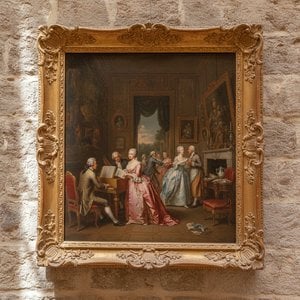
Explore the profound beauty of genre painting. From Dutch Golden Age masters to global traditions, discover how artists capture the essence of everyday life through masterful realism and timeless storytelling.

 Previzualizare
 Trimite
 Distribuie
 Detalii despre lucrare

 Descarcă
 Produse similare
 Radiografie
 Diapozitive automate
 Vezi mai mult







 Opțiunea cu sticlă este disponibilă doar pentru dimensiuni de sub 110 cm


