Biografie artist
Un Pionier al Preciziei Luminoase: Viața și Arta lui Georges Seurat
Georges Pierre Seurat, născut la Paris pe 2 decembrie 1859, a apărut ca o figură esențială în tranziția de la impresionism la arta modernă. Cariera sa scurtă, dar intens concentrată, a revoluționat pictura prin dezvoltarea punctilismului, o tehnică fundamentată pe principii științifice și o căutare neîncetată a adevărului optic. Povestea lui Seurat este una de observație minuțioasă, rigoare intelectuală și o sensibilitate profundă la nuanțele luminii și culorii – calități care l-au distins de contemporanii săi și continuă să captiveze publicul astăzi. Viața sa timpurie, deși aparent convențională, a pus bazele explorărilor sale artistice viitoare. Familia s-a mutat pe Boulevard de Magenta la scurt timp după nașterea lui, iar tatăl său, Antoine Chrysostome Seurat, un fost funcționar juridic devenit speculant imobiliar, i-a oferit o copilărie confortabilă care i-a permis tânărului Georges acces la educație artistică. A început pregătirea formală la École Municipale de Sculpture et Dessin sub sculptorul Justin Lequien, urmată de înscrierea la prestigioasa École des Beaux-Arts în 1878, studiind sub Henri Lehmann. Acești ani formativi i-au insuflat o fundație solidă în tehnicile tradiționale, dar chiar și atunci, o personalitate artistică unică începea să prindă contur – un amestec de sensibilitate delicată și o fascinație emergentă pentru analiza sistematică.
De la Rădăcini Academice la Cromoluminarism
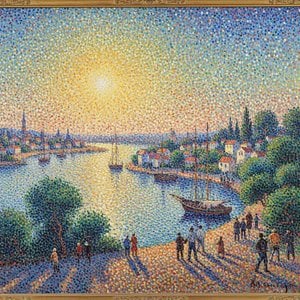
Dezvoltarea artistică a lui Seurat nu a fost o saltare bruscă spre inovație, ci mai degrabă o evoluție graduală alimentată de curiozitatea intelectuală și experimentarea riguroasă. Inițial, munca sa reflecta standardele academice ale vremii, demonstrând competență în desen și un respect pentru principiile compoziționale stabilite. Cu toate acestea, a început curând să pună la îndoială aceste convenții, căutând o abordare mai științifică a picturii. S-a scufundat în domeniul emergent al teoriei culorilor, studiind scrierile oamenilor de știință precum Michel Eugène Chevreul și Ogden Rood, care au explorat efectele optice ale culorilor juxtapuse. Această cercetare a devenit piatra de temelie a tehnicii sale revoluționare, cromoluminarism – știința culorii – și aplicarea sa practică, punctilismul. Ideea principală era simplă în aparență: aplicarea unor puncte mici, distincte de culoare pură pe o pânză, bazându-se pe ochiul privitorului pentru a le amesteca optic și a crea un efect vibrant, luminos. Nu era vorba doar despre obținerea unor culori mai luminoase; era vorba despre înțelegerea modului în care sistemul vizual uman percepe lumina și culoarea și valorificarea acestei cunoștințe pentru a crea o experiență de pictură mai dinamică și captivantă. El pregătea meticulos compozițiile sale mari cu desene Conté pe hârtie aspră, cartografind cu atenție plasarea fiecărui punct, demonstrând o precizie aproape matematică în procesul său artistic.
Pietre de Hotar ale Inovației: Lucrări Majore și Viziune Artistică
Culminarea cercetărilor și experimentelor sale este poate exemplificată cel mai bine în A Sunday Afternoon on the Island of La Grande Jatte (1884-1886), o lucrare monumentală care a marcat începutul neoimpresionismului. Această pictură iconică, care descrie parizieni bucurându-se de un după-amiază liniștită pe Sena, prezintă punctilismul său în cea mai mare măsură. Figurile, redate ca puncte atent plasate de culoare, par să vibreze și să strălucească cu lumină, creând o atmosferă de liniște senină. Alfalfa, Saint-Denis (1886-1887) demonstrează aplicarea teoriei culorilor la un peisaj rural, în timp ce lucrările mai vechi precum Landscape at Saint-Ouen (1882-1883) dezvăluie stilul său în evoluție și interesul crescând pentru capturarea efectelor luminii și atmosferei. Chiar și reprezentările vieții moderne pariziene, cum ar fi The Eiffel Tower (1889), au fost transformate prin tehnica sa unică, prezentând un amestec armonios de modernitate industrială și inovație artistică. Bathers at Asnières (1884), o altă lucrare importantă, a explorat teme precum timpul liber și viața modernă cu stilul său distinctiv, prevestind abordarea mai rafinată văzută în *La Grande Jatte*. Aceste picturi nu erau doar reprezentări ale scenelor; erau experimente vizuale atent construite concepute pentru a explora posibilitățile culorii și percepției.
O Moștenire Durabilă: Influență și Semnificație Istorică
În ciuda unei vieți tragic de scurtă durată – Seurat a murit la vârsta de doar 31 de ani în 1891 – impactul său asupra lumii artei a fost profund și larg răspândit. Munca sa a contestat convențiile artistice tradiționale, deschizând calea pentru numeroase mișcări ulterioare. Accentul pus pe exprimarea subiectivă și explorarea unor noi tehnici a rezonat cu artiștii care căutau să se elibereze de constrângerile academice. Influența lui Seurat poate fi observată în lucrările faviștilor, care au îmbrățișat culori îndrăznețe și tușe expresive; cubiștilor, care au deconstruit formele în forme geometrice; și expresioniștilor abstracți, care au prioritizat intensitatea emoțională și gestul spontan. Abordarea sa științifică a picturii, deși inițial controversată, a extins în cele din urmă definiția posibilităților artistice. El a demonstrat că arta poate fi atât riguroasă intelectual cât și evocatoare emoțional, o sinteză care continuă să inspire artiștii astăzi. Moștenirea lui Seurat se extinde dincolo de inovațiile sale tehnice; el a lăsat în urmă un corp de lucrări care captează esența vieții moderne cu o precizie și frumusețe fără egal, consolidându-i locul ca adevărat pionier al artei moderne. Picturile sale rămân mărturii ale puterii observației, experimentării și dorinței umane durabile de a înțelege lumea din jurul nostru prin lentila expresiei artistice.



 Previzualizare
 Comută pe Print
 Trimite
 Distribuie
 Detalii despre lucrare

 Descarcă
 Produse similare
 Radiografie
 Diapozitive automate
 Statistici


 Vezi mai mult






































 Opțiunea cu sticlă este disponibilă doar pentru dimensiuni de sub 110 cm