The Architect of Abstraction: The Life and Legacy of Frank Bowling
In the vast, textured landscapes of contemporary abstraction, few names resonate with as much profound authority as Frank Bowling. Born in 1934 in the riverside town of Bartica, British Guiana, Bowling’s journey is one of remarkable movement—not just across continents, but through the very layers of paint and medium itself. His arrival in Britain as a young man marked the beginning of a career that would fundamentally reshape the trajectory of post-war British art. As a pioneer of color field painting and lyrical abstraction, Bowling did not merely paint surfaces; he constructed worlds that evoke the geological, the cartographic, and the deeply psychological.
Bowling’s formative years in the United Kingdom saw him immersed in the rigorous creative environments of the Regent Street Polytechnic and the Chelsea School of Art. By 1959, his talent earned him a prestigious scholarship to the Royal College of Art, placing him at the heart of a revolutionary generation. Alongside luminaries such as David Hockney and R.B. Kitaj, Bowling was part of a cohort that challenged the boundaries of British experimentalism. It was during this period that the echoes of American Abstract Expressionism—the monumental legacies of Mark Rothko and Barnative Newman—began to resonate within his work, inspiring a fascination with vast, immersive canvases that prioritize emotional resonance over representational clarity.
The Cartography of Color and Materiality
The mid-1960s heralded the emergence of Bowling’s most iconic contribution to the art world: the 'Map' series. These groundbreaking works eschewed traditional imagery in favor of a complex, fluid language of color and texture. In these paintings, the artist utilized the technique of pouring diluted paint onto canvas, allowing pigments to bleed, stain, and coalesce into shapes that suggest continents, oceans, and shifting borders. This approach transformed the canvas into a living topography, where the boundaries between land and sea, or self and other, become beautifully blurred.
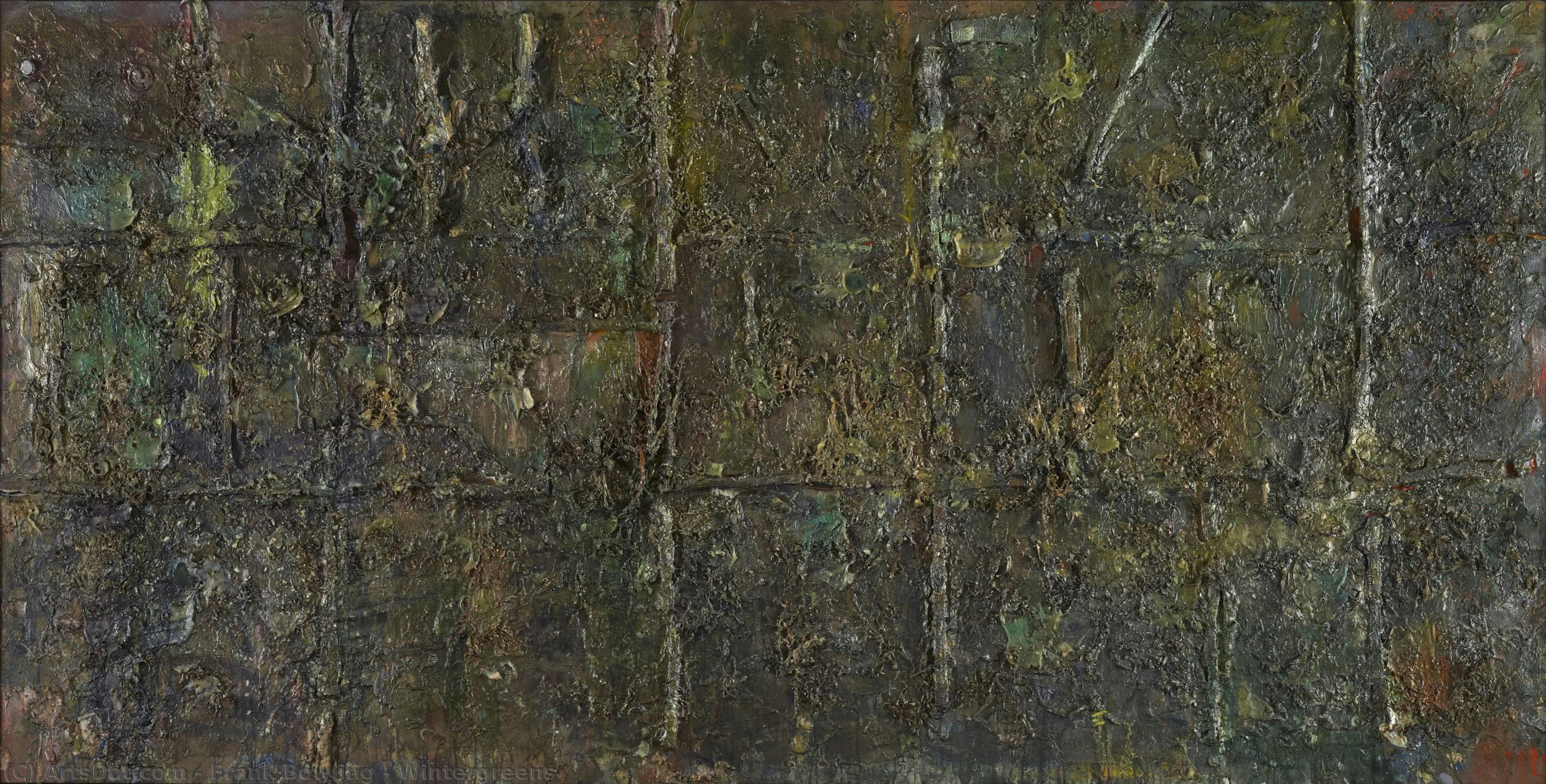
What truly distinguishes Bowling’s technique is his daring exploration of materiality. He famously incorporated industrial substances such as asphalt and resin into his compositions, creating heavy, tactile surfaces that possess a physical weight and geological presence. This use of non-traditional media was more than a stylistic choice; it was a deliberate gesture against the polished aesthetic conventions of his era. Through these rugged textures, Bowling explored themes of globalization, cultural displacement, and the anxieties of a post-colonial world, making his work as much about political identity as it is about formal beauty.
A Modern Master on the Global Stage
The historical significance of Frank Bowling extends far beyond the aesthetic realm. As one of the most distinguished Black artists to emerge from the post-war British art school system, his success represents a pivotal moment in the diversification of the British canon. His career has been defined by a series of monumental achievements that have cemented his status as a modern master:
- Royal Academy Recognition: Bowling holds the distinction of being the first Black artist to be elected a member of the prestigious Royal Academy of Arts.
- Global Institutional Presence: His works are held in the world's most esteemed collections, including Tate Britain, the Museum of Modern Art (MoMA) in New York, and the Metropolitan Museum of Art.
- Critical Retrospectives: Major exhibitions, such as his landmark 2019 retrospective at Tate Britain, have allowed the world to witness the evolution of his "New York Years" and his enduring influence on lyrical abstraction.
Today, Frank Bowling remains a singular figure whose work continues to breathe and evolve. Whether through the vibrant energy of pieces like 'Who’s Afraid of Barney Newman' or the atmospheric depth of 'Wintergreens', he invites the viewer into a space where color is not just seen, but felt. His legacy is etched into the very fabric of modern art—a testament to the power of abstraction to navigate the complexities of the human experience.


 Vezi în context
 Comandă pictură realizată manual
 Trimite
 Distribuie
 Detalii
 Ghidul

 Descarcă
 Produse similare
 Radiografie
 Diaporama
 Statistici

 Citește mai mult






































 Opțiunea cu sticlă este disponibilă doar pentru dimensiuni de sub 110 cm


