


Achiziționați o imagine digitală de înaltă rezoluție, îmbunătățită, mult superioară previzualizării online.
Fiecare fișier este pregătit cu meticulozitate de specialiștii noștri interni, utilizând instrumente avansate și retușare manuală expertă. Ne asigurăm că fiecare imagine beneficiază de o claritate excepțională, o acuratețe precisă a culorilor și detalii fine.
Fișierul final este livrat prin e-mail în termen de 72 de ore, optimizat pentru utilizare imediată în medii profesionale, editoriale și de imprimare. Aceasta este aceeași calitate în care au încredere studiouri de design, edituri și galerii de top.
Descărcați un fișier la rezoluție înaltă pentru afișare personală, imprimare și proiecte creative. ( Comandă printul Comandă pictură lucrată manual)
Când alegeți WahooArt.com, nu primiți doar o simplă imagine – primiți o operă de artă digitală îmbunătățită profesional, creată cu precizie și susținută de o garanție de satisfacție. Iată tot ceea ce primești odată cu comanda ta, în mod automat:

Fișierul imaginii digitale la rezoluție înaltă vă va fi trimis prin e-mail în termen de 72 de ore de la finalizarea comenzii – gata pentru utilizare imediată.

Opera ta de artă este optimizată profesional prin intermediul unor instrumente AI avansate și al editării manuale, asigurând un nivel maxim de detalii, claritate și acuratețe a culorilor.

Ai șters sau ai pierdut din greșeală fișierul? Nu îți face griji – ți-l vom retrimite oricând, gratuit.

Bucură-te instant de noua ta operă de artă, fără taxe vamale, taxe de import sau costuri de livrare – descărcările digitale sunt întotdeauna fără taxe.

Asigurăm o reflectare cât mai fidelă a culorilor originale în imaginea ta digitală, prin utilizarea unor instrumente profesionale și a proceselor de gestionare a culorii.

Dacă nu sunteți mulțumit de imaginea digitală achiziționată, o vom revizui sau vă vom returna 100% în termen de 100 de zile – fără nicio explicație necesară.

Nu ești mulțumit? Obține o rambursare completă în termen de 100 de zile de la primirea fișierului tău digital – fără întrebări.

Cumpără 3 imagini, economisește 10% - Cumpără 5, economisește 15% - Cumpără 10+, economisește 20%. Ideal pentru proiecte creative, galerii și agenții.

Francis Holman, born in the coastal town of Ramsgate in 1729, was a British maritime painter whose meticulous depictions of ships and naval life cemented his place as a pivotal figure in eighteenth-century art. Though largely unrecognized during his lifetime—a regrettable oversight considering the enduring fascination with his canvases today—Holman’s legacy resides in his contribution to documenting the burgeoning Royal Navy and capturing the spirit of Britain's maritime dominance. He stands alongside Thomas Luny as one of the era’s most accomplished artists, demonstrating a remarkable ability to blend scientific observation with artistic sensitivity.
Holman’s upbringing was profoundly shaped by his father, Francis Holman Sr., a master mariner who instilled in him an unwavering appreciation for seafaring traditions and craftsmanship. His grandfather, a Ramsgate cooper—a profession deeply intertwined with the maritime economy—further solidified Holman's connection to the sea. This familial heritage undoubtedly fueled his artistic vision, informing his detailed renderings of vessels and their surroundings with unparalleled accuracy. He married Elizabeth, producing three sons, John, Francis, and another son who tragically perished in infancy. Subsequently, he remarried Jane Maxted around 1781, though no children were born from this union. Holman’s will penned in 1783 revealed a solitary existence, marking the final chapter of his life.
Holman's artistic journey commenced with an apprenticeship under Thomas Luny, a fellow painter who would become a celebrated maritime artist himself. This formative relationship fostered collaboration and honed Holman’s technique—particularly in capturing the dynamism of naval battles and the intricacies of shipyards. His early works focused on portraits of ships, commissioned by captains eager to commemorate their vessels. From 1768, he resided in several addresses within the Shadwell area of East London, positioned near Wapping and Blackwall Docks, which served as frequent subjects for his brush. These locations were the beating heart of British maritime commerce, providing him with a front-row seat to the construction and departure of great vessels.
His technical prowess is perhaps most evident in his ability to manipulate light and horizon. Drawing significant influence from Dutch sea painters such as Willem van de Velde the Younger, Holman often employed a low horizon line to emphasize the vastness of the sky and the imposing presence of the masts and rigging. His works are not merely records of wood and canvas but are atmospheric studies of movement and weather. Whether depicting the tranquil river traffic on the Thames or the chaotic intensity of naval engagements during the American War of Independence, Holman possessed a rare talent for conveying the weight of the sea and the tension of combat.
The historical importance of Francis Holman extends far beyond the aesthetic value of his oil paintings. He acted as a visual chronicler of an era when Britain was asserting its naval supremacy. His depictions of shipyards, such as the celebrated View of Blackwall Yard, provide invaluable insights into the industrial and maritime landscape of the eighteenth century. The enduring value of his work is reflected in the modern art market; for instance, his masterpiece of Blackwall Yard achieved a staggering sum at Christie’s in 2018, underscoring the continued reverence for his historical accuracy.
Throughout his career, Holman exhibited at prestigious venues including the Free Society of Artists and the Royal Academy, marking his ascent within the professional art community. His contribution to the genre of marine painting is characterized by several key elements:
Today, the works of Francis Holman are cherished not only as fine art but as essential historical documents. He remains a master of the maritime genre, an artist who looked upon the sea with both the eye of a scientist and the soul of a poet.
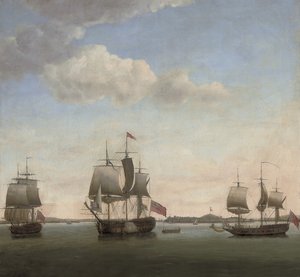
1729 - 1784 , United Kingdom

 Previzualizare
 Trimite
 Distribuie
 Detalii despre lucrare

 Descarcă
 Produse similare
 Radiografie
 Diapozitive automate
 Vezi mai mult


