Fra Angelico’s Vision of Divine Judgement: Exploring *The Last Judgment (detail)*
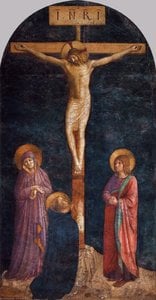
Fra Angelico (c. 1395-1455), a Dominican friar and one of the most revered painters of the Early Renaissance, imbues his *Last Judgement (detail)* with both profound spiritual devotion and remarkable artistic skill. This fragment, originally part of a larger composition destined for the monastery of San Marco in Florence, offers a captivating glimpse into Angelico’s unique ability to blend theological complexity with serene beauty – a hallmark of his oeuvre.
Historical Context & Artistic Lineage
Created in 1431 under the patronage of Cosimo de’ Medici, this work reflects the artistic and religious fervor of the early Quattrocento. Angelico's style bridges the gap between the late Gothic traditions – discernible in the decorative details and hierarchical composition – and the burgeoning Renaissance preoccupation with naturalism and perspective. He was deeply influenced by masters like Masaccio, yet retained a distinctive lyrical quality that distinguishes his work from its contemporaries. The San Marco monastery itself, a crucible of humanist thought and artistic innovation, furnished Angelico’s creative spirit with an unparalleled environment for flourishing.
Composition & Narrative Detail
*The Last Judgment (detail)* presents a densely populated scene centered around Christ as Judge. He is depicted with arms outstretched in a gesture of both authority and mercy, separating the saved from the damned. Surrounding him are celestial beings – angels and saints – arranged in tiers of reverence. Below, the resurrected dead emerge from their tombs, awaiting their final reckoning. The composition is meticulously orchestrated, guiding the viewer’s gaze upwards towards Christ as its focal point. Observe the careful arrangement of figures, each conveying a distinct emotional response to this momentous occasion; Angelico's masterful use of space and gesture speaks volumes about the spiritual drama unfolding before us.
Symbolism & Iconography
Every element within this painting resonates with symbolic significance. Books symbolize divine knowledge and scripture, their placement near certain saints hinting at contemplation and faith. The radiant aureole encircling Christ embodies holiness and divinity, while the drapery of the figures is rendered with exquisite detail, reflecting both earthly elegance and spiritual grace. Furthermore, the depiction of Saint Sebastian underscores themes of martyrdom and unwavering devotion – a poignant reminder of sacrifice for righteousness.
Technique & Material Considerations
*The Last Judgment (detail)* exemplifies Angelico’s mastery of fresco secco—a technique involving applying pigments to dry plaster—resulting in a matte surface that enhances the painting's luminosity and depth. The meticulous layering of paint, combined with subtle shading effects, contributes to an astonishingly realistic portrayal of human anatomy and drapery. Pigments likely included tempera alongside oil-based mediums, ensuring vibrancy and longevity. Supported by a wooden panel, this artwork stands as testament to Angelico’s dedication to craftmanship and his unwavering commitment to conveying the sublime beauty of divine judgment.
Emotional Impact & Artistic Legacy
The overall impression is one of profound reverence and awe—a palpable sense of encountering the sacred. Angelico's serene palette, dominated by deep reds, blues, and golds, evokes a feeling of solemn majesty, inviting contemplation on themes of salvation and divine grace. *The Last Judgment (detail)* remains an enduring emblem of Early Renaissance spirituality, inspiring artists and viewers alike with its masterful composition and evocative symbolism—a timeless masterpiece that continues to captivate audiences centuries later.



 Previzualizare
 Comandă pictură lucrată manual
 Trimite
 Distribuie
 Detalii despre lucrare

 Descarcă
 Produse similare
 Radiografie
 Diapozitive automate
 Statistici


 Vezi mai mult






































 Opțiunea cu sticlă este disponibilă doar pentru dimensiuni de sub 110 cm