Obțineți un fișier gata de imprimare care depășește cu mult calitatea previzualizării web. Fiecare imagine digitală pe care o vindem provine dintr-un master de înaltă rezoluție din baza noastră de date — având, de regulă, o lățime între 5.000 și 15.000 de pixeli — astfel încât să puteți printa în format mare, să decupați strâns sau să reproduceți detalii fine cu încredere.
Niciun fișier nu părăsește studioul nostru fără să fie tratat. Un expert digital verifică nuanțele de culoare în raport cu pictura originală și le corectează acolo unde este necesar, apoi îmbunătățește claritatea și detaliile folosind instrumente profesionale de retușare — rămânând întotdeauna fidel gestului pictural și stilului artistului. Rezultatul este o imagine care seamănă cu tabloul propriu-zis, nu cu o scanare filtrată.
Aprobați înainte de finalizare: expertul nostru vă va trimite imaginea prin e-mail în termen de 72 de ore pentru revizuire. Nu sunteți mulțumit? Solicitați îmbunătățiri sau corecturi, ori cereți o restituire a plății dacă calitatea nu este pe măsura așteptărilor.
Aceasta este calitatea pe care se bazează editorii, studiourile de design, galeriile și tipăriturile.
Descărcați un fișier la rezoluție înaltă pentru afișare personală, imprimare și proiecte creative. ( Comută pe versiunea Print Comandă pictură realizată manual)
Când alegeți WahooArt.com, nu primiți doar o simplă imagine – primiți o operă de artă digitală îmbunătățită profesional, creată cu precizie și susținută de o garanție de satisfacție. Iată tot ceea ce primești odată cu comanda ta, în mod automat:
Fișierul imaginii digitale la rezoluție înaltă vă va fi trimis prin e-mail în termen de 72 de ore de la finalizarea comenzii – gata pentru utilizare imediată.
Opera ta de artă este optimizată profesional prin intermediul unor instrumente AI avansate și al editării manuale, asigurând un nivel maxim de detalii, claritate și acuratețe a culorilor.
Ai șters sau ai pierdut din greșeală fișierul? Nu îți face griji – ți-l vom retrimite oricând, gratuit.
Bucură-te instant de noua ta operă de artă, fără taxe vamale, taxe de import sau costuri de livrare – descărcările digitale sunt întotdeauna fără taxe.
Asigurăm o reflectare cât mai fidelă a culorilor originale în imaginea ta digitală, prin utilizarea unor instrumente profesionale și a proceselor de gestionare a culorii.
Dacă nu sunteți mulțumit de imaginea digitală achiziționată, o vom revizui sau vă vom returna 100% în termen de 100 de zile – fără nicio întrebare.
Nu ești mulțumit? Primești rambursarea integrală în termen de 100 de zile de la primirea fișierului digital – fără nicio întrebare.
Cumpără 3 imagini, economisește 10% - Cumpără 5, economisește 15% - Cumpără 10+, economisește 20%. Ideal pentru proiecte creative, galerii și agenții.
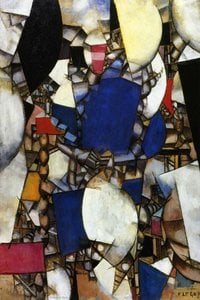
In the quiet tension of Fernand Léger’s 1919 masterpiece, Study for the Card Game, one finds a profound paradox that defines the very essence of early twentieth-century modernism. The canvas presents an arresting stillness, yet beneath its surface, there is a rhythmic, almost mechanical vitality that refuses to be ignored. At first glance, the composition appears deceptively simple, presenting three figures—a man and two women—standing in a shared moment against a muted backdrop of ochre and grey. However, to look closer is to witness a revolution of form. Léger does not merely depict people; he deconstructs them into an intricate orchestration of interlocking cubes, cylinders, and planes. This is the birth of a visual language where the human silhouette begins to merge with the structural precision of the machine age.
The technique employed in this study reveals Léger’s obsessive dedication to volume and light. Utilizing a meticulous process he termed multiplication, the artist layered thin washes of color to establish a foundational tonal structure before applying heavy, opaque pigments. This method allowed him to build up forms with a sculptural weight, capturing the internal volume of each figure without relying on traditional, soft-focus shading. Instead, Léger embraced bold contrasts and sharp outlines, creating a sense of depth through geometric intersection rather than atmospheric perspective. For the discerning collector or interior designer, this technique offers a striking visual texture that commands attention, providing a sophisticated focal point that feels both structurally grounded and vibrantly alive.
To understand the emotional resonance of Study for the Card Game, one must look to the era from which it emerged. Painted in the immediate aftermath of World War I, the work is steeped in the burgeoning anxieties and technological triumphs of a changing Europe. As industrialization accelerated, Léger found inspiration in the rhythmic, metallic hum of the modern city. The card game itself serves as a poignant symbol; much like the deterministic forces of the machine age, the game suggests a world governed by patterns, chance, and structural logic. There is a certain muscular energy in his use of primary colors and bold shapes that mirrors the strength and resilience of a society rebuilding itself through innovation.
For those seeking to infuse a contemporary space with historical depth, this piece offers an unparalleled opportunity. It bridges the gap between the organic human experience and the disciplined beauty of Constructivism. The painting does not merely decorate a wall; it invites a dialogue about how we perceive reality in an increasingly mechanized world. Whether placed in a minimalist gallery setting or as a bold statement in a curated residential collection, Léger’s work brings a sense of intellectual rigor and aesthetic dynamism. It is an invitation to embrace the beauty of the essential form—a timeless tribute to the era when art first learned to speak the language of the future.
Cu atmosfera sa Elegant, „Study for the card game” este recomandată pentru o Living Room.
În "Study for the card game" de Fernand Léger, mișcarea Cubism întâlnește epoca Era modernă.
Mișcarea asociată cu "Study for the card game" de Fernand Léger este Cubism. Această clasificare plasează lucrarea printre artiști și opere de artă conexe.


1881 - 1955 , Franța
 Previzualizare
 Trimite prin felicitare
 Distribuie
 Detalii despre lucrare
 Ghid
Ghid

 Descarcă imaginea
 Produse similare
 Radiografie
 Galerie foto
 Întrebări și răspunsuri
 Statistici

 Vezi mai mult