CONSULTAȚIE GRATUITĂ ÎN ARTE VIZUALE

x
Comandă tipăritul Comandă tipăritulCumpără imaginea Cumpără imaginea TrimiteTrimite
DetaliiDetalii Adaugă la favorite Adaugă la favorite DescarcăDescarcă SimilareSimilare Raze XRaze X DiaporamaDiaporama

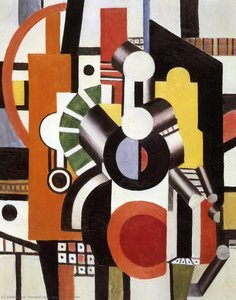
Composition

Explore Fernand Léger’s ‘Composition,’ a dynamic Cubist abstraction featuring geometric shapes & bold grayscale hues. A unique 1920 masterpiece by a pioneering artist.

Descoperiți Fernan Léger (1881-1955): Pionier al Cubismului & "Tubism". Admirați picturi îndrăznețe despre viața modernă, mașinării și forma umană – un precursor cheie al Pop Art-ului!

Reproducere manuală în ulei

Pictură în ulei pe pânză, pictată manual, la dimensiunea și ramele dorite de dumneavoastră, realizată la comandă de artiștii noștri.

P118B $10
P118H $10
P118W $10
P438Z $10
P508JH $12
P508YH $12
P805H $10
P805Z $10
P919BZ $10
P919G $10
P919XJ $10
P959ZH $10
P968JZ $12
W106C $8
W218G $10
W218JH $8
W218Y $10
W307PJ $10
W316G $10
W316PJ $8
W316Y $10
W398PJ $8
W4111J $10
W500HY $15
W500JH $15
W692G $12
W849H $8
W940BG $15
W953PJ $8

Standard
custom
CM
INCH

Alegeți dintre dimensiunile noastre prestabilite, care respectă proporțiile originale ale operei de artă.

lățime
înălțime

Puteți introduce propriile dimensiuni pentru a se potrivi unui anumit cadru sau spațiu. Dacă dimensiunea selectată nu corespunde proporțiilor imaginii originale, vom decupa opera de artă sau vom extinde pictura cu elemente suplimentare pictate manual. O simulare digitală vă va fi trimisă pentru aprobare înainte de începerea producției.
Vă rugăm să rețineți că previzualizarea de pe ecran nu reflectă decuparea sau extinderea reală. Doar macheta va arăta cu exactitate compoziția finală.
Deși sunt disponibile dimensiuni personalizate, vă recomandăm să selectați o dimensiune din lista predefinită pentru a păstra proporțiile originale.

Exemple de elemente ce pot fi modificate: Înlocuiți fața cu fotografia clientului; Adăugați un animal de companie (de exemplu, înlocuiți pisica cu un câine); Includeți un mesaj ascuns în fundal; Schimbați peisajul sau elementele din fundal.
După plasarea comenzii, echipa WahooArt.com va trimite clientului instrucțiuni prin e-mail și îi va furniza o previzualizare a machetei

Livrare în întreaga lume () în 3/4 săptămâni, în loc de cele 5 săptămâni standard. (2 Iulie). Fără compromisuri în ceea ce privește calitatea.

why_choose_icon
Livrare expres gratuită la nivel mondial
why_choose_icon
Pânză de in de înaltă calitate
why_choose_icon
Asigurare completă pentru transport
why_choose_icon
Garanție de rambursare a taxelor vamale
why_choose_icon
Garanția fidelității culorilor
why_choose_icon
Politica de retur de 60 de zile (doar pentru defecte)
why_choose_icon
Garanție 100% de rambursare
why_choose_icon
Reducere la comenzi multiple

Preț total

-

reproduction

Composition

Tehnică de reproducere

Dimensiune reproducere

-

Preț total calculat

-

Informații rapide

  • Influences: Futurism
  • Year: 1920
  • Subject or theme: Abstract form
  • Notable elements: Geometric shapes
  • Title: Composition
  • Artistic style: Synthetic Cubism

Test de cunoștințe despre artă

Fiecare întrebare are un singur răspuns corect.

Întrebare 1:
What is the primary style of Fernand Léger’s ‘Composition’?
Întrebare 2:
The artwork predominantly utilizes which color palette?
Întrebare 3:
Which artistic movement does ‘Composition’ most closely align with?
Întrebare 4:
The artwork's fragmented forms and multiple perspectives are characteristic of:
Întrebare 5:
Fernand Léger’s work often reflected his interest in which era?

Descriere operă de artă

A Fractured Vision of the Machine Age

Fernand Léger's Composition, painted in 1920, isn’t a depiction of recognizable objects; it’s an immersion into the very *feeling* of modernity. Born amidst the rural landscapes of Argentan, Normandy, Léger possessed a unique perspective – one forged by his early life working with his father on the farm, juxtaposed against the burgeoning industrial world of Paris. This duality informs every facet of this work, creating a visual language that simultaneously celebrates and critiques the dynamism and fragmentation inherent in the machine age. The painting immediately commands attention not through narrative, but through its sheer geometric density: overlapping rectangles, circles, and subtly curved lines coalesce into an ambiguous spatial field, inviting the viewer to navigate a world where perspective is deliberately distorted.

The grayscale palette, punctuated by strategic bursts of yellow and red, isn’t merely decorative. The muted tones emphasize the flatness of the picture plane, pushing back against traditional notions of depth and realism. These vibrant accents – reminiscent of factory lights or signal flares – inject a vital energy into the composition, hinting at the underlying rhythms of industrial life. Léger masterfully employs angular lines to create a sense of fractured movement, mirroring the jarring yet compelling experience of navigating a rapidly changing urban landscape. The deliberate lack of strong shadows further contributes to this flattened effect, reinforcing the painting’s focus on form and structure rather than illusionistic representation.

Tubism and the Spirit of the Machine

Composition firmly establishes Léger as a pivotal figure in the development of Cubism, specifically within his own distinctive style known as “Tubism.” Rejecting the purely representational aims of earlier Cubists like Picasso and Braque, Léger sought to distill the essence of modern life – its mechanical forms, its streamlined shapes, and its relentless forward momentum – into a simplified visual vocabulary. The dominant geometric motifs—cylinders, cones, and cubes—are not merely abstract shapes; they are echoes of factory machinery, automobiles, and other symbols of industrial progress. This isn’t simply an aesthetic choice; Léger was deeply fascinated by the mechanics of the modern world, believing that art should reflect its underlying structure.

The painting's influence extends beyond Cubism, foreshadowing elements of Pop Art with its embrace of everyday objects and industrial imagery. Léger’s approach to color – a restrained palette punctuated by bold accents – anticipates the later work of artists like Andy Warhol. The deliberate simplification of forms, combined with a focus on texture (though subtly rendered through variations in tone), creates an image that is both visually arresting and intellectually stimulating. It's a testament to Léger’s ability to capture the spirit of his time—a period of unprecedented technological advancement and social transformation.

Craftsmanship and a Legacy of Innovation

Examining the technique reveals a meticulous attention to detail. Léger employed precise brushwork, layering paint with remarkable control to achieve the desired tonal variations and create a sense of depth through overlapping forms. The use of oil paints on canvas lends a richness and durability to the work, ensuring its longevity. The composition’s seemingly flat appearance belies this careful construction; each shape is precisely defined, contributing to the overall sense of order within the chaotic arrangement.

Léger's legacy extends far beyond his own artistic output. He profoundly influenced subsequent generations of artists, particularly those interested in exploring the relationship between art and technology. His work continues to resonate today, offering a compelling meditation on the complexities of modernity and the enduring power of abstraction. Reproductions of Composition provide an accessible gateway into Léger’s world—a world where form, color, and movement converge to create a truly unforgettable visual experience.

Opere de artă similare


Biografie artist

A Life Forged in Form: The World of Fernand Léger

Fernand Léger, born Joseph Fernand Henri Léger in 1881 amidst the rural landscapes of Argentan, Normandy, stands as a pivotal figure in the evolution of modern art. His journey from the farmlands of his youth to the forefront of Parisian avant-garde circles is a testament to an unwavering artistic vision and a relentless pursuit of capturing the spirit of the machine age. Unlike many of his contemporaries who embraced abstraction as a retreat from representation, Léger sought to *integrate* modernity – its dynamism, its mechanical forms, its very essence – into a new visual language that was both powerfully abstract and deeply rooted in the observable world. His early life, steeped in the physicality of agricultural labor, provided a grounding contrast to the industrialized future he would so passionately depict. Initially destined for architecture, Léger’s path shifted towards painting after arriving in Paris around 1900, supporting himself through drafting work while honing his artistic skills. This period was marked by traditional academic training, but it wasn't until encountering the groundbreaking work of Paul Cézanne that a true transformation began to unfold.

The Birth of ‘Tubism’ and the Section d’Or

Cézanne’s retrospective in 1907 acted as a catalyst, liberating Léger from conventional representation and propelling him towards a more geometric and structural approach. He began dismantling forms, analyzing their underlying structures, and rebuilding them on canvas with a newfound emphasis on solidity and volume. This exploration quickly led him into the orbit of Cubism, but Léger wasn’t content to simply replicate the styles of Picasso or Braque. Instead, he developed his own distinct idiom – a personal form of Cubism that critics playfully dubbed “Tubism.” Characterized by cylindrical forms, flattened planes, and bold color contrasts, Tubism celebrated the machine aesthetic long before it became a widespread artistic preoccupation. It was an art born from observing the burgeoning industrial world, recognizing beauty in its functional shapes and mechanical rhythms. Léger’s approach differed significantly; he retained a sense of volume and depth, unlike some Cubists who completely flattened their canvases. This allowed him to depict figures with a recognizable solidity, even as they were broken down into geometric components. The movement was closely associated with the *Section d’Or* (The Golden Section), a group of artists – including Metzinger, Le Fauconnier, and Duchamp – who explored mathematical principles of harmony and proportion in their work. They sought to infuse their art with a sense of order and rationality, believing that beauty could be found in the application of geometric ratios. Léger’s participation in the Section d’Or provided him with a theoretical framework for his artistic explorations and fostered a collaborative environment where new ideas were constantly exchanged.

War, Mechanization, and a New Aesthetic

The outbreak of World War I profoundly impacted Léger’s life and work. Serving at the front from 1914 to 1916 exposed him to the brutal realities of modern warfare – artillery barrages, aerial combat, and the dehumanizing effects of mechanized conflict. This experience didn't lead to disillusionment or a rejection of modernity; rather, it solidified his fascination with machines and their power. Sketches made during his service documented the stark beauty of military technology, transforming instruments of destruction into subjects of artistic contemplation. The repetitive patterns of trenches, the gleaming metal of tanks and airplanes – all became sources of inspiration for Léger’s evolving aesthetic. Upon returning to civilian life, Léger’s paintings began to reflect a more streamlined, mechanistic sensibility, celebrating the dynamism and efficiency of the industrial world. *Soldier with a Pipe* (1916) exemplifies this shift, showcasing simplified forms and bold colors that evoke the feeling of mechanical precision. The figure is rendered in stark geometric shapes, almost resembling a machine itself, reflecting Léger’s fascination with the intersection of humanity and technology. This wasn't merely an aesthetic choice; it was a philosophical statement – an affirmation of modernity’s potential for progress and renewal, even in the face of devastating loss.

The Development of Tubism and Beyond

Following the war, Léger continued to refine his distinctive style, solidifying what became known as “Tubism.” He moved away from the fragmented forms of early Cubism, developing a more unified visual language characterized by cylindrical shapes, bold colors, and simplified figures. His paintings often depicted industrial objects – cars, trains, factories – alongside human subjects, blurring the boundaries between the natural and the artificial. He experimented with techniques such as *peinture industrielle*, using industrial pigments and applying paint in layers to create a textured surface that resembled machine parts. This period saw the creation of iconic works like *Manufacturers* (1923), a vibrant depiction of a factory scene filled with geometric forms and bold colors, capturing the energy and rhythm of modern industry. However, Léger’s artistic vision wasn't static; he continued to evolve his style throughout his career, incorporating elements of Surrealism and exploring new mediums such as sculpture and film.

Legacy and Lasting Influence

In his post-war years, Léger continued to explore the intersection of art and industry, creating works that celebrated modern life with a unique blend of abstraction and figuration. His *Paysages animés* (Animated Landscapes) series from 1921 showcased figures and animals seamlessly integrated into streamlined compositions, blurring the boundaries between organic and inorganic forms. He also experimented with sculpture and filmmaking, expanding his artistic practice beyond the confines of traditional painting. Léger’s influence on subsequent generations of artists is undeniable. His bold simplification of form, his embrace of industrial imagery, and his celebration of popular culture anticipated the emergence of Pop Art decades later. Artists like Roy Lichtenstein and Andy Warhol owe a clear debt to Léger's pioneering work. He bridged the gap between abstract art and figurative representation, demonstrating that it was possible to create works that were both intellectually rigorous and visually engaging. Today, Fernand Léger’s paintings are held in major museums worldwide, including the Musée d'Art et d'Histoire in France and the Musée National Fernand Léger, dedicated solely to his work. He remains a towering figure of 20th-century art – a visionary who dared to find beauty in the machine age and to translate its energy onto canvas with unparalleled boldness and originality. His legacy is not merely as a painter, but as a prophet of modernity. A true pioneer whose work continues to resonate with audiences today.
Fernand Léger

Fernand Léger

1881 - 1955 , Franța

Detalii rapide

  • Artistic Movement Or Style: Cubism, Tubism
  • Artists Or Movements Influenced By This Artist: ['Pop Art']
  • Artists Who Influenced This Artist: ['Paul Cézanne']
  • Date Of Birth: 4 Feb 1881
  • Date Of Death: 17 Aug 1955
  • Full Name: Fernand Léger
  • Nationality: Francez
  • Notable Artworks:
    • Les Nus dans la forêt
    • Machine Element
    • The Great Parade
  • Place Of Birth: Argentan, Franța
Explorați opere de artă organizate pe teme, stiluri și caracteristici.