CONSULTAȚIE GRATUITĂ ÎN ARTE VIZUALE

x
Comandă reproducere pictată Comandă reproducere pictatăCumpără imaginea Cumpără imaginea TrimiteTrimite
DetaliiDetalii Adaugă la favorite Adaugă la favorite DescarcăDescarcă SimilareSimilare Raze XRaze X DiaporamaDiaporama

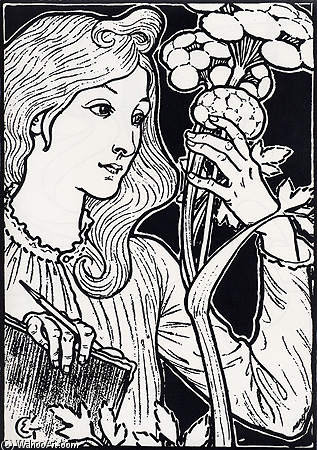
Poster Study

Eugène Grasset (1845-1917): Pionier al stilului Art Nouveau, cunoscut pentru motive florale, influențe japoneze și designul grafic inovator. Artist elvețiano-francez cu o moștenire artistică de neclintit în decor și ilustrație.

Giclée / Imprimare artistică

Print giclée sau pe canvas de calitate muzeală, cu producție rapidă și opțiuni flexibile de finisare.

Standard
custom
CM
INCH

Alegeți dintre dimensiunile noastre prestabilite, care respectă proporțiile originale ale operei de artă.

lățime
înălțime

Puteți introduce propriile dimensiuni pentru a se potrivi unui anumit cadru sau spațiu. Dacă dimensiunea selectată nu corespunde proporțiilor imaginii originale, vom decupa lucrarea de artă sau vom extinde imaginea cu margini oglindite sau cu o culoare uniformă. Un mockup digital va fi trimis pentru aprobarea dumneavoastră înainte de începerea producției.
Vă rugăm să rețineți că previzualizarea de pe ecran nu reflectă decuparea sau extinderea reală. Doar mockup-ul va arăta cu exactitate compoziția finală.
Deși dimensiunile personalizate sunt disponibile, vă recomandăm să selectați o dimensiune din lista predefinită pentru a păstra proporțiile originale.

Livrare în întreaga lume () în 2 săptămâni, în loc de cele 4/5 săptămâni standard. (2 Iulie)

why_choose_icon
Livrare expres gratuită la nivel mondial
why_choose_icon
Pânză de in de înaltă calitate
why_choose_icon
Asigurare completă pentru transport
why_choose_icon
Garanție de rambursare a taxelor vamale
why_choose_icon
Garanția fidelității culorilor
why_choose_icon
Politica de retur de 60 de zile (doar pentru defecte)
why_choose_icon
Garanție 100% de rambursare
why_choose_icon
Reducere la comenzi multiple

Preț total

-

reproduction

Poster Study

Giclée / Imprimare artistică

Dimensiune reproducere

-

Preț total calculat

-


Biografie artist

A Pioneer of Art Nouveau: The Life and Legacy of Eugène Samuel Grasset

Eugène Samuel Grasset, born in Lausanne, Switzerland on May 25th, 1845 (though some sources cite 1841), emerged as a pivotal figure bridging the gap between traditional craftsmanship and the burgeoning aesthetic of Art Nouveau. His journey began within an artistic household; his father, a skilled cabinet designer and sculptor, instilled in young Eugène both a practical understanding of materials and a deep appreciation for creative expression. This early exposure fostered a sensitivity to form and detail that would become hallmarks of Grasset’s distinctive style. Initial studies under François-Louis David Bocion honed his drawing skills, but it was a subsequent foray into architectural studies in Zurich that broadened his artistic horizons, though ultimately proved insufficient to contain his burgeoning creativity. A transformative experience followed – a voyage to Egypt after completing his formal education. This journey ignited a lifelong fascination with exoticism and ancient design principles, profoundly influencing the decorative motifs that would later define his work. Equally significant was his growing admiration for Japanese art, particularly its emphasis on flowing lines, flattened perspectives, and harmonious compositions—elements he masterfully integrated into his own unique visual language.

Early Training and Artistic Foundations

From a young age, Eugène Grasset demonstrated an exceptional talent for artistic pursuits. His father’s profession – sculpting – provided him with invaluable exposure to sculptural techniques and materials, fostering a meticulous attention to detail that would permeate his entire oeuvre. Bocion's instruction in Lausanne solidified Grasset’s foundational drawing skills, equipping him with the technical precision necessary for capturing complex forms and textures. Recognizing the importance of broader artistic knowledge, he pursued architectural studies at Zurich University, gaining insights into structural principles and spatial considerations—influences that subtly informed his later designs. However, it was a pivotal decision to embark on a journey to Egypt after graduating from university that truly shaped Grasset’s worldview and fueled his creative imagination. The grandeur of ancient Egyptian monuments and the intricate symbolism embedded within their decoration captivated him, sparking an enduring fascination with historical design traditions. This encounter served as a catalyst for exploring diverse artistic influences—particularly Japanese aesthetics—which would become central to his distinctive visual language.

The Parisian Atelier: Diverse Artistic Explorations

By 1869-1870, Grasset established himself as both a painter and sculptor in Lausanne, demonstrating versatility and ambition from an early age. Yet, the allure of Paris proved irresistible, propelling him into a remarkably varied artistic career that encompassed furniture design, fabric creation, tapestry weaving, ceramic artistry, and jewelry making. These weren’t merely commercial endeavors; Grasset elevated each discipline to high art, employing luxurious materials like ivory and gold with unwavering dedication to craftsmanship and innovative combinations of textures and forms. He meticulously researched historical precedents—particularly Gothic architecture—analyzing structural elements and decorative ornamentation to inform his designs. This scholarly approach combined seamlessly with an instinctive understanding of artistic principles, resulting in creations that were both aesthetically sophisticated and technically masterful. His furniture designs exemplify the Art Nouveau ethos: graceful curves, organic shapes inspired by plant forms, and meticulous attention to detail—a testament to his commitment to pushing the boundaries of decorative art.

The Influence of Japanese Aesthetics

Grasset’s artistic vision was profoundly shaped by his admiration for Japanese art, particularly its emphasis on flowing lines, flattened perspectives, and harmonious compositions. He meticulously studied prints and textiles from Japan, absorbing stylistic elements that would become integral to his own visual language. The deliberate simplification of forms—a hallmark of Japanese aesthetics—served as a counterpoint to the ornate embellishments characteristic of Western Art Nouveau, fostering a balanced approach to design. This influence is evident in Grasset’s decorative motifs—floral arrangements rendered with delicate linework and subtle shading—as well as in his architectural sketches where he sought to capture the essence of spatial harmony. He skillfully blended Gothic* architecture's intricate detailing with Japanese aesthetics' serene elegance, forging a distinctive visual vocabulary that resonated with the spirit of the era.

A Master of Graphic Design: Posters and Beyond

From 1877 onwards, Grasset turned his considerable talent towards graphic design, initially focusing on postcards before expanding into postage stamps for both France and Switzerland. He rapidly gained recognition as a master of the medium, producing lithographs that were not only visually stunning but also remarkably effective in communicating their message. His *Jeanne d'Arc Sarah Bernhardt* poster became one of his most celebrated works, earning inclusion in the prestigious *Maîtres de l’Affiche* series—a testament to its artistic merit and widespread acclaim. He designed the Christmas cover for *Harper’s Magazine* in 1892 and contributed illustrations—*The Wooly Horse* and *The Sun of Austerlitz*—to *Century Magazine* in 1894, accompanying a serialized story about Napoleon Bonaparte. Notably, *The Wooly Horse* proved so popular that it was recreated in stained glass by Louis Comfort Tiffany, highlighting the cross-pollination of artistic ideas during this period. His meticulous attention to typography and composition—combined with his masterful use of color—established him as a pioneer of modern graphic design, anticipating many of the stylistic conventions that would characterize the 20th century.

Legacy and Enduring Influence

Beyond his prolific creative output, Grasset dedicated himself to education, believing strongly in nurturing the next generation of artists and designers. He taught at several prominent Parisian institutions—École Guérin (1890–1903), École d’art graphique (1903–1904), Académie de la Grande Chaumière (1904–1913)—imparting his knowledge and inspiring countless students. Among his notable pupils were Paul Berthon, Georges Bourgeot, Augusto Giacometti, and Arsène Herbinier, all of whom went on to achieve significant success in their own right. Eugène Samuel Grasset passed away on October 23rd, 1917, in Sceaux, France, leaving behind a rich artistic legacy. He is rightfully remembered as a pivotal figure in the Art Nouveau movement, a visionary who seamlessly blended tradition with innovation and whose work continues to inspire artists and designers today. His innovative use of floral motifs, Japanese influences, and historical references remains remarkably relevant, demonstrating the enduring power of his aesthetic vision. Grasset’s ability to synthesize diverse influences into a cohesive and original style remains a source of inspiration for designers seeking to create visually compelling and emotionally resonant works.
Eugène Samuel Grasset

Eugène Samuel Grasset

1845 - 1917 , Elveția

Detalii rapide

  • Artistic Movement Or Style: Art Nouveau
  • Artists Who Influenced This Artist:
    • Viollet le Duc
    • Japanese art
  • Date Of Birth: May 25, 1845
  • Date Of Death: October 23, 1917
  • Full Name: Eugène Samuel Grasset
  • Nationality: Swiss-French
  • Notable Artworks:
    • Jeanne d'Arc Sarah Bernhardt
    • Semeuse (the sower)
    • February
  • Place Of Birth: Lausanne, Switzerland