Printuri giclée sau pe canvas de calitate muzeală, cu proces de producție rapid și opțiuni flexibile de finisare. ( Comandă pictură realizată manual Comută pe Imagine Digitală)





























Alegeți dintre dimensiunile noastre prestabilite, care respectă proporțiile originale ale operei de artă.

Introduceți lățimea și înălțimea necesare pentru a se potrivi ramei sau peretelui dumneavoastră. O printare poate fi doar tăiată, niciodată extinsă dincolo de dimensiunea imaginii originale, astfel încât o dimensiune cu o formă diferită va pierde o parte din imagine. Vă trimitem o simulare digitală pentru aprobare înainte de a imprima orice. Imaginea afișată pe această pagină nu prezintă tăierea reală — doar simularea arată acest lucru.
Livrare în întreaga lume () în 2 săptămâni, în loc de cele 4/5 săptămâni standard. (10 Noiembrie)
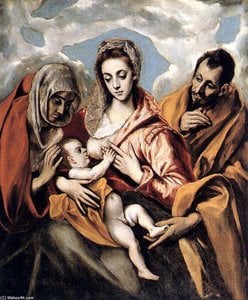
Retable and side altars
Dimensiune reproducere
El Greco’s “Retable and Side Altars,” painted in 1577 for the Cistercian convent of Santo Domingo el Antiguo in Toledo, Spain, isn't merely a religious depiction; it’s a profound exploration of faith, emotion, and the burgeoning artistic spirit of the late Renaissance. Commissioned during a pivotal moment in El Greco’s career – his arrival in Spain after years spent honing his craft in Italy and Greece – this monumental altarpiece reveals a synthesis of influences, forging a uniquely powerful style that would resonate through art history. The work stands as a testament to El Greco's ability to imbue religious iconography with an intensely personal and dramatic sensibility, pushing beyond the established conventions of the time.
The core of the altarpiece centers around “The Assumption of the Virgin,” a breathtaking vision of Mary ascending into heaven. El Greco masterfully employs a dynamic composition, eschewing the static serenity often associated with religious art. Figures are elongated and distorted, their bodies contorted in expressions of anguish and ecstasy. The use of color is equally arresting – deep reds, blues, and ochres dominate, creating an atmosphere of heightened drama and spiritual intensity. The architectural setting, rendered with a subtle yet effective perspective, anchors the scene within the confines of Toledo’s Santo Domingo convent, grounding the divine in the earthly realm.
El Greco's artistic journey is crucial to understanding this masterpiece. His early training in Crete exposed him to Byzantine iconography, characterized by its stylized figures and rich symbolism. However, his time in Italy, particularly Venice, introduced him to the innovations of the Renaissance – a fascination with perspective, naturalism, and the use of oil paint. Crucially, he was deeply influenced by Flemish artists like Jan van Eyck and Dirk Bouts, whose meticulous detail, dramatic lighting, and emotional intensity found their way into his work. This confluence of influences is most evident in the altarpiece’s composition, its use of chiaroscuro (the contrast between light and dark), and the expressive faces of its figures.
Yet, El Greco didn't simply mimic these styles; he transformed them, imbuing them with his own distinctive vision. The elongated figures, the heightened emotionalism, and the unsettling use of color are distinctly *El Greco*. He wasn’t interested in creating a purely realistic representation of religious subjects; instead, he sought to convey their spiritual essence through powerful visual metaphors.
The “Retable and Side Altars” is rich with symbolic detail. The figures themselves are not merely portraits but embodiments of theological concepts. The placement of saints, the gestures they make, and their expressions all contribute to a complex narrative that speaks to themes of faith, devotion, and salvation. Note, for example, the prominent role of Saint John the Evangelist in one of the side panels – a figure often associated with divine revelation and prophecy. The inclusion of classical elements, such as the architectural framework and the references to Roman mythology, further enriches the work’s symbolic landscape.
The choice of Toledo itself is significant. As a city steeped in religious history and a center of Spanish culture, it provided El Greco with a fertile ground for his artistic explorations. The depiction of the city's skyline, subtly integrated into the background, connects the divine realm to the everyday world.
Ultimately, “Retable and Side Altars” is a profoundly moving work of art. It’s not simply a depiction of religious events; it's an exploration of human emotion – faith, doubt, joy, sorrow, and ultimately, hope. The elongated figures, the dramatic lighting, and the intense colors all contribute to a sense of heightened emotional intensity. The viewer is drawn into the scene, invited to contemplate the mysteries of faith and the complexities of the human experience. It’s a testament to El Greco's ability to transform religious iconography into a powerful expression of the soul—a legacy that continues to captivate audiences centuries later.
Consider commissioning a high-quality reproduction to bring this extraordinary artwork into your home or office, allowing its evocative power and spiritual depth to enrich your surroundings.
Dimensiunea Large, orientarea Portrait: aceasta este configurația de imprimare recomandată pentru "Retable and side altars" de El Greco.
"Retable and side altars" de El Greco transmite un sentiment Spiritual, într-o atmosferă generală Elegant.
„Retable and side altars” aparține perioadei Mature Period din cariera lui El Greco. Această clasificare corelează opera cu evoluția artistului.

Doménikos Theotokópoulos, cunoscut de istorie sub numele de El Greco, și-a început călătoria în 1541 pe insula Creta. La acea vreme, insula era sub stăpânire venetiană, un fapt care i-ar fi permis, mai târziu, să îmbine tradițiile orientale cu cele occidentale. S-a format ca pictor de icoane în cadrul tradiției bizantine, o disciplină ce impunea o atenție meticuloasă la detaliu și o concentrare pe esența spirituală a subiectului, mai degrabă decât pe simpla asemănare fizică. Această imersie timpurie în școala cretană i-a oferit o precizie simbolică ce avea să rămână o constantă, chiar și atunci când stilul său a trecut prin transformări radicale.
La vârsta de douăzeci și șase ani, s-a mutat la Veneția, căutând să-și extindă înțelegerea lumii naturale. În Republica Venetiană, a descoperit operele lui Titian și Tintoretto, absorbind măiestria lor în utilizarea culorii și a luminii pentru a defini forma. A învățat să se îndepărteze de liniile rigide ale tinereții sale, adoptând o pincelată mai fluidă și un sentiment de dinamism. Această perioadă nu a fost o respingere a rădăcinilor sale, ci o expansiune a acestora, pe măsură ce începea să îmbine iconografia disciplinată a moștenirii sale grecești cu senzualitatea atmosferică a Renașterii italiene.
După o perioadă petrecută la Roma, unde a întâlnit formele alungite și compozițiile sofisticate ale manierismului, El Greco s-a stabilit în Toledo, Spania, în anul 1577. Această mutare s-a dovedit a fi decisivă. Toledo era un centru al unei fervoare religioase intense în timpul Contrareformei, oferind un peisaj perfect adaptat viziunii sale tot mai mistice. Aici, stilul său a atins cea mai distinctivă fază, caracterizată prin figuri care păreau întinse și contorsionate, ca și cum ar fi fost trase de o forță spirituală invizibilă. El a folosit culoarea nu pentru a imita realitatea, ci pentru a intensifica impactul emoțional, utilizând adesea nuanțe supranaturale pentru a reprezenta divinul.
Opera sa din Spania a fost marcată de o tensiune între planul terestru și cel eteric. În Înmormântarea Contului de Orgaz (1586-1588), a juxtapus reprezentarea realistă a figurilor contemporane cu forme celeste, alungite, creând un pod vizual între cel mortal și cel divin. Capacitatea sa de a manipula lumina și umbra i-a permis să creeze un sentiment de dramă, care părea simultan teatral și profund personal. El nu a pictat doar scene; a încercat să redargă realitățile emoționale și spirituale care există dincolo de suprafața lumii fizice.
Ultimele ani ai vieții sale au marcat o evoluție către un abstracționism și un misticism și mai profunde. Compozițiile sale au devenit mai complexe, iar figurile sale mai distorsionate, reflectând o detașare crescândă de normele artistice convenționale. Deși a obținut succes și a primit comenzi semnificative de la biserici și monastere din Toledo, influența sa nu a fost simțită imediat de restul lumii artei după moartea sa din 1614. Pentru o lungă perioadă, a fost privit ca un excentric, opera sa fiind în mare parte ignorată de nucleul principal al istoriei artei.
Abia în secolul XX importanța sa a fost recunoscută deplin. Moderniștii au descoperit în opera sa un precursor al stilurilor expresive și fragmentate ale viitorului. Capacitatea sa de a distorsiona proporțiile și de a folosi culori îndrăznețe și emotive a rezonat cu cei care căutau să transmită stări psihologice interne. Astăzi, picturile sale sunt privite ca ferestre către spiritul uman, fiind celebrate pentru capacitatea lor unică de a surprinde intensitatea credinței și lupta pentru transcendare.
Lucrări remarcabile includ:

1541 - 1614 , Grecia

Explore the profound drama of Spanish Baroque art. Delve into the mastery of light, shadow, and realism through the legendary works of Diego Velázquez and the Spanish Golden Age.
 Previzualizare
 Trimite prin felicitare
 Distribuie
 Detalii despre lucrare
 Ghid
Ghid

 Descarcă imaginea
 Produse similare
 Radiografie
 Galerie foto
 Întrebări și răspunsuri
 Statistici


 Vezi mai mult









 Opțiunea cu sticlă este disponibilă doar pentru dimensiuni de sub 110 cm